
New 2025 Freightliner Tow Trucks For Sale
Shop new 2025 Freightliner tow trucks, including M2 106 wreckers and rollback carriers with Cummins power and Jerr-Dan bodies.
Learn more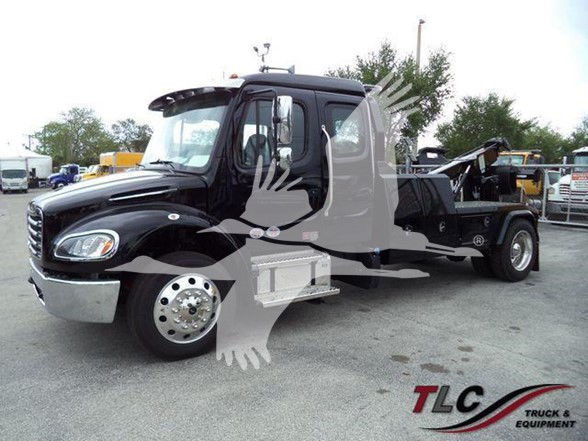
Have new 2025 freightliner tow truck to sell? List it here to reach thousands of buyers.
About New 2025 Freightliner Tow Trucks
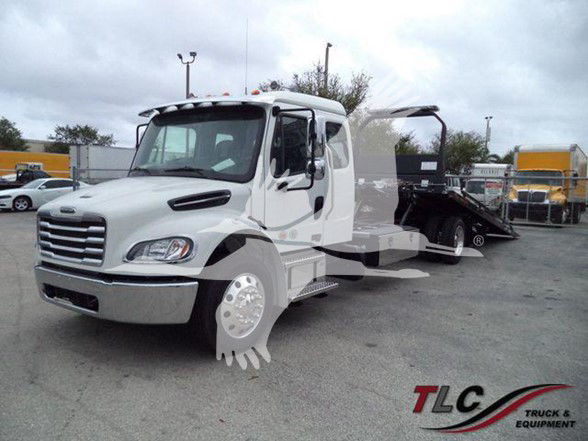
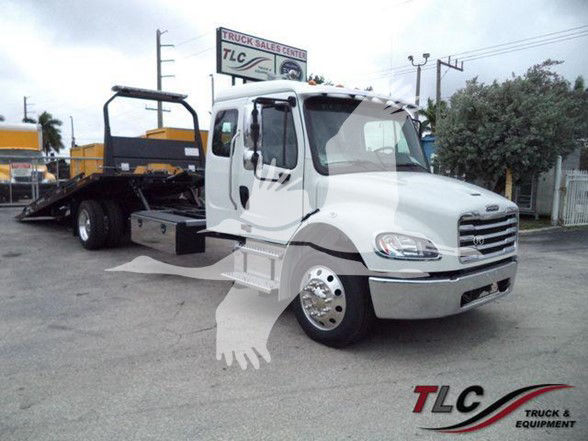
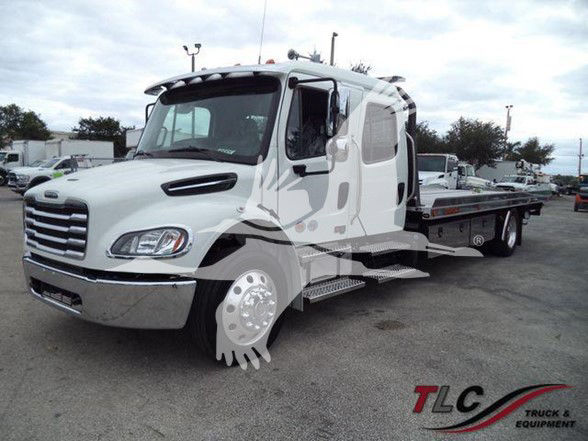
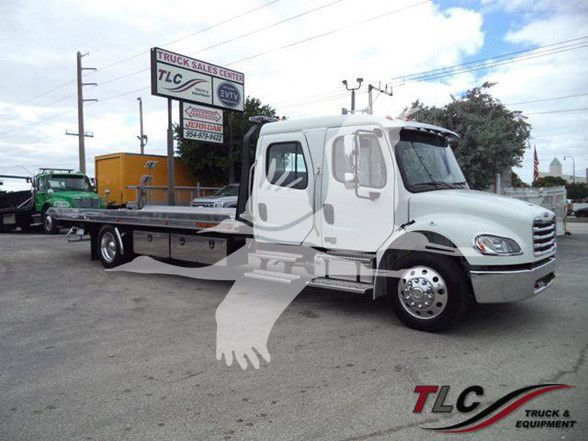
One of the first decisions is carrier versus wrecker. A 22-foot rollback with a low-profile steel bed is a strong fit for vehicle transport, dealer moves, impounds, disabled EVs, all-wheel-drive units, and lower-clearance cars that need full-deck loading instead of a wheel-lift tow. A wrecker setup, such as a 12-ton integrated body with dual winches, hydraulic stiff legs, and an extendable boom, is better suited for recoveries, police rotation work, roadside extractions, and vehicles that cannot be loaded conventionally. Many buyers focus on wheel-lift rating, winch capacity, bed length and deck width, underlift design, and the included towing kit because those details directly affect the jobs the truck can legally and efficiently handle.
The Freightliner M2 106 platform is commonly spec'd with Cummins diesel power in the 300 hp range and an Allison automatic transmission, a combination that remains popular in towing because it is easy to train drivers on and works well in stop-and-go service. Air brakes, air ride suspension, 22.5-inch rubber, and aluminum wheels are also typical on better-equipped trucks in this category. Extended cab layouts matter more than many first-time buyers expect. Extra in-cab space helps crews store chains, straps, dollies, and personal gear while also giving operators a more usable work truck for long shifts. Visibility, mirror package, turning radius, and PTO integration are all worth checking because tow work happens in tight lots, on shoulders, and in poor weather.
On the body side, Jerr-Dan is one of the most recognized names in the segment, and buyers often compare features such as low-center-of-gravity decks, removable rails, tunnel boxes, stainless toolbox doors, LED light bars, work lighting, and dual free-spool or worm-drive winches. The right spec depends on the mix of calls. A carrier focused on repossession, municipal contract work, or general transport has different needs than a wrecker assigned to recover pickups, vans, and medium-duty commercial units. New 2025 Freightliner tow trucks appeal to buyers who want current emissions systems, fresh warranty coverage, updated interiors, and a chassis that can be put to work immediately with minimal reconditioning. The best value usually comes from matching body style, lift and winch capacity, storage, and wheelbase to the exact service area and call profile.
Frequently Asked Questions
What is the difference between a Freightliner rollback and a Freightliner wrecker?
A rollback uses a tilting slide-back deck to load the entire vehicle onto the bed, which is ideal for damaged vehicles, all-wheel-drive units, low-clearance cars, and general transport. A wrecker uses a boom, winches, and wheel-lift or underlift equipment to tow or recover a vehicle without placing it fully on a deck. For mixed-duty towing operations, the choice comes down to the type of calls being run most often, the space available at recovery scenes, and whether full-deck transport or recovery capability is the priority.
Why is the Freightliner M2 106 a common tow truck chassis?
The Freightliner M2 106 is widely used in towing because it offers a solid medium-duty platform with good maneuverability, straightforward body upfit compatibility, and strong support for rollback and wrecker applications. It is commonly paired with Cummins diesel power and Allison automatic transmissions, which gives operators a familiar drivetrain for urban towing, highway work, and frequent stop-and-go service. The chassis also supports practical specs such as air brakes, air ride suspension, and 26,000 lb GVWR configurations.
What should buyers look at first on a new 2025 tow truck?
The first items to review are body type, GVWR, wheel-lift or underlift rating, winch capacity, bed length, and storage layout. Those specs determine what vehicles the truck can carry or tow and how efficiently the operator can work on scene. After that, buyers should check engine and transmission pairing, axle ratings, wheelbase, lighting package, PTO setup, and included towing equipment such as L-arms, forks, straps, chains, and dollies. A truck that looks similar on paper can perform very differently depending on those details.
Is a 26,000 GVWR Freightliner tow truck enough for commercial use?
A 26,000 GVWR Freightliner tow truck is a common choice for commercial towing because it covers a wide range of light-duty and medium-duty work while keeping the truck in a manageable medium-duty class. For rollback use, it is often well suited to passenger vehicles, pickups, SUVs, and many fleet units. For wrecker applications, it can handle a broad range of standard towing and recovery calls when paired with the right body and underlift ratings. Buyers handling heavier commercial recoveries or larger trucks may need to move into a heavier chassis class.
What body features matter most on a new tow truck?
The most important body features depend on the truck's job mix, but buyers commonly prioritize low-profile deck design, wheel-lift capacity, boom rating, winch setup, toolbox space, lighting, and rear access equipment. On carriers, deck width, bed angle, removable rails, and low-center-of-gravity design affect how easily damaged or low-clearance vehicles load. On wreckers, dual winches, hydraulic stiff legs, fork packages, and underlift geometry affect recovery capability and stability. Good storage and scene lighting also make a major difference in daily productivity and safety.