
New 2024 Ford Tow Trucks For Sale in Florida
Have new 2024 ford tow truck to sell? List it here to reach thousands of buyers.
New 2024 Ford Tow Trucks in Florida
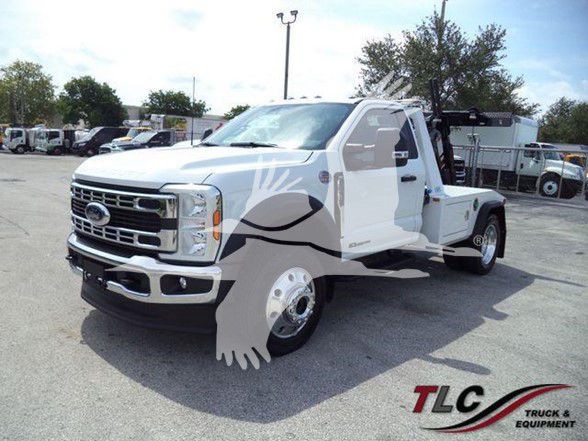
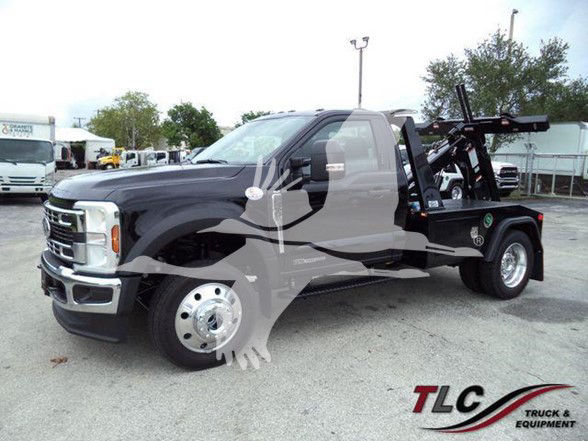
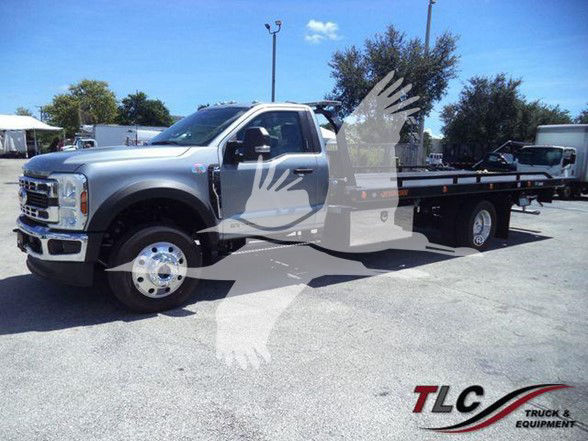
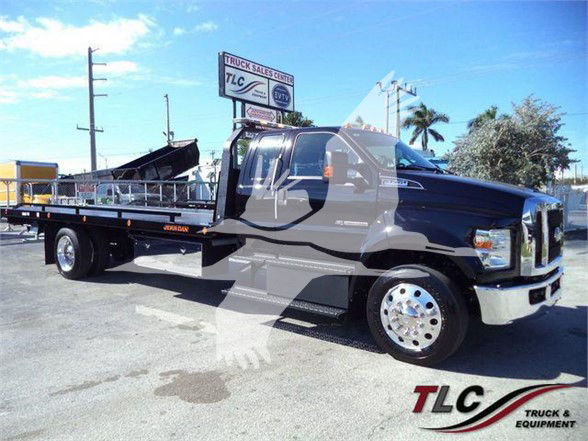
The biggest decision is usually wrecker versus carrier. A Ford F-450 with a self-loader or auto-loader body is a practical fit for tight urban routes, private property impounds, dealership work, and quick hook-and-go calls. These trucks commonly feature an 8,000-lb class drag winch, wheel-lift equipment, work lights, backup camera systems, and amber warning lights. A Ford F-600 or F-750 with a rollback, also known as a car carrier or flatbed tow truck, is better suited for all-wheel-drive vehicles, lower-clearance cars, inoperable units, and damage-free transport. Common carrier specs include 20-foot to 22-foot decks, 102-inch deck width, XLP or low-profile bed designs, 6-ton deck ratings, 3,500-lb hydraulic wheel lifts with L-arms, removable rails, and toolbox storage.
On the chassis side, GVWR, brake type, and axle configuration matter as much as the body. F-600 models often land in a useful middle ground for operators who want rollback capability without stepping into a full F-750. F-750 tow trucks typically bring 26,000-lb GVWR class capability, air brakes, heavier running gear, and 22.5-inch low-profile tires, which can make sense for higher utilization fleets and longer wheelbase carrier bodies. In Florida, corrosion exposure is usually less severe than in northern road salt markets, but heat, humidity, and nonstop duty cycles still make cooling system access, hydraulic system layout, light placement, and toolbox sealing worth a close look. On new units, buyers should also compare body manufacturer support, structural warranty terms, and the service network for both the truck and the towing equipment.
A serious buyer should match the truck to the call profile, not just the headline capacity rating. Deck angle, approach geometry, wheel-lift reach, winch specification, and bed height all affect what the truck can load efficiently in real-world conditions. Extra-low-profile rollback decks are especially useful for low-clearance cars and specialty vehicles. Four-wheel-drive F-450 or F-600 configurations can also be valuable for soft shoulders, storm response, and uneven recovery scenes. If the truck will spend most of its time on local police rotation, apartment towing, auction runs, or dealership transport, maneuverability and cycle speed often matter more than maximum chassis size. If it will regularly move heavier pickups, loaded vans, or commercial units, stepping up in GVWR, brake package, and carrier length usually pays off.
Frequently Asked Questions about New 2024 Ford Tow Trucks in Florida
What is the difference between a Ford rollback tow truck and a Ford self-loader wrecker?
A rollback uses a tilt-and-slide carrier bed to load the entire vehicle onto the deck, which is preferred for all-wheel-drive vehicles, low-clearance cars, collision units, and damage-free transport. A self-loader wrecker uses a wheel-lift and boom arrangement for fast hookups, making it more efficient for private property impounds, short tows, and high-volume roadside work. The right choice depends on how often you need full deck transport versus quick recovery and relocation.
Which 2024 Ford tow truck chassis is best for light-duty towing in Florida?
For many light-duty operations, the Ford F-450 is a strong fit when paired with a self-loader body because it combines compact dimensions, diesel torque, and good maneuverability in tighter city environments. The F-600 adds more chassis capacity and can be a smart bridge between a pickup-based wrecker and a larger medium-duty carrier. The F-750 is usually the better choice when the business leans heavily toward rollback transport, higher daily use, and heavier vehicle mix.
What common specs should buyers compare on a new Ford rollback tow truck?
The most important rollback specs include deck length, deck width, bed height, loading angle, rated deck capacity, wheel-lift capacity, winch rating, and chassis GVWR. Buyers should also look at air brakes versus hydraulic brakes, tire size, wheelbase, cab configuration, toolbox layout, and whether the body uses low-profile or extra-low-profile deck geometry. These details have a direct effect on what vehicles the truck can safely load, how easily it can do the work, and how well it fits the route.
Why does deck design matter on a carrier or flatbed tow truck?
Deck design affects loading clearance, ease of use, and the range of vehicles the truck can handle without damage. Low-profile and XLP-style decks reduce approach angle, which helps when loading sports cars, lowered vehicles, and units with front-end damage. Features such as dual-angle decks, removable rails, and properly matched wheel-lift equipment also improve versatility when transporting mixed vehicle types.
Are Ford F-750 tow trucks typically built with air brakes?
Many Ford F-750 tow truck builds are equipped with air brakes, especially when configured as 26,000-lb GVWR medium-duty carriers. Air brakes are often preferred on heavier rollback applications because they align with the truck’s weight class and duty cycle. Buyers should still verify the exact brake setup on each unit, since chassis configuration can vary by application and upfit.