
Mack Tank Trucks For Sale
Browse Mack tank trucks, including vacuum and service applications, with details on tank size, axle ratings, PTO setup, pump specs, and chassis fit.
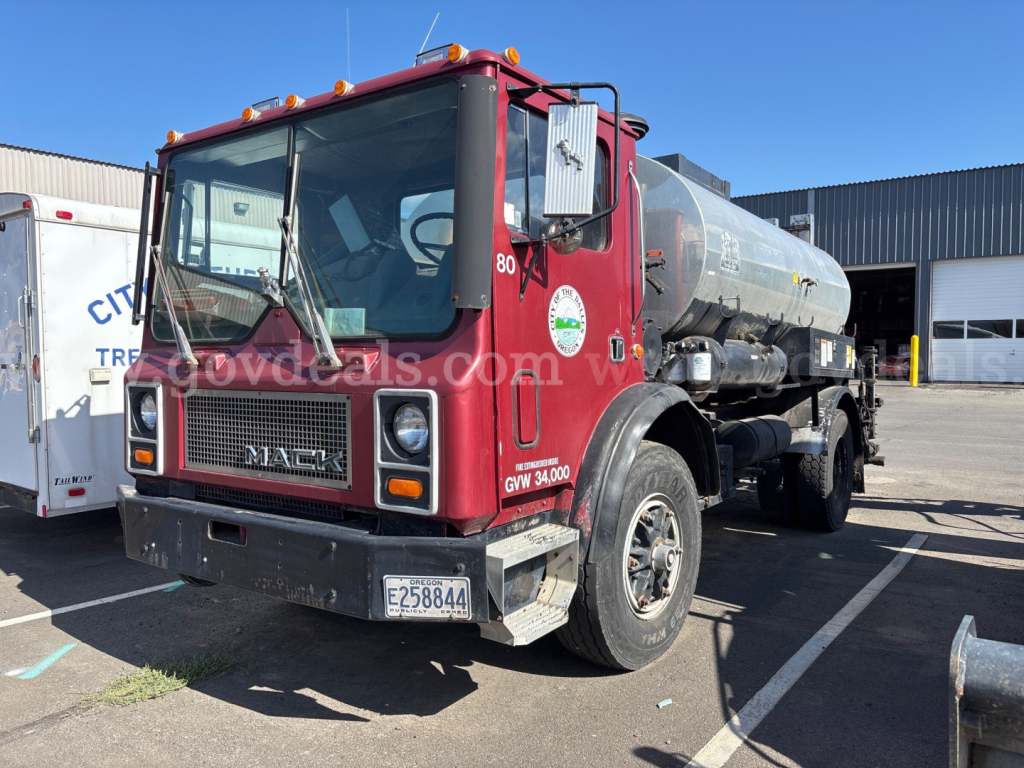
Selling a mack tank truck? List your mack tank truck for sale and reach thousands of commercial buyers.
Mack Tank Trucks
Tank capacity, tank material, and pump package should drive the buying decision before cab trim or cosmetics. Many Mack tank trucks in this class carry around 2,000 to 3,000 gallons, which is a practical range for septic service, sludge hauling, grease recovery, and liquid waste removal without pushing the chassis beyond its intended axle balance. Aluminum tanks reduce tare weight and can improve legal payload, while steel tanks may be preferred in harsher environments or where spec consistency matters more than weight savings. On vacuum units, pump brand, CFM rating, PTO setup, hose storage, rear work area design, and valve layout matter just as much as the tank itself because they directly affect load time, route efficiency, and operator productivity.
A Mack tank truck should also be evaluated as a complete system, not just a cab and tank. Front axle and rear axle ratings, suspension type, wheelbase, frame reinforcement, and brake configuration all affect how the truck handles a partially filled tank and repeated stop-and-go service work. Many buyers prefer an Allison automatic for urban routes and frequent PTO operation, especially in septic, portable toilet, grease, and industrial pumping service. If the truck is being used for vacuum recovery or liquid waste collection, check for baffles, cleanout access, sight gauges, hydraulic or PTO-driven pump controls, and the condition of the plumbing, seals, and fittings. These details often determine downtime more than the engine or transmission alone.
For buyers comparing Mack tank trucks for sale, the key is matching the chassis class and tank system to the actual product being hauled. Septic and sludge work may prioritize vacuum performance and tank washout access. Used cooking oil and waste oil collection can place more emphasis on contamination control, pump compatibility, and compartment or plumbing design. Municipal and contractor buyers may focus on maneuverability, turning radius, spring or air suspension preference, and service body protection such as side guards, toolboxes, and heavy-duty rear bumpers. A properly spec'd Mack tank truck can be a strong fit for dense route work, utility service, and specialized liquid handling where uptime and predictable operating costs matter more than highway speed.
Frequently Asked Questions about Mack Tank Trucks
What are Mack tank trucks commonly used for?
Mack tank trucks are commonly used for septic pumping, wastewater removal, grease trap service, sludge hauling, vacuum recovery, and used oil or cooking oil collection. The exact application depends on the tank design, pump system, plumbing layout, and material compatibility. Many medium-duty Mack tank trucks are built for local and regional service routes where durability, maneuverability, and PTO-driven equipment performance are more important than long-haul specifications.
What tank size is typical on a medium-duty Mack tank truck?
A common tank size on a medium-duty Mack tank truck is roughly 2,000 to 3,000 gallons, although the right capacity depends on axle ratings, tank material, and the density of the product being hauled. Buyers should calculate legal loaded weight, not just tank volume. A larger tank is not always better if the chassis cannot carry the product legally or if route density makes a smaller, lighter truck more efficient.
Is an aluminum tank better than a steel tank on a Mack tank truck?
An aluminum tank usually offers lower tare weight and improved payload potential, which can be a major advantage on a medium-duty chassis. A steel tank may be preferred for certain severe-duty environments, impact resistance, or long-term repair familiarity. The better choice depends on the product being hauled, corrosion concerns, repair practices, and how close the truck will operate to its GVWR on a daily basis.
What should I inspect on a used Mack vacuum tank truck?
Inspect the vacuum pump rating, PTO engagement, tank condition, plumbing, valves, hose reels or hose storage, rear work area, and all seals and fittings. Also check for internal baffling, tank cleanout access, corrosion, weld quality, and signs of patch repairs. On the chassis side, review axle ratings, suspension, brake condition, frame integrity, and service records. A used vacuum tank truck is best evaluated as one integrated unit because failures often come from the pump and tank system rather than the base truck alone.
Why do many Mack tank trucks use automatic transmissions?
Automatic transmissions are common because tank truck service often involves frequent stops, tight jobsite access, PTO operation, and repeated low-speed maneuvering. An automatic can reduce driver fatigue, improve consistency across multiple operators, and simplify operation in urban or residential service routes. In septic, grease, and liquid waste applications, that ease of use can translate into faster training and more predictable route efficiency.