
International Tank Trucks For Sale
Shop International tank trucks for municipal, water, fuel, and service applications. Compare chassis specs, tank capacity, PTO setup, and GVWR.
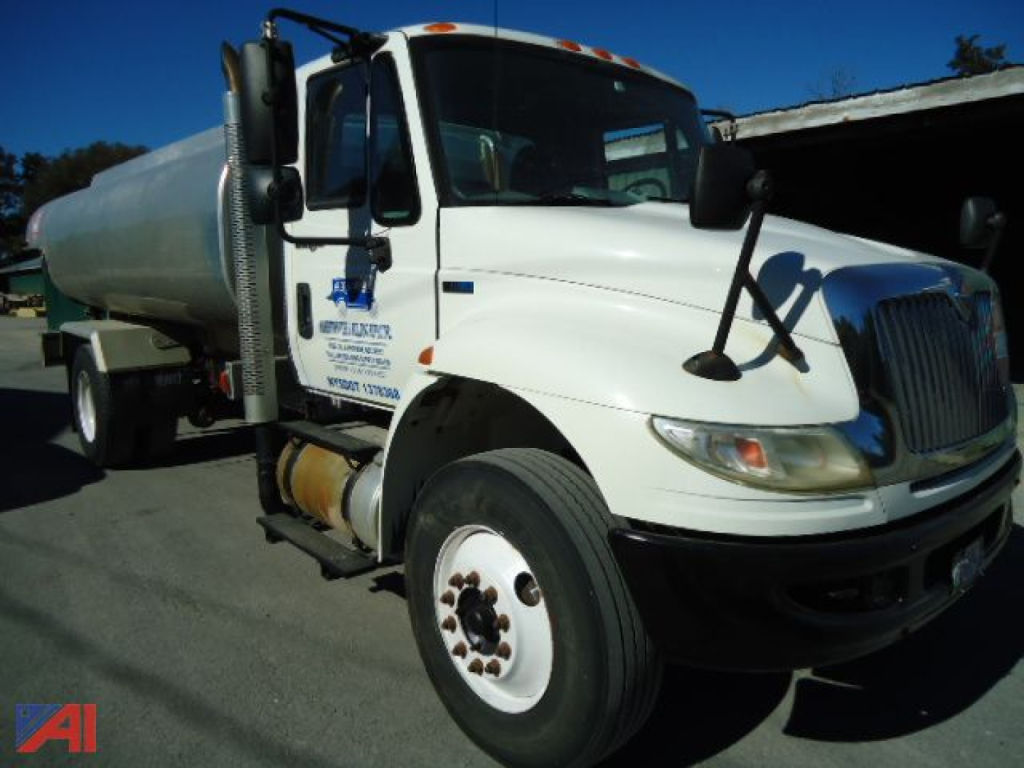

Selling a international tank truck? List your international tank truck for sale and reach thousands of commercial buyers.
International Tank Trucks
A buyer should look closely at tank material, capacity, pump system, PTO arrangement, axle rating, and weight distribution. Water and flush trucks often carry tanks in the 1,500 to 4,000 gallon range on medium-duty International chassis, while specialized units may be larger depending on axle configuration and local road limits. Pump output matters as much as tank size. Street flush and water application trucks may use engine-driven or hydrostatic pump systems with front, rear, or side spray bars and nozzles. Fuel and service tank trucks need a different review, including meter setup, hose reel layout, compartment design, and any applicable compliance items. If the truck is intended for regulated fuel work, confirm the tank certification status, plumbing condition, and shutoff equipment rather than assuming the chassis alone tells the story.
International chassis are popular in this segment because parts support is broad and many technicians are familiar with DT-series diesel engines, Allison automatic transmissions, and straightforward vocational electrical layouts. On used tank trucks, pay attention to corrosion around tank saddles, outriggers, PTO mounting points, and plumbing supports. Review suspension type, rear ratio, wheelbase, and turning radius against the route the truck will actually run. A single-axle truck may be ideal for city service, plant yards, and tight municipal work, while a tandem setup may be better suited for higher payload requirements. Cab condition also matters more than many buyers expect because these trucks often spend long hours idling, operating auxiliary equipment, and cycling through stop-and-go routes.
The best International tank truck is the one with a chassis spec and body configuration that fit the liquid being hauled, the roads it runs, and the equipment it needs to power. Buyers comparing listings should verify GVWR, tank gallons, baffle design, pump rating, hose and valve condition, PTO operation, and any body manufacturer details such as Etnyre, Ledwell, Heil, or other vocational builders. Service history is especially important on tank equipment because maintenance extends beyond the engine and transmission into pumps, seals, spray systems, valves, and tank integrity. A clean truck with the correct tank setup will usually outperform a cheaper unit that needs rework to match the application.
Frequently Asked Questions about International Tank Trucks
What are International tank trucks commonly used for?
International tank trucks are commonly used for water hauling, street flushing, dust control, fuel and lube service, septic work, and other vocational liquid transport applications. The chassis can support several body types, so the intended use depends more on the tank design, pump system, and plumbing than on the cab alone. Buyers should confirm whether the truck is configured for clean water, non-potable water, fuel, waste, or another liquid because each application has different equipment requirements.
What should I check first on a used International tank truck?
Start with the tank body and the auxiliary system, not just the engine. Inspect tank condition, saddle mounts, baffles, plumbing, valves, pump operation, PTO engagement, and any signs of corrosion or leakage. After that, review chassis fundamentals such as GVWR, axle ratings, suspension, transmission, and brake condition. A sound International chassis is important, but the tank system is usually the most expensive part to repair or reconfigure.
How important is tank capacity when comparing tank trucks?
Tank capacity matters, but it should be considered alongside legal payload, axle ratings, and the job cycle. A larger tank can improve productivity, but only if the chassis can carry it within legal weight limits and the route allows that load. For municipal or urban work, a slightly smaller tank on a more maneuverable International chassis may be the better choice. Pump performance, nozzle layout, and refill efficiency can affect real-world output just as much as raw gallons.
Are International tank trucks good for municipal and utility work?
International tank trucks are widely used in municipal and utility fleets because they are available in practical medium-duty and vocational chassis specs with good service support. Many units are configured for street flushing, water service, dust suppression, and general public works tasks. Their popularity also means buyers can often find familiar drivetrains, common automatic transmissions, and body combinations that are easier to maintain over time.
Do I need to verify the body manufacturer on a tank truck listing?
Yes. The body manufacturer is a major part of the truck's value and capability because the tank, pump, controls, and plumbing are built by the body company, not the chassis maker. Knowing whether the truck has an Etnyre, Heil, Ledwell, or another body helps you evaluate parts availability, control layout, tank construction, and intended application. Two International tank trucks with the same cab and engine can perform very differently if the body equipment is built for different work.