
Used Workhorse Step Van Trucks For Sale
Used Workhorse step vans for delivery, service or food trucks. Compare W42 and W62 specs, engines, GVWRs, bodies, and key buying tips.
Learn more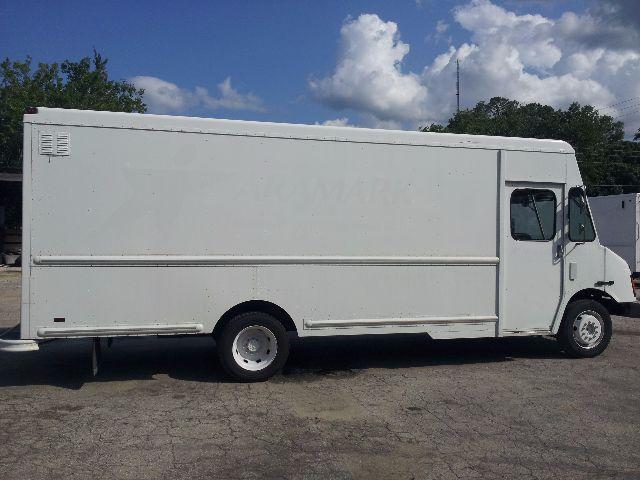
Have used workhorse step van truck to sell? List it here to reach thousands of buyers.
About Used Workhorse Step Van Trucks
Powertrains vary by year and chassis. Many W42 units use GM Vortec gasoline engines such as 4.8L or 6.0L paired to heavy-duty automatics, valued for simpler emissions equipment and easier cold starts. Heavier W62 models may feature larger gas or diesel power like 8.1L gas or medium-duty diesels paired to Allison transmissions, offering stronger GCWR and hill performance. Expect hydraulic brakes on lighter GVWRs and, on some higher GVWR W62 builds, air brakes. Common wheelbases range widely to match body lengths, and dual rear wheels deliver stability with good wheel cut for city routes.
Selecting the right GVWR matters for insurance, licensing, and payload. Workhorse step vans commonly span roughly 12,000 to 23,500 lb GVWR, keeping most builds comfortably under the 26,000 lb CDL threshold. Parcel and service routes benefit from gas engines that tolerate extended idling and frequent heat cycles. Regional and rural routes with longer cruise segments may justify diesel for torque and fuel economy, especially at higher GVWR. If refrigeration, generators, or inverter systems are planned for a food truck or mobile workshop, verify alternator output, PTO or auxiliary power provisions, and electrical upfit quality.
On used units, evaluate frame rails and stepwells for rust, roof seams for leaks, and cargo floors for soft spots. Inspect sliding door tracks, rear door rollers, and bulkhead locks. Delivery duty often means high idle hours, so confirm engine hours along with mileage, check transmission service history, and look for steering gear play, kingpin or bushing wear, and brake condition. Verify tire load ratings, lighting circuits from prior upfits, and any liftgate or ramp operation. Parts support is straightforward since many components are shared with GM medium-duty platforms and major body builders, which helps keep downtime in check.
Frequently Asked Questions
What sizes and GVWR ranges are common on Workhorse step vans?
Most used Workhorse step vans fall between 14 and 22 ft body lengths with GVWRs from about 12,000 to 23,500 lb. Shorter W42 configurations suit dense city routes and tight alleys, while longer W62 builds carry more volume and payload for bulk deliveries. Both are typically non-CDL unless the GVWR or GCWR exceeds 26,000 lb.
What powertrains are typical on Workhorse W42 and W62 chassis?
W42 models frequently use GM Vortec gasoline engines like 4.8L or 6.0L paired to heavy-duty automatic transmissions. W62 units may have larger gas options or medium-duty diesels mated to Allison automatics. Lighter platforms usually have hydraulic brakes, while some higher GVWR W62 configurations can be equipped with air brakes.
Is gas or diesel better for stop-and-go delivery routes?
For frequent stops and high idle time, gasoline power is often favored due to quicker warmup, simpler emissions hardware, and predictable maintenance costs. Diesel can be the better choice at higher GVWRs or for routes with longer highway stretches and grades, where extra torque and potential fuel savings help offset more complex aftertreatment systems.
Do I need a CDL to drive a Workhorse step van?
Most Workhorse step vans are non-CDL since many are rated under 26,000 lb GVWR. You will need a CDL if the vehicle’s GVWR or operated combination weight is 26,001 lb or higher, if it has air brakes in a jurisdiction that requires an endorsement, or if you are transporting certain regulated loads. Always confirm local licensing rules.
What should I inspect on a used Workhorse step van before purchase?
Look closely at frame rails, stepwells, roof seams, and cargo floors for corrosion or water intrusion. Test sliding door tracks, rear roll-up or swing doors, and bulkhead latches. Review maintenance records for engine and transmission services, check idle hours, inspect steering and suspension wear points, verify brake life, and confirm operation of any liftgate, ramp, HVAC, and electrical upfits.