
Ram Service/Utility Trucks For Sale
Explore Ram service and utility trucks, including 5500 chassis cab models built for field service bodies, tools, parts storage, and towing.
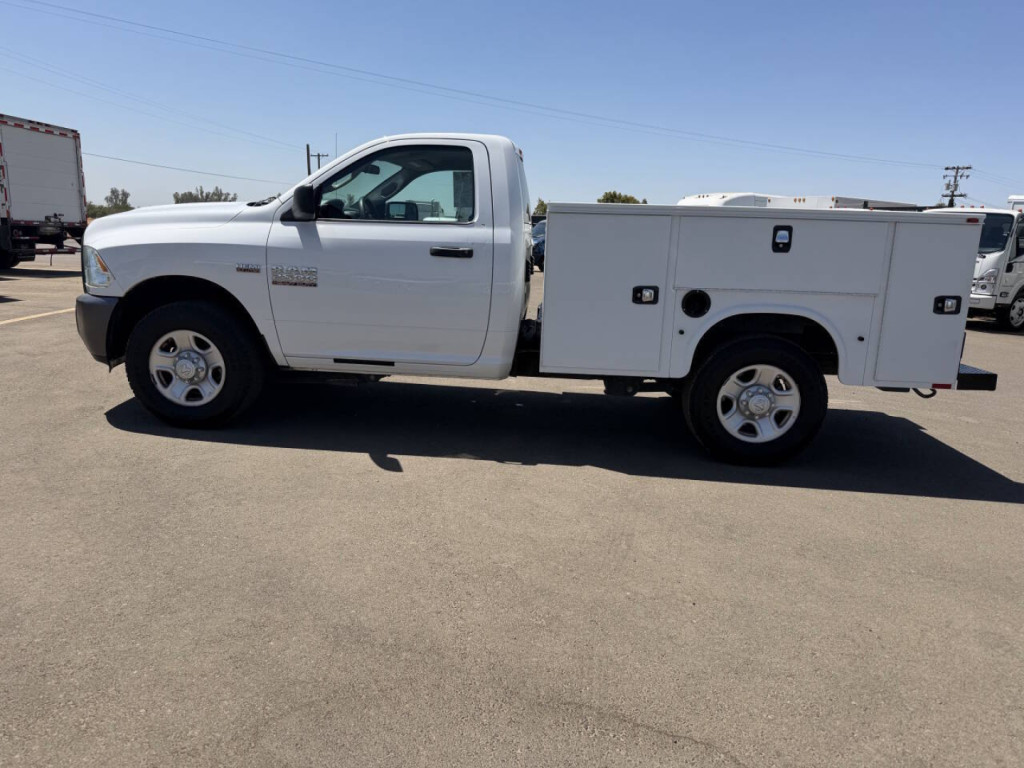
Selling a ram service/utility truck? List your ram service/utility truck for sale and reach thousands of commercial buyers.
Ram Service/Utility Trucks
A key buying decision is the chassis and drivetrain combination. Many Ram service trucks are equipped with the 6.7L Cummins turbo diesel, which is well-known in commercial use for low-end torque and compatibility with PTO-driven equipment. Buyers should pay close attention to GVWR, front axle capacity, rear axle rating, wheelbase, and whether the truck is 4x2 or 4x4. Four-wheel drive matters for utility contractors, oilfield work, and municipal applications where trucks leave pavement or operate year-round in rough conditions. Cab configuration also affects usability. Regular cab layouts maximize body length, while crew cab trucks trade some body space for passenger capacity.
The service body itself often determines the truck's real value. Common features include multiple lockable compartments, ladder racks, reel mounts, compressor shelves, inverter systems, strobe lighting, trailer brake controls, and heavy-duty hitch setups. Some bodies are built for mechanics with crane reinforcement and drawer packages, while others are set up for utility line work or general contractor use. Buyers should inspect compartment condition, rust around body mounts, door alignment, latch wear, and signs of overloading near the rear suspension. On used Ram utility trucks, it is also smart to verify PTO operation, upfit wiring quality, and how well the body was matched to the chassis payload and axle ratings.
Ram service trucks appeal to buyers who want a medium-duty work truck in a more compact footprint than a full-size Class 6 or 7 rig. They are easier to maneuver in urban service routes, residential neighborhoods, and crowded jobsites, while still offering serious towing and equipment-carrying capability. When comparing listings, the best approach is to look beyond model year and mileage and evaluate the complete package: engine, drivetrain, axle capacity, body brand, compartment layout, upfit quality, and service history. In this category, the right specification usually matters more than the badge on the door.
Frequently Asked Questions about Ram Service/Utility Trucks
What Ram models are most common in service and utility truck applications?
The most common Ram models in this category are the 4500 and 5500 chassis cab. The Ram 5500 is especially common when buyers need a heavier service body, more payload capacity, or support for equipment such as air compressors, cranes, generators, and welding systems. The right model depends on the body weight, expected cargo, towing needs, and axle ratings required for the work.
Is a Ram 5500 a good choice for a service body truck?
A Ram 5500 is a strong fit for many service body applications because it offers medium-duty capability in a relatively manageable chassis size. It is often selected for mechanic trucks, contractor support units, utility service trucks, and municipal fleet use. Buyers should still confirm that the body, tools, fluids, mounted equipment, and trailer weight all fit within the truck's GVWR and axle limits, since upfit weight adds up quickly.
What should I inspect on a used Ram service or utility truck?
Focus on both the truck and the upfit. Check engine hours if available, transmission operation, 4x4 engagement, suspension wear, brake condition, and frame integrity. On the service body, inspect compartment floors, hinges, latches, seals, corrosion at mounting points, and any signs of cracking around crane bases or reinforced sections. Electrical systems deserve close attention, especially if the truck has PTO equipment, inverters, auxiliary lighting, or aftermarket wiring.
Why does wheelbase matter on a Ram utility truck?
Wheelbase affects body length, turning radius, weight distribution, and overall usability. A longer wheelbase can support a larger service body and more storage space, but it may be less maneuverable in tight urban work zones or residential service calls. A shorter wheelbase improves agility, though it can limit compartment space and payload balance depending on the upfit. Matching wheelbase to body design is an important part of buying the right truck.
Should I choose a diesel Ram service truck or look for a gas engine?
Diesel Ram service trucks, especially those with the 6.7L Cummins, are common because they provide strong torque for towing, hauling, and PTO-related work. They are often preferred in heavier-duty applications and high-utilization fleets. Gas-powered trucks can make sense for lighter service routes, lower annual mileage, or fleets focused on reducing upfront cost and simplifying emissions-related maintenance. The better choice depends on duty cycle, idle time, payload, and how the truck will be equipped.