
New Freightliner Service/Utility Trucks For Sale
Shop new Freightliner service and utility trucks built for field repair, crane work, compressors, tool storage, and upfit versatility.
Learn more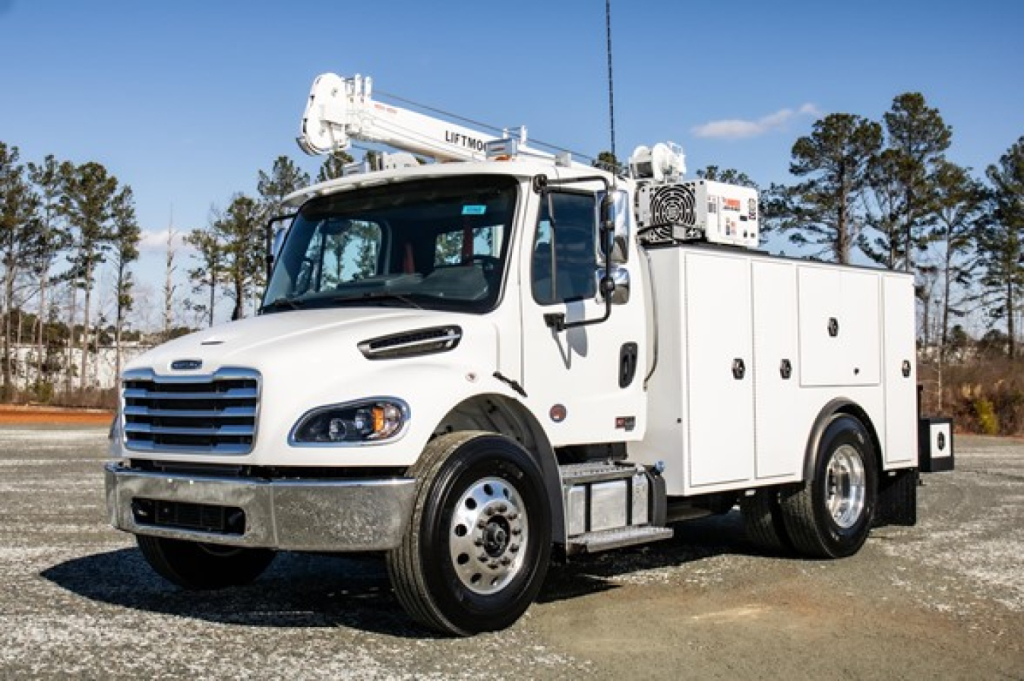
Have new freightliner service/utility truck to sell? List it here to reach thousands of buyers.
About New Freightliner Service/Utility Trucks
A big buying decision is the upfit, not just the cab and chassis. Many new Freightliner service trucks are ordered with enclosed side packs, tall compartments, work benches, reel setups, air compressors, welders, and hydraulic or electric cranes. Crane ratings, boom length, and lift chart matter if the truck will handle generators, pumps, construction attachments, or jobsite components. Buyers should also look at body material, compartment layout, outrigger design, PTO compatibility, and how the service body balances payload against storage density. A well-matched service body reduces wasted motion in the field and keeps frequently used tools, fittings, and consumables accessible.
On the chassis side, Freightliner is a common choice because the M2 platform is straightforward to upfit, easy to service, and widely accepted in municipal, utility, and contractor fleets. Typical specs include diesel power in the medium-horsepower range, Allison automatic transmissions, single-axle 4x2 layouts, and wheelbases selected to support crane bodies or standard utility bodies without compromising turning radius. Buyers comparing listings should pay attention to GVWR, front and rear axle ratings, frame strength, suspension setup, and cab configuration. If the truck will carry a crane, compressor, welding gear, and fully loaded bins every day, axle capacity and weight distribution are just as important as engine output.
For many fleets, the value of a new Freightliner service truck is uptime and consistency. New units can be spec'd for a standardized fleet layout, which helps technician productivity, driver familiarization, and maintenance planning. Details like backup cameras, work lighting, inverter systems, safety strobes, ladder racks, pintle or receiver hitches, and tire selection can make a real difference once the truck is in daily service. The best choice comes down to matching the Freightliner chassis and service body package to the actual job cycle, including lifting needs, compressor demand, road conditions, and the amount of parts and tooling the truck must carry.
Frequently Asked Questions
What is a Freightliner service or utility truck used for?
A Freightliner service or utility truck is used as a mobile workshop for field repairs, equipment maintenance, utility service, and contractor support. Depending on the upfit, it may carry tools, parts, compressors, welders, hose reels, and a crane for lifting components on jobsites or at customer locations. These trucks are common in construction, power and telecom utility work, heavy equipment service, municipalities, and fleet maintenance operations.
What should I look for first when comparing new Freightliner service trucks?
Start with the body and equipment package, because the upfit determines how well the truck performs the job. Compare crane capacity, boom reach, compressor output, compartment layout, drawer packs, outrigger setup, and available payload after the body is installed. Then confirm the chassis can support that upfit with the right GVWR, axle ratings, wheelbase, frame, PTO provision, and transmission.
Are Freightliner M2 service trucks good for crane body applications?
Yes, the Freightliner M2 is a common platform for crane body and mechanic truck applications because it is widely upfitted in the medium-duty market and supports a broad range of service body configurations. Buyers still need to verify front axle loading, rear axle capacity, frame reinforcement, and wheelbase against the crane rating and the expected weight of tools, compressors, and materials carried in the body. A good crane-body spec depends on weight distribution as much as on the boom's advertised lifting capacity.
What engine and transmission setup is common on new Freightliner utility trucks?
Many new Freightliner utility and service trucks are spec'd with diesel engines in the medium-duty horsepower range and Allison automatic transmissions. That combination is popular because it works well in stop-and-go service, PTO-driven applications, and mixed urban or regional routes where ease of operation matters. Exact horsepower and transmission ratings should be matched to body weight, terrain, and whether the truck will spend more time driving or operating stationary equipment.
How important is payload on a new service truck?
Payload is critical because service trucks often gain weight quickly once the crane, compressor, welder, fuel, fluids, parts inventory, and hand tools are loaded. A truck that looks well-equipped on paper can become overloaded in real use if the chassis and body were not matched carefully. Buyers should calculate working payload with the full upfit installed and confirm that the axle ratings and GVWR still leave enough legal and practical capacity for daily operations.