
Freightliner Service/Utility Trucks For Sale
Browse Freightliner service and utility trucks built for field repair, crane work, compressors, secure storage, and dependable medium-duty uptime.

Selling a freightliner service/utility truck? List your freightliner service/utility truck for sale and reach thousands of commercial buyers.
Freightliner Service/Utility Trucks
The chassis matters as much as the body. Freightliner medium-duty platforms are known for a comfortable cab layout, good visibility, and broad service support, which is important if the truck will be dispatched daily across a large territory. Common powertrains include diesel engines in the mid-range horsepower classes paired with automatic or manual transmissions, depending on application and fleet preference. Buyers should pay close attention to GVWR, wheelbase, axle ratings, PTO compatibility, and body upfit details. A service truck with a compressor, generator, welder, or crane needs enough payload and frame capacity to carry tools and parts without exceeding ratings. If the unit includes an air compressor or crane, confirm the equipment brand, output, service records, and whether the PTO, hydraulic system, and controls have been maintained correctly.
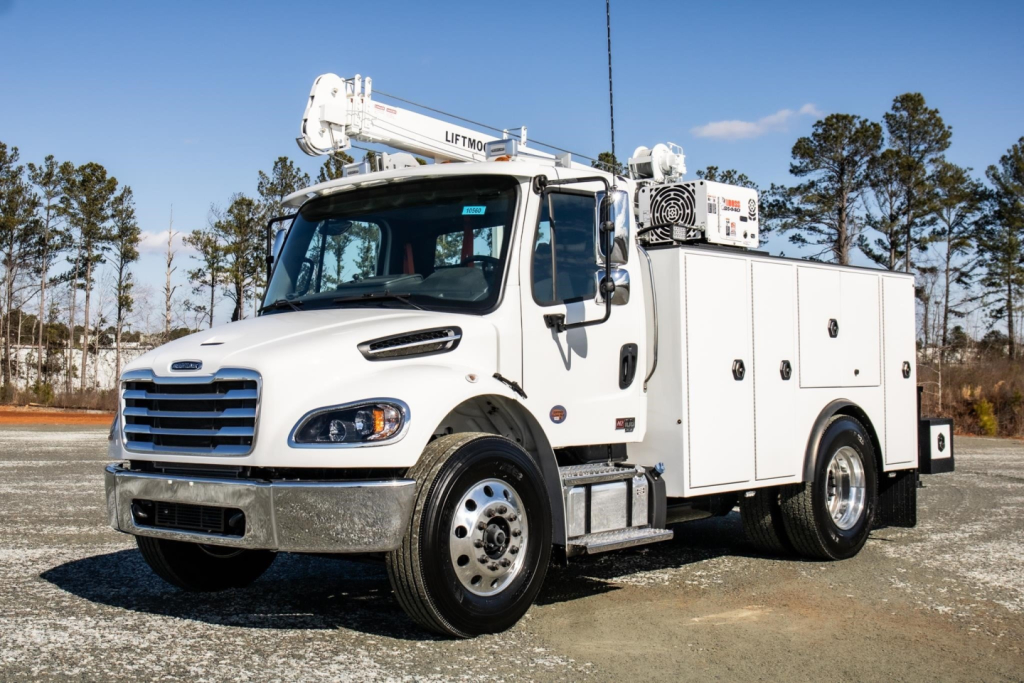
Body configuration drives day-to-day usefulness. Utility bodies typically feature multiple side compartments with locks, drawer systems, rear work benches, vise mounts, hose reels, and LED scene lighting. Some are set up for mechanic service with crane outriggers and heavy-duty tool storage, while others are closer to municipal utility trucks with beacon lights, cones, and traffic control equipment. Compartment layout, shelf depth, and weather sealing matter more than many buyers expect because they affect organization, tool protection, and technician efficiency. If the truck will work off pavement or in tight urban spaces, also consider overall body width, turning radius, suspension spec, and the crane's lift chart at different boom lengths rather than focusing only on maximum rated capacity.
A good Freightliner service truck should be evaluated as a complete package, not just by model year or mileage. Engine hours, idle time, PTO hours, electrical condition, rust around body mounts and compartment floors, and wear in the crane or compressor system can tell more than odometer miles alone. Buyers comparing listings should look for clean upfit integration, functioning locks and lighting, documented maintenance, and signs that the truck was spec'd for the work it actually performed. When the chassis, service body, and auxiliary equipment are matched correctly, a Freightliner utility truck can handle years of dependable on-site support with less downtime and better technician productivity.
Frequently Asked Questions about Freightliner Service/Utility Trucks
What is a Freightliner service or utility truck typically used for?
A Freightliner service or utility truck is commonly used as a mobile work platform for field mechanics, utility crews, contractors, and municipal departments. These trucks are designed to carry tools, parts, consumables, and support equipment directly to the jobsite. Many are equipped with service bodies, locking compartments, compressors, generators, welders, and small cranes so technicians can perform repairs and installations without returning to the shop.
What should I check first on a used Freightliner service truck?
Start with the chassis ratings and the upfit condition. Verify GVWR, front and rear axle ratings, wheelbase, and PTO setup, then inspect the service body, compartment floors, door seals, locks, lighting, and mounting points. If the truck has a crane, compressor, welder, or hydraulic system, review maintenance records and test operation if possible. Idle hours and PTO hours are especially important because service trucks often spend significant time running stationary equipment.
Are Freightliner M2 service trucks a good fit for crane and compressor upfits?
Yes, the Freightliner M2 platform is a common choice for service body applications because it offers a medium-duty chassis with good cab access, upfitter compatibility, and a wide range of wheelbase and GVWR configurations. It is frequently used for crane service bodies, mechanic trucks, and utility builds with underdeck or hydraulic-driven compressors. The key is matching the frame, axle ratings, and PTO provisions to the weight and duty cycle of the installed equipment.
How important is the body layout on a utility truck?
Body layout has a major impact on productivity. Compartment count, shelf spacing, drawer systems, and access from ground level affect how fast a technician can find tools and parts. Poor organization leads to wasted time and overloaded compartments. Buyers should look for a layout that fits their trade, along with durable weather seals, secure latches, effective work lighting, and enough space for the inventory they plan to carry every day.
Do miles matter less on a service truck than on other commercial trucks?
Mileage still matters, but it should not be the only metric. Service and utility trucks often accumulate engine hours through idling and PTO operation while parked at jobsites, so low miles do not always mean low wear. Buyers should compare odometer miles with engine hours, idle time, and the condition of the auxiliary equipment. A well-maintained truck with documented PTO and hydraulic service can be a better buy than a lower-mile unit with neglected service body equipment.