
Used 2015 Ford Service/Utility Trucks For Sale
Browse used 2015 Ford service and utility trucks, including F-350 and Transit-based work trucks with service bodies, cranes, compressors, and shop-ready upfits.
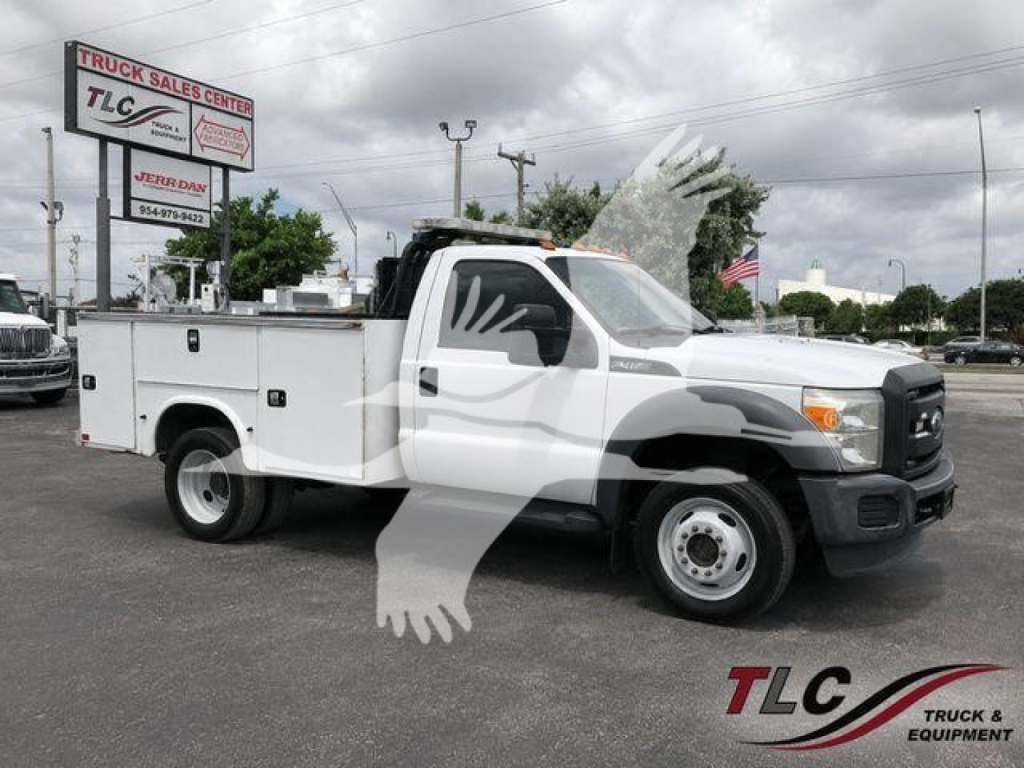

Have used 2015 ford service/utility truck to sell? List it here to reach thousands of buyers.
Used 2015 Ford Service/Utility Trucks
On 2015 Ford service trucks, one of the first decisions is gas versus diesel and how that matches the work cycle. The 6.2L gas V8 is common in F-350 and similar applications and is often a practical fit for fleets that want lower upfront cost, simpler emissions equipment, and predictable maintenance for shorter-route or stop-and-go work. Diesel-equipped Super Duty models are more attractive when the truck carries heavier bodies, spends more time towing, or runs PTO-driven equipment regularly. Buyers should compare GVWR, axle ratings, wheelbase, cab style, and 2WD versus 4WD, then match those specs to the body length, compartment layout, and payload left after the upfit is installed.
The service body itself is where productivity is won or lost. A good used utility truck should be evaluated for compartment size, shelving, drawer systems, ladder or conduit racks, compressor mounting, inverter or generator setup, and any crane, welder, liftgate, hose reel, or plow equipment already on the truck. On crane bodies, confirm crane capacity, PTO engagement, outrigger operation, and the condition of hydraulic lines and controls. On enclosed utility bodies, check rear access, pass-through design, interior lighting, and roof height. Buyers should also inspect door latches, hinges, seals, scuff areas, rust around compartment floors, and the general condition of the body subframe because these trucks often spend their lives carrying tools, parts, and jobsite equipment rather than light freight.
For a used 2015 Ford utility truck, maintenance history matters as much as mileage. Idle hours, PTO hours, electrical loads from auxiliary equipment, and corrosion from road salt can tell more than the odometer alone. Look closely at front-end wear, brakes, charging system output, wiring quality for aftermarket accessories, and signs of overloading or repeated curbside service use. A well-spec'd 2015 Ford service truck can still be a strong value because parts availability is broad, Ford chassis support is widespread, and many examples already include expensive vocational equipment that would cost far more to add later.
Frequently Asked Questions about Used 2015 Ford Service/Utility Trucks
What should I look for first on a used 2015 Ford service or utility truck?
Start with the chassis rating and the upfit. Confirm the truck's GVWR, axle capacities, wheelbase, cab configuration, and powertrain, then compare that to the actual service body, crane, compressor, welder, or other installed equipment. After that, review maintenance records, inspect the body structure for rust or compartment damage, and check how the auxiliary equipment operates under load. On a service truck, the body and vocational gear often determine the truck's true value more than the base cab and chassis.
Is a 2015 Ford F-350 service truck enough, or should I step up to an F-450 or F-550?
An F-350 can be a good fit for lighter service bodies, mobile technicians, and fleets that do not need large cranes or heavy constant payloads. If the truck will carry a larger utility body, run PTO-driven accessories, tow regularly, or support a crane and outriggers, an F-450 or F-550 usually provides more chassis capacity and better long-term durability. The right choice depends on body weight, cargo, trailer requirements, and how much reserve payload you want after the upfit is installed.
Are gas or diesel engines better in a 2015 Ford utility truck?
Gas engines such as the 6.2L V8 are often preferred for lighter-duty service work, shorter routes, and fleets that want lower acquisition cost and less emissions-system complexity. Diesel power makes more sense when the truck is heavily upfitted, tows often, or runs in higher-load duty cycles where torque and efficiency under load matter more. The best choice comes down to payload, PTO usage, annual miles, idle time, and maintenance strategy.
How important are engine hours and PTO hours on a used service truck?
They are extremely important because service and utility trucks often spend long periods idling or operating equipment while stationary. A truck with moderate mileage can still have substantial wear if it has high idle time or heavy PTO use from cranes, compressors, or hydraulic systems. Engine hours, PTO hours, and the condition of the charging, cooling, and hydraulic systems give a clearer picture of how the truck was actually used.
What are common upfit brands and features on Ford service trucks from this era?
Common body and equipment brands include Reading, Knapheide, Stellar, IMT, Auto Crane, and VMAC. Typical features include side-pack compartments, ladder racks, crane packages, air compressors, welders, hose reels, liftgates, drawers, shelving, and work lighting. Buyers should verify that each installed component works properly, has available parts support, and matches the type of field service the truck is expected to perform.