
Peterbilt Rollback Trucks For Sale in Georgia
Browse Peterbilt rollback trucks for sale in Georgia, including 348 and 365 models with steel beds, winches, tandem axles, and diesel power.
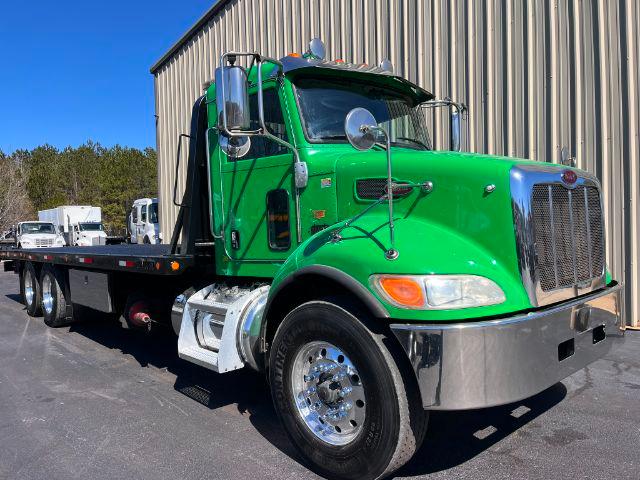
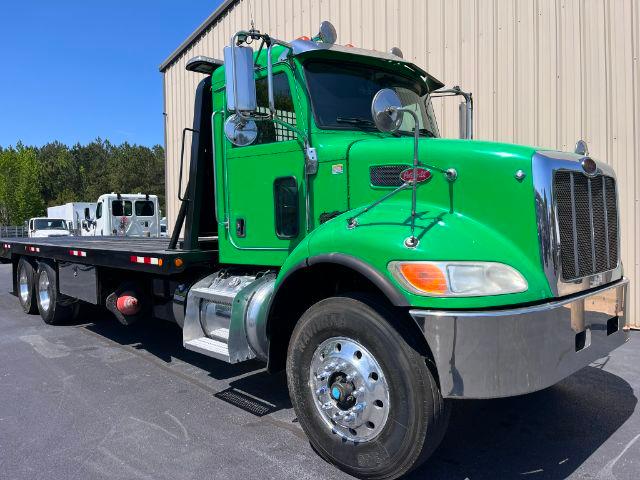
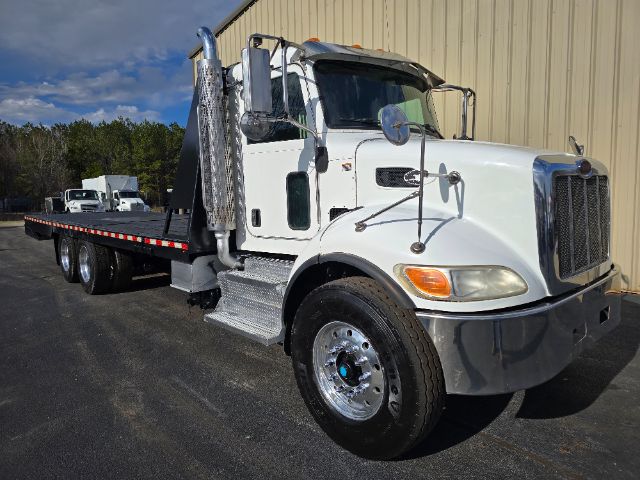
Selling a peterbilt rollback truck? List your peterbilt rollback truck for sale and reach thousands of commercial buyers.
Peterbilt Rollback Trucks in Georgia
On Peterbilt rollback applications, the 348 is one of the most common platforms because it balances vocational durability with a tighter, more maneuverable package than a larger severe-duty chassis. Buyers will often see PX-9 power in the 300 to 350 horsepower range paired with an Allison automatic, which is a proven combination for stop-and-go loading, city routing, and less driver fatigue. Some heavier-spec trucks, especially tri-axle or roll-off based vocational builds, can show up with larger Cummins engines, manual transmissions, higher horsepower, and deeper rear ratios. Front axle ratings around 20,000 pounds, rear ratings around 40,000 pounds, 6x4 drivetrains, air ride suspension, and engine brakes are common on rollback configurations intended for equipment hauling rather than basic car hauling.
The bed and hydraulic package deserve as much attention as the cab and drivetrain. A rollback truck, also known as a slide-back or car carrier, relies on the bed geometry, cylinder performance, subframe condition, and winch setup to do the job efficiently. Look closely at deck length, bed rating, winch capacity, tie-down points, toolbox layout, lighting, PTO operation, and any hydra-tail or low-angle loading feature if the truck will regularly handle low-clearance equipment. On used units, check for deck wear, hinge and pivot play, cracked crossmembers, hydraulic leaks, cable condition, and signs of frame modification. Wheelbase is another key spec because it affects deck fitment, turning radius, and bridge law compliance.
For buyers comparing Peterbilt rollback trucks for sale, the main decision is usually application-driven. A truck handling contractor equipment every day needs different gearing, axle capacity, and deck construction than one focused on disabled vehicle transport. Georgia buyers should also think about route profile, jobsite access, DOT weight exposure, and how often the truck will operate loaded on secondary roads versus interstate runs. A well-spec'd Peterbilt rollback can deliver long service life, better driver comfort, and stronger resale value, but only if the bed rating, GVWR, axle spread, and hydraulic system match the work.
Frequently Asked Questions about Peterbilt Rollback Trucks in Georgia
What is the typical capacity of a Peterbilt rollback truck?
Many Peterbilt rollback trucks in commercial service are equipped with 28 to 30-foot beds rated around 30,000 pounds, often on tandem-axle chassis with GVWRs near 60,000 pounds. Actual working capacity depends on bed manufacturer, winch rating, axle ratings, wheelbase, and the truck's empty weight. Buyers should verify both deck rating and legal payload because they are not always the same.
Is a Peterbilt 348 a good platform for a rollback body?
Yes. The Peterbilt 348 is a widely used rollback and wrecker chassis because it offers a strong vocational frame, good visibility, and straightforward body upfit compatibility. It is commonly spec'd with PX-9 diesel power, Allison automatic transmissions, air ride suspension, and tandem rear axles, which suits equipment hauling and medium-duty recovery work well.
What should I inspect on a used rollback truck besides the engine and transmission?
Pay close attention to the rollback bed, hydraulic system, and chassis integration. Inspect the deck surface, rails, crossmembers, tilt frame, cylinders, hoses, PTO function, winch cable, sheaves, and tiedown hardware. Also check for frame alterations, rust around body mounts, uneven deck wear, and any signs the truck has regularly carried loads beyond the bed's intended capacity.
Are Peterbilt rollback trucks used only for towing cars?
No. While rollback trucks are often called car carriers or slide-backs, many Peterbilt units are configured for heavier commercial work. They are commonly used to move construction equipment, rental fleet machines, utility vehicles, box trucks, and other cargo that benefits from a full hydraulic loading deck and winch-assisted loading.
Why do many Peterbilt rollback trucks have Allison automatic transmissions?
Allison automatics are popular in rollback applications because they simplify loading operations, improve low-speed control, and reduce driver fatigue in frequent stop-and-go service. They also work well in urban towing, equipment delivery, and tight jobsite maneuvering where smooth throttle response and controlled backing are more important than maximizing highway fuel economy.