
Used 2019 International Refrigerated Trucks For Sale
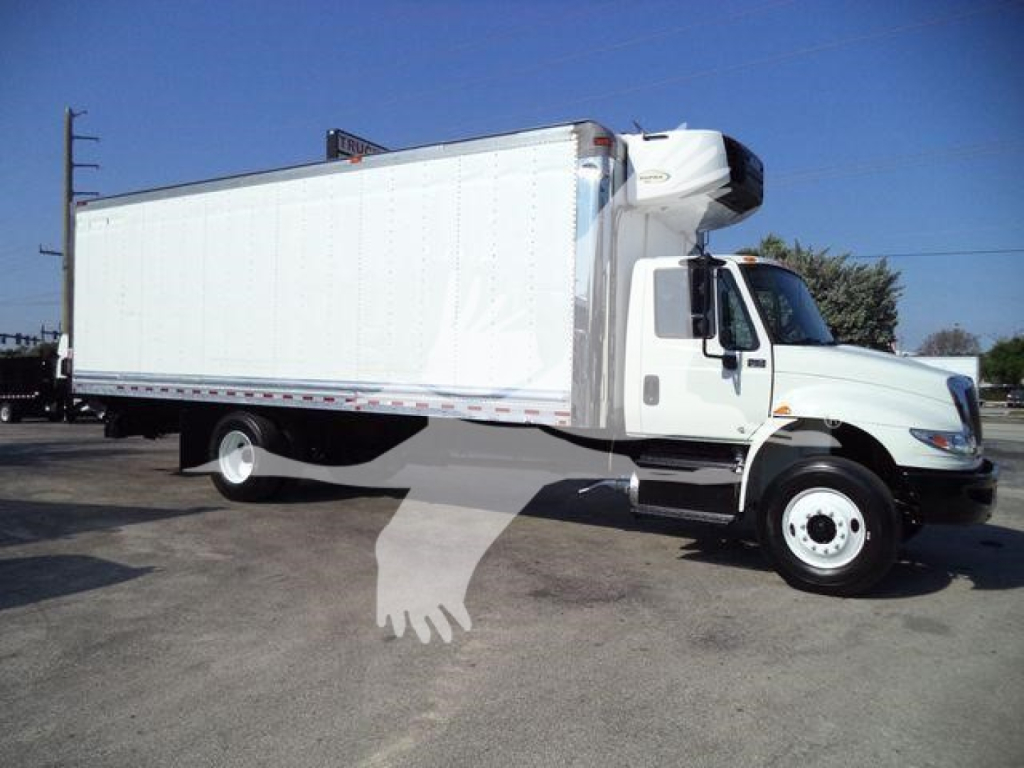
Have used 2019 international refrigerated truck to sell? List it here to reach thousands of buyers.
Used 2019 International Refrigerated Trucks
Frequently Asked Questions about Used 2019 International Refrigerated Trucks
What should I inspect first on a used 2019 International refrigerated truck?
Start with the refrigeration system, insulated body, and maintenance records. Confirm the reefer unit pulls down to target temperature, holds temperature under load, and cycles correctly. Inspect the evaporator, condenser, drain lines, door seals, floor condition, and front wall for damage or moisture intrusion. On the chassis side, review engine hours, idle time, transmission operation, brake condition, suspension wear, and any fault codes. A clean box with poor insulation or a reefer with deferred maintenance can turn a good-looking truck into an expensive repair item.
What body and reefer specs are common on a 2019 International 4300 refrigerated truck?
A common setup is a 26 ft refrigerated van body with a roll-up rear door, curbside access door, interior scuff liner or scuff plate, E-track, and a tuck-under liftgate. Many units ride on 22.5-inch wheels and are built as single-axle medium-duty trucks around the 26,000 lb GVWR range. Reefer units from Carrier or Thermo King are both common in this class, with truck-mounted systems sized for frozen or fresh applications depending on insulation package and route demand. Buyers should verify the exact body manufacturer, insulation thickness, and liftgate rating rather than assuming all 26 ft reefers are equipped the same.
Is a used 2019 International reefer truck good for city delivery routes?
Yes. The 2019 International 4300 is well suited for urban and regional refrigerated delivery because it balances payload, maneuverability, and serviceability. An automatic transmission reduces driver fatigue in stop-and-go traffic, and the medium-duty chassis is easier to route through tighter commercial areas than a tractor-trailer. This category is especially common in multi-stop operations where rear access, side-door loading, and liftgate use are part of the daily routine.
How important is liftgate capacity on a refrigerated straight truck?
Liftgate capacity is a major buying point because it directly affects how the truck performs at docks, retail stops, and curbside deliveries. Many used units in this class are equipped with tuck-under liftgates in the 2,500 lb to 3,500 lb range, but the right rating depends on pallet weight, product type, and delivery method. A mismatched liftgate can slow unloading, increase safety risk, and limit what freight the truck can handle. Buyers should also inspect platform corrosion, cylinder condition, hydraulic operation, and the gate's stowed ground clearance.
What is the difference between a fresh-use reefer truck and a frozen-spec reefer truck?
The difference usually comes down to reefer unit capacity, insulation package, door sealing, and how well the body maintains temperature during repeated stops. A truck used for chilled produce or dairy may not be built to hold deep-frozen temperatures on a demanding route. Frozen-spec trucks generally need stronger pull-down performance and tighter thermal integrity. On a used 2019 International refrigerated truck, that means checking the reefer model, body construction, bulkhead setup if equipped, and real-world temperature performance before assigning it to frozen work.