
Commercial Trucks For Sale in Ontario
Used trucks for sale in Ontario: day cabs, sleepers, straight and vocational. Compare specs, axle options, SPIF-compliant configurations.

Selling a commercial truck? List your commercial truck for sale and reach thousands of commercial buyers.
Commercial Trucks in Ontario
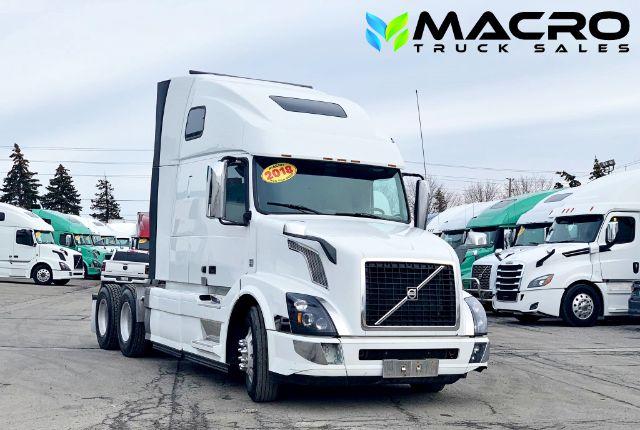
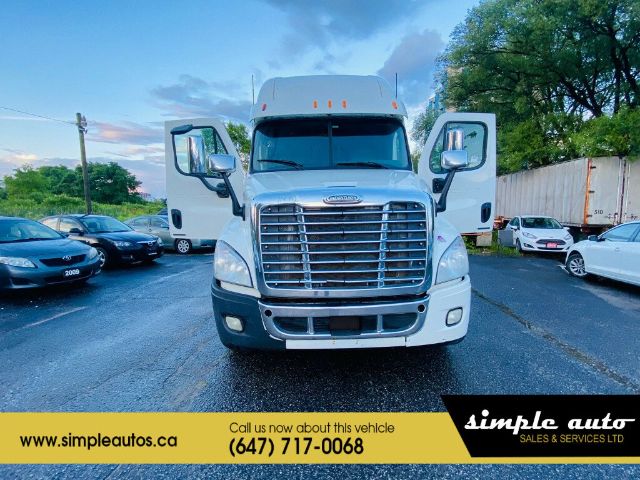
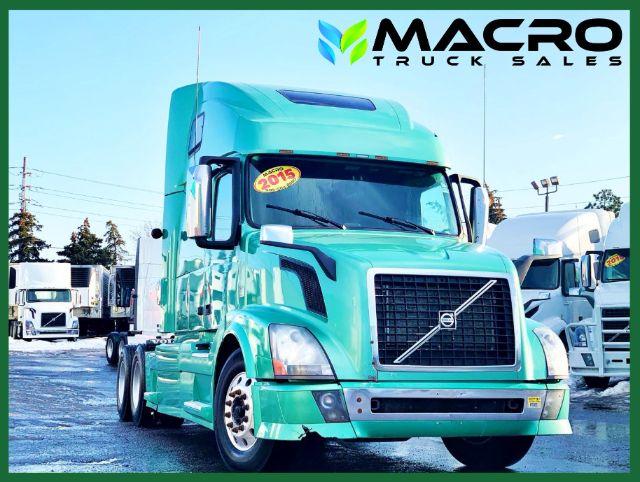
Linehaul and regional tractors in this market typically run 13 to 15 liter engines in the 400 to 505 hp range with 1550 to 1850 lb-ft torque. Automated manuals like DT12, I-Shift and UltraShift dominate late-model listings; direct-drive with faster axle ratios favors flat Ontario lanes, while overdrive with mid-range ratios helps mixed terrain. A 6x4 tandem provides traction in snow and on job sites, while 6x2 or 4x2 saves weight and fuel for highway-only work. Day cabs with set-back steer axles turn tighter in the GTA, and aero sleepers with mid-roof or high-roof fairings deliver the best fuel economy at Canadian cruise speeds. Collision mitigation, lane departure and adaptive cruise are common on late-model tractors and are worth prioritizing for safety and insurance.
Straight trucks cover everything from 24 to 28 foot dry van bodies with e-track and liftgates to refrigerated units with high insulation values and multi-temp systems for grocery routes. Municipal and construction buyers will see tandem and tri-axle dumps with steel boxes for abrasion or aluminum for payload, heated floors for asphalt, high-capacity central hydraulics and electric or hydraulic tarps. Forestry and northern applications push toward double frames, full-locking differentials, crossmember reinforcement and high-clearance bumpers. Allison automatics shine in stop-and-go or off-road duty; manuals and AMTs suit highway and mixed duty.
Ontario winters drive specific choices. Look for cold-weather packages with block heaters, high CCA batteries, heated mirrors, air dryer upgrades and 3PMSF drive tires or chains for the north. Disc brakes and stability control shorten stops on wet and slushy roads. For sleepers, diesel-fired bunk heaters and battery HVAC reduce idling and protect DPFs while meeting local anti-idle bylaws. Salt exposure is real, so inspect frames, crossmembers, brake lines, DEF tanks and wiring for corrosion, and review DPF, DOC and SCR history, ash loadings and forced regens. Telematics, TPMS and remote diagnostics help manage uptime across long Ontario corridors from Windsor to Thunder Bay.
Frequently Asked Questions about Commercial Trucks in Ontario
What axle configurations make sense for Ontario loads, and what is SPIF?
For highway tractors, tandem 6x4 is the most common for traction and balanced weights. Weight-sensitive fleets may choose 6x2 or 4x2 when operating primarily on dry pavement. Vocational trucks often run tri-axle or quad-axle with lift axles to increase legal payload. Ontario’s SPIF (Safe, Productive, Infrastructure Friendly) program sets design and control requirements for lift axles and multi-axle vehicles. SPIF-compliant trucks use steerable lift axles with automatic load and speed controls to qualify for full weight allowances. If a vocational truck is not SPIF-compliant, it may face reduced allowable weights and routing limits.
Are speed limiters and ELDs required for trucks operating in Ontario?
Ontario requires most heavy trucks equipped with electronic engine controls to have speed limiters set to 105 km/h. For hours-of-service, federally regulated carriers in Canada must use certified ELDs, and most Ontario carriers that cross provincial or national borders follow that rule. Verify your operation type and ensure the ELD device is on the Canadian certification list to avoid compliance issues.
What truck specs are best for Ontario’s winter conditions?
A cold-weather package with block heater, higher-output alternator, heated mirrors, air dryer with desiccant and high-CCA batteries is a strong baseline. Many fleets choose 3PMSF-rated drive tires, automatic traction control and full-locking differentials for snow and ice. Disc brakes, stability control and collision mitigation help on slick highways. For sleepers, diesel-fired bunk heaters or battery-based HVAC cut idling, protect aftertreatment systems and keep drivers comfortable during long, cold nights.
What should I look for in a used Ontario truck regarding emissions and corrosion?
Request aftertreatment records, including DPF cleaning or replacement intervals, SCR dosing system repairs and any history of forced regens. Inspect for exhaust leaks upstream of sensors, DEF crystal buildup, wiring chafe and sensor faults. Salt exposure is common, so check frame rails, crossmembers, suspension hangers, brake lines, aluminum components and electrical connectors for scaling or corrosion. A clean annual safety and opacity test history, plus recent oil and coolant analysis, are positive indicators.
Can a U.S.-spec truck be operated in Ontario without modification?
Many U.S.-spec heavy trucks can be operated in Ontario, but you must verify compliance with Canadian and provincial requirements. Confirm CMVSS compliance or an acceptable path to compliance, ensure daytime running lights function, check speed limiter settings and confirm lighting, brake and weight configurations meet Ontario rules. If you plan vocational service, verify SPIF compliance for lift-axle configurations. Consult the OEM and a licensed Ontario mechanic or inspection facility before committing.