
Used Mack Mixer Trucks For Sale
Shop used Mack mixer trucks with Granite and vocational specs, common axle ratings, drum capacities, and drivetrain options for concrete hauling.
Selling a used mack mixer truck? List your used mack mixer truck for sale and reach thousands of commercial buyers.
Used Mack Mixer Trucks
Drivetrain matters more on a mixer than on many other vocational trucks because the truck spends so much time starting under load and operating through traffic, plants, and crowded pours. Mack MP7 engines are common in this category, often in the mid-300 to 400-plus horsepower range, paired with Allison automatics or Mack mDrive automated manual transmissions. Allison-equipped mixer trucks are popular for urban and residential concrete delivery because of smooth low-speed control and reduced driver fatigue. mDrive trucks can offer fuel savings and strong vocational calibration, but buyers should pay close attention to clutch history, software updates, and how the transmission behaves when backing and crawling on uneven jobsites. Rear axle ratios, PTO setup, and hydraulic performance all deserve close inspection because drum speed and charge-discharge function depend on that system working correctly.
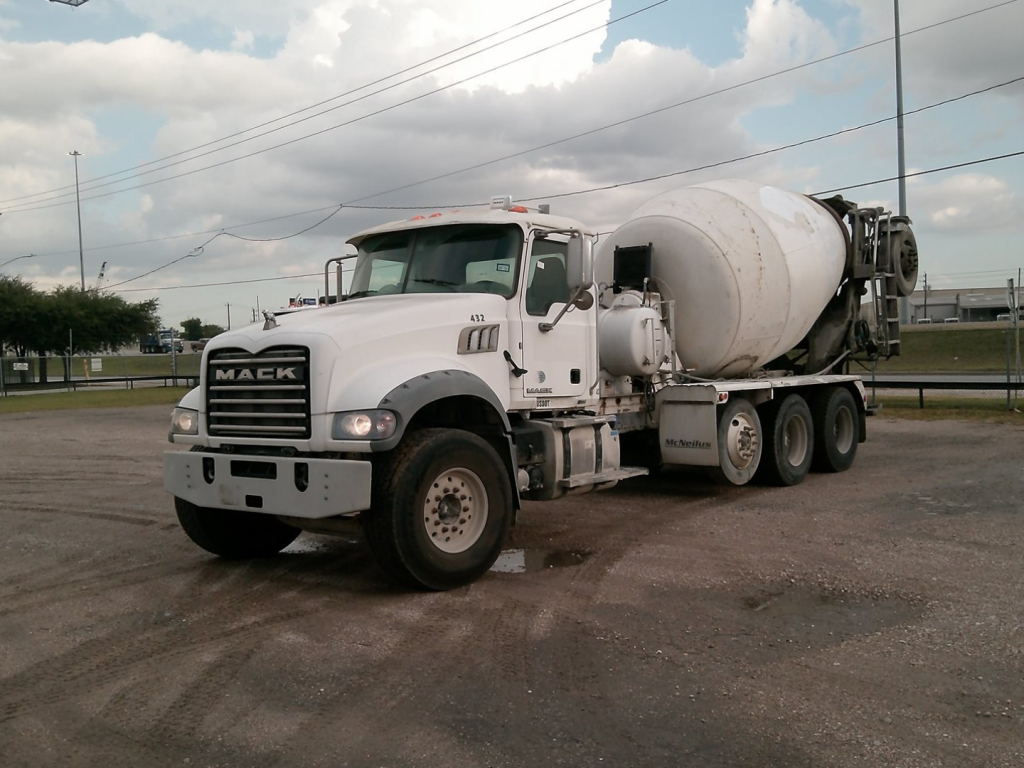
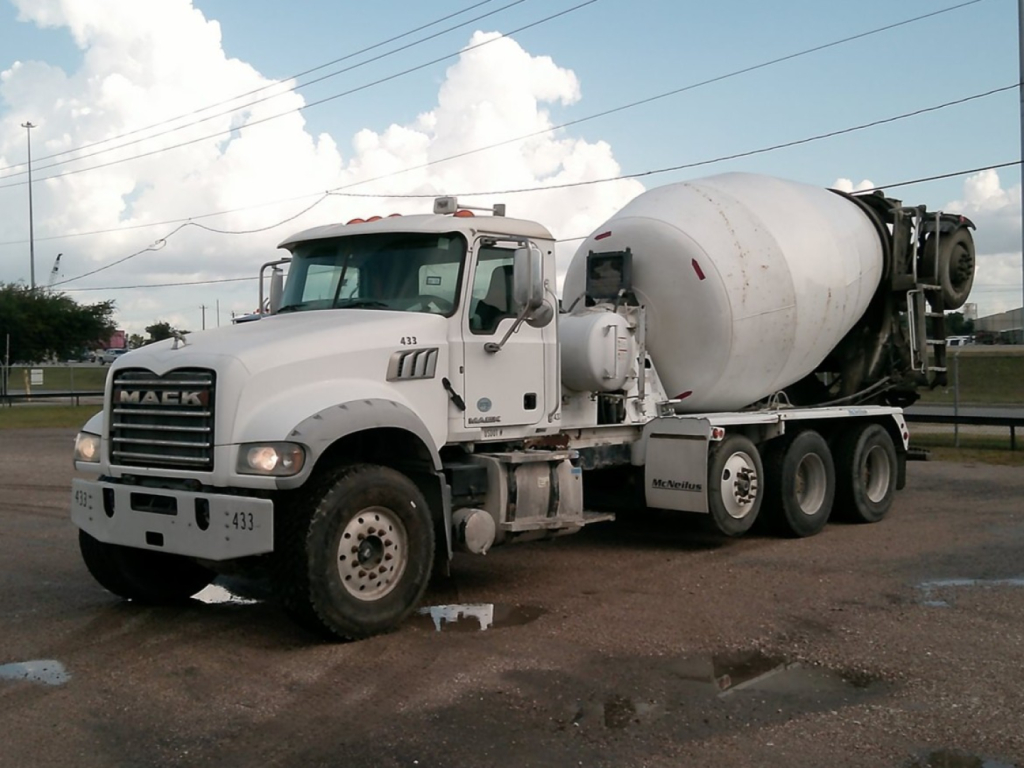
Body specs are just as important as the chassis. Many used Mack mixer trucks carry McNeilus, Beck, Oshkosh, or similar mixer bodies, with drum capacities often in the 10.5 to 11 yard range. Actual payload capacity depends on local weight law, axle ratings, and the installed mixer package, not just drum size. Look closely at water tanks, chute condition, ladder and platform corrosion, subframe integrity, barrel wear, roller condition, and signs of cracking around pedestals or rear structure. A mixer can have a sound engine and transmission but still need major barrel or hydraulic work, so buyers should verify drum operation, PTO engagement, charge and discharge response, and any leaks from the pump, motor, or hydraulic plumbing.
Used Mack mixer trucks also need a careful frame and suspension review because concrete service is hard on the whole truck. Double-frame configurations, walking beam suspensions, heavy steer components, and severe-duty steering gear are common advantages in this class. Check for frame rust, repaired crossmembers, front axle wear, lift axle operation, brake condition, and tire matching across all positions. Odometer miles only tell part of the story on a mixer truck. Engine hours, idle time, plant-to-job route length, and maintenance records often say more about remaining life than mileage alone. For buyers comparing listings, the best value usually comes from a truck with a strong maintenance history, legal axle spec for the intended territory, and a mixer body that is still structurally sound and fully operational.
Frequently Asked Questions about Used Mack Mixer Trucks
What should I look for first when buying a used Mack mixer truck?
Start with the axle configuration, front and rear axle ratings, and the mixer body condition. Those three items determine legal payload, usability in your market, and potential repair exposure. A Mack mixer truck may have a strong MP7 engine and still require expensive hydraulic, barrel, or structural work if the mixer body has been neglected. Buyers should also confirm transmission type, lift axle operation, frame condition, suspension wear, and PTO performance before putting too much weight on odometer reading alone.
Are Mack Granite mixer trucks good for concrete delivery work?
Yes. Mack Granite mixer trucks are widely used in ready-mix service because they are designed for severe-duty vocational work. They are known for stout front axle capacity, durable frame options, and drivetrain packages that fit stop-and-go concrete routes well. Common specs include MP7 engines, heavy vocational suspensions, and either Allison automatic or Mack mDrive transmissions. The exact fit depends on local bridge law, jobsite access, and the weight of the installed mixer body.
What is the difference between an Allison automatic and Mack mDrive in a mixer truck?
An Allison automatic uses a torque converter and is often preferred for repeated starts, tight maneuvering, and smooth low-speed control at plants and pours. That makes it a strong choice for urban and residential concrete delivery. Mack mDrive is an automated manual that can offer better fuel economy and solid vocational performance when properly spec'd and maintained. Buyers should test either transmission under load if possible, especially in reverse, low-speed crawling, and PTO-related operation.
How many yards does a used Mack mixer truck usually carry?
Many used Mack mixer trucks are equipped with 10.5-yard to 11-yard rear discharge mixer bodies. Drum size does not automatically equal legal payload because state weight laws, axle spacing, steer axle capacity, pusher or booster axle setup, and mixer body weight all affect what the truck can legally haul. Buyers should match the truck's axle spec to their delivery territory rather than choosing only by advertised drum capacity.
Do miles matter on a used mixer truck as much as they do on a highway truck?
Not always. Mixer trucks often accumulate lower road miles relative to the amount of heavy-duty work they perform. Frequent starts and stops, PTO use, extended idle time, short-haul routes, and jobsite maneuvering can create significant wear that does not show up in mileage alone. Engine hours, maintenance records, drum and hydraulic condition, suspension wear, and frame integrity are often better indicators of real value in this category.