
Western Star Lube Trucks For Sale
Shop Western Star lube trucks built for field service, preventive maintenance, and mobile lubrication with durable chassis and vocational specs.
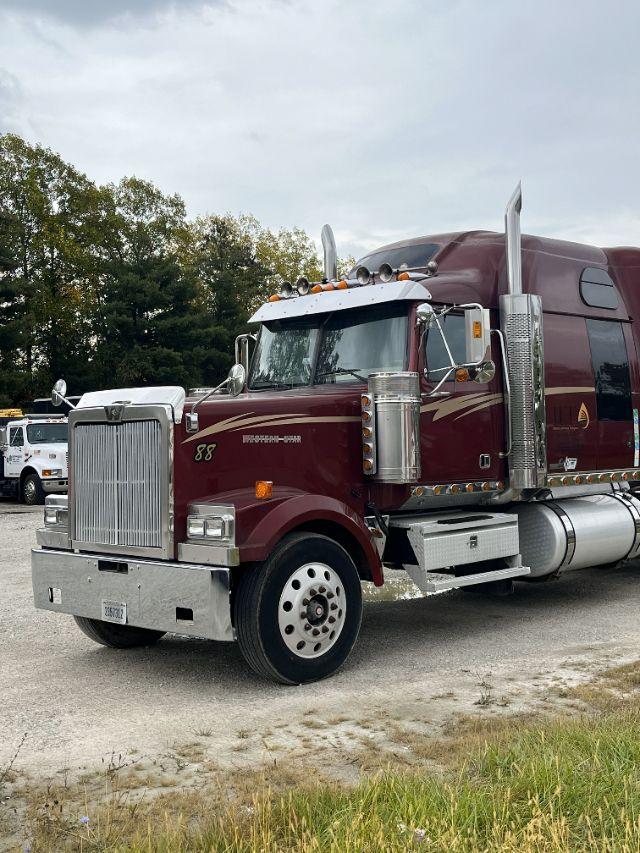
Selling a western star lube truck? List your western star lube truck for sale and reach thousands of commercial buyers.
Western Star Lube Trucks
The first buying decision is usually chassis and body balance. Common Western Star platforms for lube service include models from the 4900 and 4700 families, often spec'd with diesel engines from Detroit, Cummins, or Caterpillar depending on year and original build. Transmission choice can range from manual and automated manual to full automatic, with automatics often preferred for frequent jobsite movement and service-stop work. Pay close attention to wheelbase, front axle capacity, rear axle rating, and frame space because those dimensions affect tank sizing, reel placement, toolbox access, and overall weight distribution. On a used lube truck, pump type, PTO operation, tank condition, hose reel function, and meter accuracy are just as important as engine and transmission condition.
Buyers should also evaluate the service body itself, not just the truck underneath it. Lube trucks are commonly configured with multiple product tanks, used-fluid recovery, air compressors, grease systems, and enclosed storage for filters and service parts. Aluminum bodies can help control curb weight, while steel bodies may offer a lower upfront cost and strong durability in harsh environments. Check for internal tank contamination, leaking valves, worn plumbing, cracked reel mounts, and corrosion around compartments and subframe mounting points. If the truck will be used for MSHA, pipeline, municipal, or utility work, verify any required lighting, fire suppression provisions, backup alarms, and jobsite safety equipment. A clean service body with functional pumps and sound tanks can save far more money than a lower-priced truck that needs extensive hydraulic, plumbing, or tank repair.
Western Star lube trucks are typically chosen by operations that want a service truck with long-term vocational durability rather than a lighter on-road platform. They fit preventive maintenance programs for heavy equipment, quarry fleets, cranes, generators, paving spreads, agricultural machines, and mixed contractor fleets that need field fueling and lubrication support from one unit. The right spec depends on where the truck works, how much product it carries, and how often it leaves pavement. A buyer comparing listings should look at engine hours and idle history, PTO engagement quality, tank and pump layout, gross vehicle weight rating, and the practical serviceability of the entire package. In this category, uptime comes from how well the chassis and the lube system were matched from the start.
Frequently Asked Questions about Western Star Lube Trucks
What should I inspect first on a used Western Star lube truck?
Start with the service system before focusing only on the powertrain. Check the condition of fresh oil and waste oil tanks, pumps, PTO engagement, hose reels, metering equipment, valves, plumbing, and compartment structure. Then confirm the chassis can support the body correctly by reviewing GVWR, axle ratings, wheelbase, frame condition, and any signs of overload or poor weight distribution. A strong engine does not offset a worn-out lube body with leaking tanks or nonfunctional reels.
Are Western Star lube trucks good for off-road and severe-duty service?
Yes. Western Star is a strong fit for lube truck applications that involve construction sites, quarries, energy jobs, and rough access roads. Many vocational Western Star chassis are built with heavy frame rails, durable suspensions, and service-friendly layouts that hold up well in severe-duty cycles. The exact capability still depends on axle spec, tire package, suspension, wheelbase, and how the lube body was mounted and loaded.
What engine and transmission specs are common on Western Star lube trucks?
Common engines vary by model year and original application, but Detroit, Cummins, and Caterpillar power are frequently seen in vocational Western Star trucks. Transmissions may be manual, automated manual, or automatic. For a lube truck, the best choice usually depends on duty cycle. Frequent stop-and-go jobsite work often favors an automatic, while some fleets still prefer manual or automated manual setups for familiarity, control, and lower complexity.
How important is tank layout on a lube truck?
Tank layout is one of the most important parts of the buying decision because it affects payload, service speed, contamination control, and safety. A good layout gives clear separation between products, easy hose access, practical reel placement, and safe recovery of used fluids. It should also allow technicians to reach filters, meters, pumps, and valves without climbing awkwardly or working around obstruction points. Poor layout can slow every service call and make maintenance on the truck itself more difficult.
Can a Western Star lube truck handle both lubrication and light field service work?
Many can, provided the body was spec'd for that role. Some lube trucks include compressed air, grease delivery, filter storage, work lighting, and tool compartments that support routine field maintenance beyond fluid service alone. The key is confirming the body configuration, remaining payload, and power take-off capacity match the work expected. A unit designed only for fluid delivery may not offer the storage, compressor output, or service access needed for broader field support.