
New Kenworth Trucks For Sale
Browse new Kenworth trucks including T880, T380, and W990 models with spec options for vocational, regional, heavy haul, and sleeper use.
Learn moreBrowse Kenworth Trucks by Category
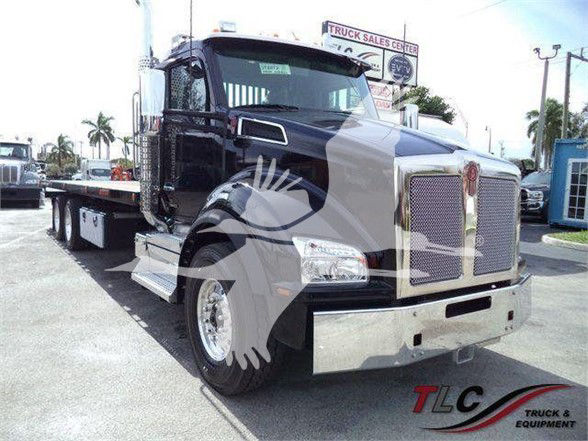
Showing 85 to 85 of 85 results
Have new kenworth truck to sell? List it here to reach thousands of buyers.
About New Kenworth Trucks
For vocational buyers, the T880 is one of the most common starting points because it can be spec'd as a day cab, tractor, or chassis for specialized body installation. Heavy-haul and lowboy setups often use Cummins X15 power, tandem or tri-axle configurations, shorter or purpose-built wheelbases, and suspensions like AG 460 to handle higher loads and tougher jobsite conditions. A 565 hp X15 with ratios such as 3.91 or 4.30 points to a truck built for pulling power, gradeability, and startability rather than maximizing highway fuel economy. Buyers comparing new Kenworth T880 trucks should look closely at front axle capacity, pusher or tag axle integration, frame reinforcement, PTO readiness, and the exact suspension package, because those details determine how well the truck fits a dump, lowboy, mixer, or heavy equipment hauling role.
On the medium-duty side, the Kenworth T380 is a common choice for operators needing a cab and chassis for box truck, rollback, utility, stake bed, or service body work. Specs like a PACCAR PX-7, single axle, 6-speed transmission, and numerically high rear ratio are typical for stop-and-go routes and body-builder flexibility. Wheelbase is especially important on a new T380 because it drives body length, bridge law compliance, and turning radius. Buyers should also verify cab-to-axle dimension, frame height, PTO provisions, fuel tank placement, and suspension compatibility before body installation, since those details affect upfit cost and lead time.
For over-the-road buyers, the Kenworth W990 remains a flagship conventional that combines long-hood styling with heavy-duty highway specs. A tandem axle 6x4 with a 52-inch flat top sleeper, Cummins X15, 18-speed transmission, and 3.70 ratio fits fleets and owner-operators looking for strong pull, highway durability, and a premium cab environment. On any new Kenworth sleeper or day cab, it is worth comparing hood length, wheelbase, sleeper size, fuel capacity, suspension type, tire size, and driveline spec against the freight you plan to haul. New Kenworth trucks are often chosen for their broad factory spec range, vocational adaptability, and resale strength, but the best value comes from matching the truck's exact build to the job instead of buying by model name alone.
Frequently Asked Questions
What are the most common applications for new Kenworth trucks?
New Kenworth trucks are commonly used for heavy haul, dump, lowboy, regional freight, long-haul sleeper service, and medium-duty body applications such as rollback, utility, and box truck work. The T880 is widely used in vocational and severe-duty service, the T380 fits medium-duty chassis applications, and the W990 is aimed at premium highway and sleeper operation. The right application depends more on the truck's complete spec than the badge on the hood.
What should I look at first when comparing new Kenworth T880 trucks?
Start with the intended job, then compare axle configuration, engine rating, wheelbase, rear axle ratio, suspension, and frame spec. A T880 set up for lowboy or heavy-haul duty may have a high-horsepower Cummins X15, heavy suspension, and a ratio like 4.30 for pulling power, while a lighter vocational tractor may use a different ratio and wheelbase to balance maneuverability and road speed. Front axle capacity, PTO options, and body or trailer compatibility are also critical.
Is the Kenworth T380 a good platform for a body builder or upfit?
Yes. The Kenworth T380 is commonly ordered as a cab and chassis for bodies such as box trucks, service trucks, flatbeds, rollbacks, and utility equipment. Buyers should confirm cab-to-axle measurement, wheelbase, frame dimensions, PTO capability, fuel tank placement, and suspension details before upfitting. Those factory choices affect what body can be installed, how the finished truck balances, and how quickly the upfit can be completed.
How do rear axle ratio and horsepower affect a new Kenworth truck?
Horsepower and rear axle ratio directly affect startability, gradeability, cruise rpm, and fuel usage. Higher horsepower and numerically higher ratios, such as 4.30 or 5.57, generally support heavier loads, stop-and-go work, or vocational service where pulling power matters. Lower numerical ratios, such as 3.70, are more common in highway applications where road speed and engine rpm at cruise are bigger priorities. The correct combination depends on load weight, terrain, transmission, and duty cycle.
What is the difference between a Kenworth day cab and sleeper truck?
A day cab is built for local, regional, vocational, or return-to-home operations and typically offers lower weight and tighter packaging. A sleeper truck adds a sleeper compartment for over-the-road use, which increases wheelbase and supports team or long-haul operation. On a new Kenworth, that difference affects not only driver accommodations but also fuel capacity, frame layout, turning radius, and how the truck fits the lanes and freight it will run.