
Kenworth Hooklift Trucks For Sale
Shop Kenworth hooklift trucks built for waste, scrap, construction, and municipal work with durable chassis options and versatile body setups.
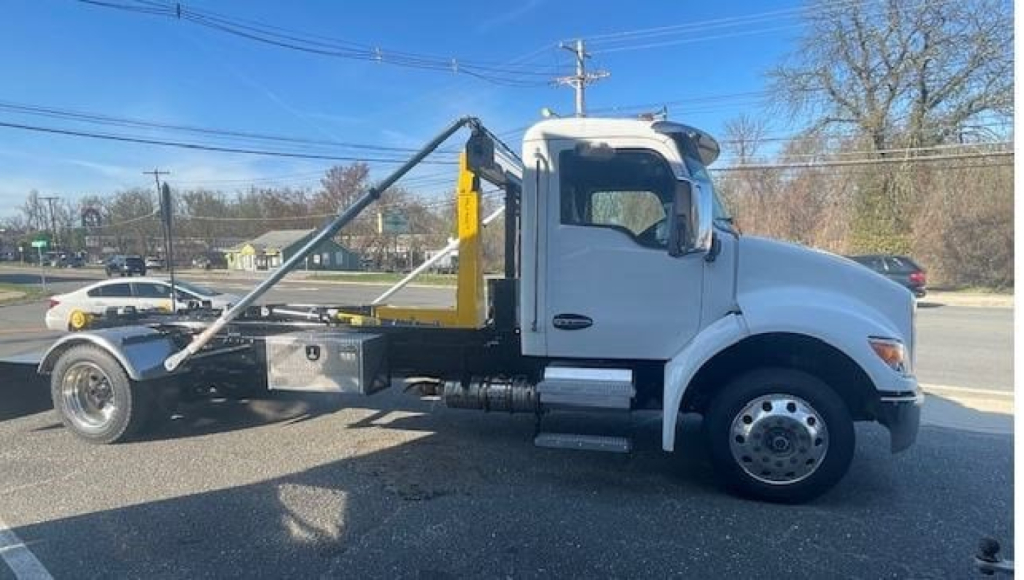
Selling a kenworth hooklift truck? List your kenworth hooklift truck for sale and reach thousands of commercial buyers.
Kenworth Hooklift Trucks
For most buyers, the chassis specs matter as much as the hooklift itself. Kenworth medium-duty models such as the T280 are common starting points for hooklift applications, especially in non-CDL or CDL-light operations around a 26,000-lb GVWR. Depending on the body rating and intended container length, buyers should pay close attention to axle ratings, wheelbase, frame strength, cab-to-axle measurement, suspension, PTO compatibility, and transmission programming. Diesel powertrains are typical, often paired with automatic transmissions for stop-and-go routes and easier driver onboarding. Visibility, turning radius, and cab ergonomics are also important in urban service work, transfer stations, alleys, and tight jobsite access.
Hooklift capacity is not one-size-fits-all. The key decision is matching the hoist rating and jib setup to the containers or swap bodies you plan to run. Common considerations include hook height, body length range, loaded lifting capacity, dump angle, hydraulic cycle times, and how the system handles tarping or container securement. Some fleets use hooklift trucks strictly for dumpsters and debris boxes, while others rotate flatbeds, landscape bodies, salt spreaders, storage containers, or specialty equipment bodies. That versatility is the main advantage of a hooklift truck, but it only pays off if the truck, hoist, and body inventory are sized correctly for each other.
When comparing Kenworth hooklift trucks for sale, look closely at the complete upfit, not just the truck badge or model year. A well-matched unit should have the right frame reinforcement, rear suspension stability, hydraulic package, and body control layout for repeated loading cycles. Buyers also tend to evaluate cab configuration, brake type, rear axle ratio, legal payload after body weight, and service access for both the chassis and the hoist components. Kenworth hooklift trucks are often chosen by fleets that want a more refined driver environment without giving up vocational durability, especially in applications where uptime, maneuverability, and multi-body capability drive the return on investment.
Frequently Asked Questions about Kenworth Hooklift Trucks
What is a Kenworth hooklift truck used for?
A Kenworth hooklift truck is used to pick up, transport, dump, and exchange containers or interchangeable bodies on a single chassis. Common applications include waste hauling, scrap service, demolition cleanup, construction debris, municipal sanitation, landscaping, and equipment transport. The main advantage is flexibility, since one truck can handle multiple body types instead of being limited to a single permanently mounted body.
What should I check first when buying a Kenworth hooklift truck?
Start with the match between the chassis and the hooklift system. Buyers should confirm GVWR, front and rear axle ratings, wheelbase, frame specification, PTO setup, and suspension capacity before looking at body options. After that, verify the hooklift hoist rating, hook height, compatible container lengths, and the actual payload available once the truck and upfit are fully equipped. A truck that looks right on paper can still be undersized if the body weight and intended container loads are not calculated together.
Are Kenworth hooklift trucks good for non-CDL applications?
They can be, especially when built on a medium-duty chassis with a 26,000-lb GVWR. That configuration is popular with contractors, municipalities, and service companies that want the utility of a hooklift without moving into a higher licensing class. The tradeoff is payload and body size, so buyers need to make sure the non-CDL rating still supports the weight of the hooklift, the container, and the material being hauled.
How is a hooklift truck different from a roll-off truck?
A hooklift truck uses a hydraulic arm with a hook to load and unload containers or bodies that are designed for that system. A traditional cable roll-off truck uses a cable and hoist arrangement and is usually associated with larger containers and heavier waste applications. Hooklift trucks are generally favored for versatility, faster body swaps, and the ability to run specialty bodies such as flatbeds or equipment platforms in addition to dumpsters.
What container and body options can a Kenworth hooklift truck handle?
That depends on the hoist rating, hook height, wheelbase, and body-length range of the installed system. Many hooklift trucks handle debris boxes, dumpsters, flatbeds, storage containers, chip bodies, landscape bodies, and other removable vocational bodies. Buyers should confirm exact compatibility, because even small differences in body rail design, hook height, or overall length can affect loading performance and safe operation.