
Freightliner Heavy Haul Trucks For Sale
Browse Freightliner heavy haul trucks built for high-GCW work, with specs, axle setups, drivetrain considerations, and hauling applications.
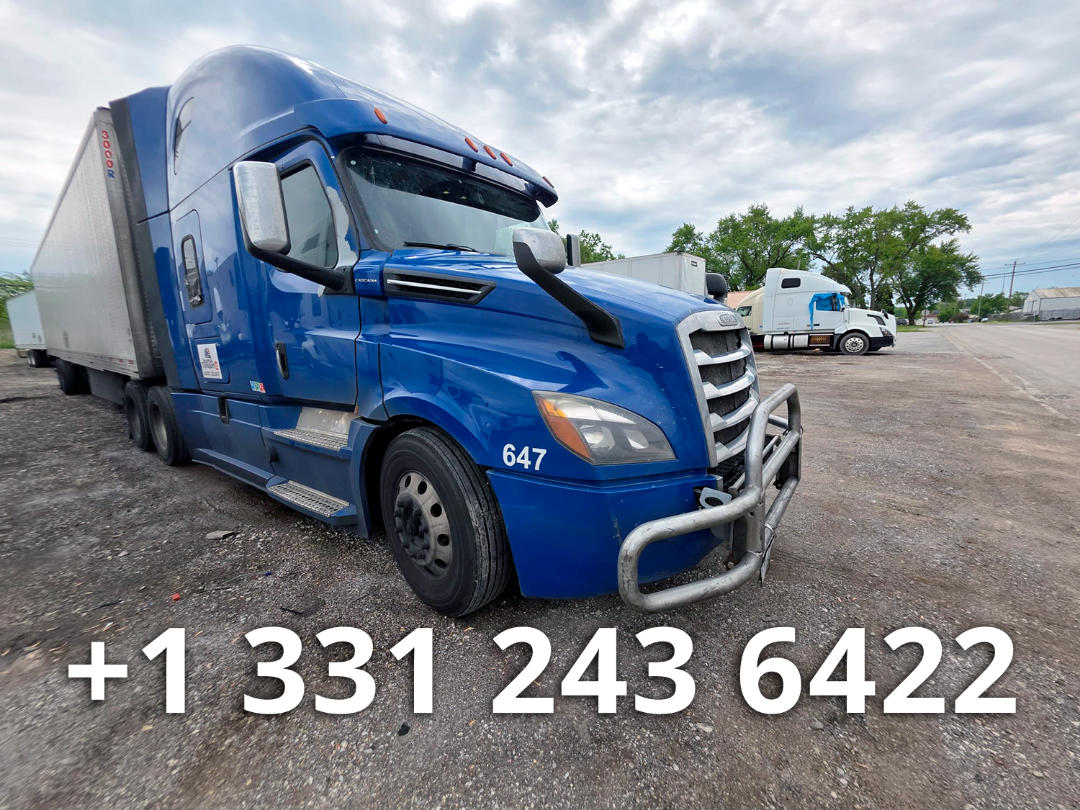
Selling a freightliner heavy haul truck? List your freightliner heavy haul truck for sale and reach thousands of commercial buyers.
Freightliner Heavy Haul Trucks
Freightliner heavy haul units can be found in vocational and highway-based platforms, including severe-duty configurations as well as road tractors adapted for specialized transport. Buyers often compare Detroit-powered trucks, especially DD-series engines, by horsepower and torque ratings, then match that to transmission type and rear axle ratio. Automated manual transmissions are common in later-model Freightliners, but many heavy haul buyers still prefer manual gearboxes for precise control during low-speed maneuvering, grade work, and trailer hookup. Cooling capacity, PTO provisions, full locking differentials, and driveline ratings matter more here than they do in a standard fleet tractor because the truck may spend long periods pulling at low speeds under extreme load.
Cab choice also affects the truck's usefulness. Day cabs are common for local and regional heavy haul work, while mid-roof or sleeper configurations may make sense for longer permitting routes. A buyer should also evaluate brake spec, steering axle rating, fifth wheel capacity, and wet kit compatibility if the truck will handle specialized hydraulic trailers. Heavy haul service creates wear patterns that do not always show up in mileage alone, so maintenance history, clutch or transmission condition, suspension bushings, frame inspection results, and evidence of driveline or differential service are often more important than the odometer. On used Freightliner heavy haul trucks, it is also smart to verify emissions system service records, especially on trucks working in low-speed, high-load duty cycles.
The best Freightliner heavy haul truck is the one correctly matched to the load profile, trailer type, and operating territory. A truck pulling construction equipment locally has different needs than one moving transformers, bridge beams, or permitted superloads across multiple states. Look closely at GCWR, axle ratings, frame rail spec, and the exact drivetrain combination instead of relying on model name alone. When the spec is right, a Freightliner heavy haul truck can deliver strong parts support, familiar serviceability, and the durability needed for demanding specialized transport.
Frequently Asked Questions about Freightliner Heavy Haul Trucks
What makes a Freightliner truck a true heavy haul spec?
A true heavy haul Freightliner is defined more by its component ratings than by its badge. Key indicators include heavy-duty front and rear axle ratings, double-frame or reinforced frame rails, deep reduction or vocational rear axle gearing, severe-duty suspension, higher GCWR, and a drivetrain designed for low-speed pulling power. Many heavy haul trucks also include full lockers, PTO capability, stronger cooling systems, and a fifth wheel setup matched to specialized trailers.
Is a Freightliner Cascadia suitable for heavy haul work?
A Freightliner Cascadia can be suitable for certain heavy haul applications, but the answer depends entirely on how it was ordered. Some Cascadias are standard highway tractors, while others are spec'd with heavier axles, stronger frames, and drivetrain components that support higher combined weights. Buyers should verify axle ratings, transmission model, rear ratio, suspension, wheelbase, and GCWR before assuming a Cascadia is equipped for true heavy haul duty.
What drivetrain specs matter most on a used Freightliner heavy haul truck?
The most important drivetrain items are engine torque rating, transmission type and model, rear axle ratio, differential type, and overall driveline capacity. Heavy haul work rewards a setup that can start heavy loads smoothly, control speed on grades, and tolerate repeated high-load operation. Buyers should also review clutch life on manual trucks, shift performance on automated manuals, evidence of driveline vibration, and service records for differentials, power dividers, and wheel seals.
Are automatic transmissions good for heavy haul Freightliner trucks?
Automatic and automated manual transmissions can work well in heavy haul service if they are rated for the intended load and calibrated for vocational use. They can reduce driver fatigue and provide consistent shifting, especially in mixed-route operation. That said, many operators still prefer manual transmissions for precise low-speed control, especially when backing specialized trailers, working on uneven ground, or handling extreme loads where gear selection feel matters.
What should I inspect before buying a used Freightliner heavy haul truck?
Start with the frame, axle tags, suspension, and fifth wheel because those components reveal whether the truck truly matches the advertised duty class. Then inspect driveline condition, transmission operation, differential service history, brake components, steering wear, and tire condition across all axles. On later-model Freightliners, emissions system history is also important, particularly if the truck spent its life in slow, high-load operation that can stress aftertreatment components.