
Grapple Trucks For Sale in Texas

Have grapple truck to sell? List it here to reach thousands of buyers.
Grapple Trucks in Texas
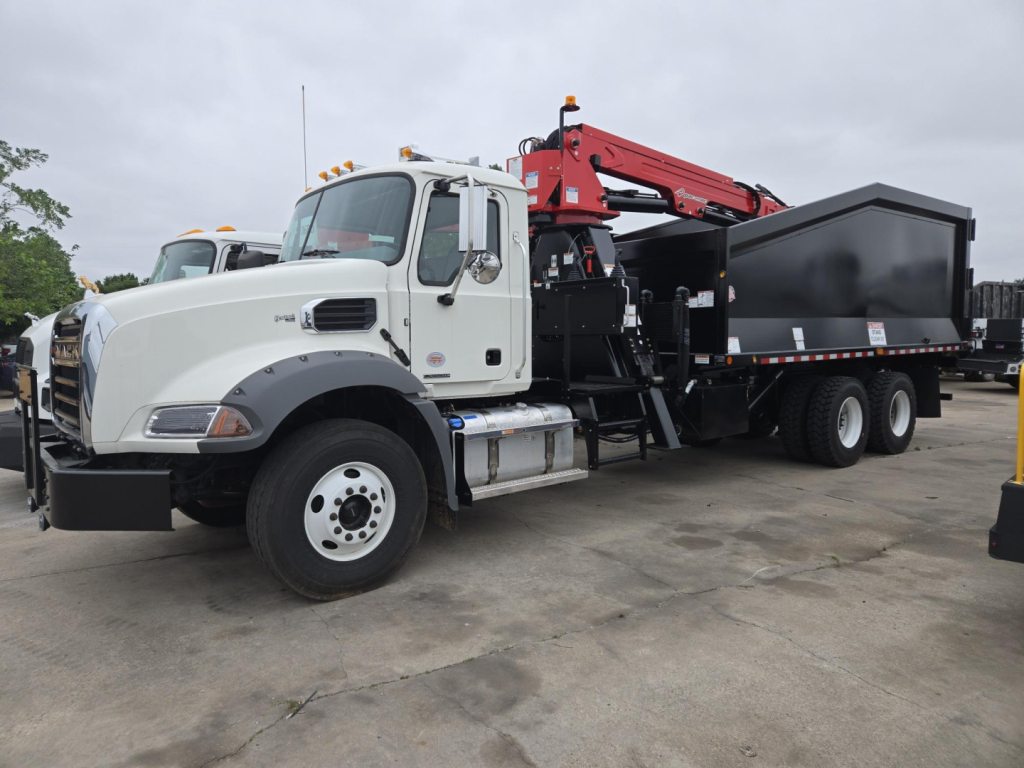
Body style and crane layout matter more than many first-time buyers expect. Rear-mount grapples are common for curbside collection and municipal routes because they give good visibility into the body and efficient loading from the back or side. Behind-cab and roll-off style configurations can make sense when reach, balance, or body interchangeability is a priority. Typical bodies are built from steel with high side walls, barn doors or tailgates, and reinforced floors to handle repeated impact from heavy material. Common body capacities often fall in the 20 to 30 cubic yard range, but the right size depends on payload density and legal axle limits, especially on routes that mix light brush with heavier logs or broken concrete.
Boom specifications deserve close attention. Key buying points include hydraulic reach, lift capacity at full extension, rotation, stabilizer design, and cycle speed. A truck that spends its day picking up storm debris needs different crane behavior than one loading dense wood waste or commercial refuse. PTO setup, hydraulic pump output, and oil cooling capacity all affect real-world performance in hot Texas conditions where trucks may idle and run hydraulics for long periods. Chassis selection is just as important. Most grapple trucks are spec'd on Class 8 platforms with tandem rear axles, heavy-duty suspensions, and diesel engines matched to stop-and-go vocational service. Front axle capacity, wheelbase, frame reinforcement, and bridge law compliance all matter when the body is full and the boom is working off-center.
A good grapple truck spec balances legal payload, operator efficiency, and durability. Buyers should inspect body floor thickness, subframe construction, outrigger condition, hydraulic hose routing, turntable wear, and signs of cracking around boom mounts. In Texas fleets, air ride versus spring suspension, automatic versus manual transmissions, and single-operator route efficiency can all affect operating cost over time. Also known as a knuckle boom debris truck or brush grapple truck in some municipal and tree service applications, this equipment category is valued for reducing labor, improving route productivity, and keeping loading operations self-contained.
Frequently Asked Questions about Grapple Trucks in Texas
What is a grapple truck used for?
A grapple truck is used to pick up, load, and haul bulky material such as brush, tree limbs, storm debris, scrap, demolition waste, and municipal refuse. Its hydraulic boom and grapple let one operator load material directly into the truck body without a separate excavator or loader. That makes it especially effective for roadside cleanup, tree service work, and municipal collection routes.
What should I look for when buying a grapple truck in Texas?
Start with the material type, route length, and legal payload requirements. Buyers should compare boom reach, grapple size, body capacity, axle ratings, PTO and hydraulic performance, and chassis durability. In Texas, heat, long idle times, and mixed urban-rural routes make hydraulic cooling, suspension choice, and brake condition especially important. The best spec is the one that matches material density and route conditions without overloading the truck.
How many cubic yards does a grapple truck body usually hold?
Many grapple truck bodies fall in the 20 to 30 cubic yard range, though actual capacity varies by body design and application. Brush and storm debris often call for larger volume bodies because the material is light but bulky. Heavier material such as logs, mixed waste, or demolition debris can fill axle capacity before body volume is reached, so cubic yards should always be considered alongside GVWR and axle ratings.
Are rear-mount and behind-cab grapple trucks different in operation?
Yes. Rear-mount grapple trucks are often preferred for municipal and curbside loading because they provide efficient access to material behind or beside the truck and allow the operator to load directly into the body. Behind-cab setups can offer a different balance of reach, chassis layout, and body configuration. The better choice depends on route style, loading position, visibility needs, and how the truck will be staged on the jobsite.
Is a grapple truck the same as a knuckle boom truck?
Not exactly. A grapple truck usually refers to a vocational truck with a debris body and a hydraulic boom fitted with a rotating grapple for loading loose or bulky material. A knuckle boom truck refers more broadly to the crane type itself. In practice, some buyers and fleets use the terms interchangeably, especially in brush, tree service, and municipal applications, but the body style and intended hauling function are what define a true grapple truck.