
New Grapple Trucks For Sale in Texas
New grapple trucks for sale in Texas. Compare boom reach, body capacity, axle ratings, hydraulics, and chassis specs for debris hauling.
Learn more
Have new grapple truck to sell? List it here to reach thousands of buyers.
About New Grapple Trucks in Texas
Key chassis decisions come down to axle ratings, suspension, transmission, and wheelbase. A typical spec in this category uses a severe-duty Class 8 platform with a front axle in the 18,000 to 20,000 pound range and tandems rated around 40,000 to 46,000 pounds, depending on body and crane weight. Automatic and automated manual transmissions are common because they reduce driver fatigue on stop-and-go routes. Suspension choice matters too. A vocational suspension can improve stability under changing load conditions, especially when the crane is working off uneven ground or when the body is partially loaded. Texas buyers should also pay attention to bridge compliance, turning radius in urban service, and cooling performance for long idle times in high heat.
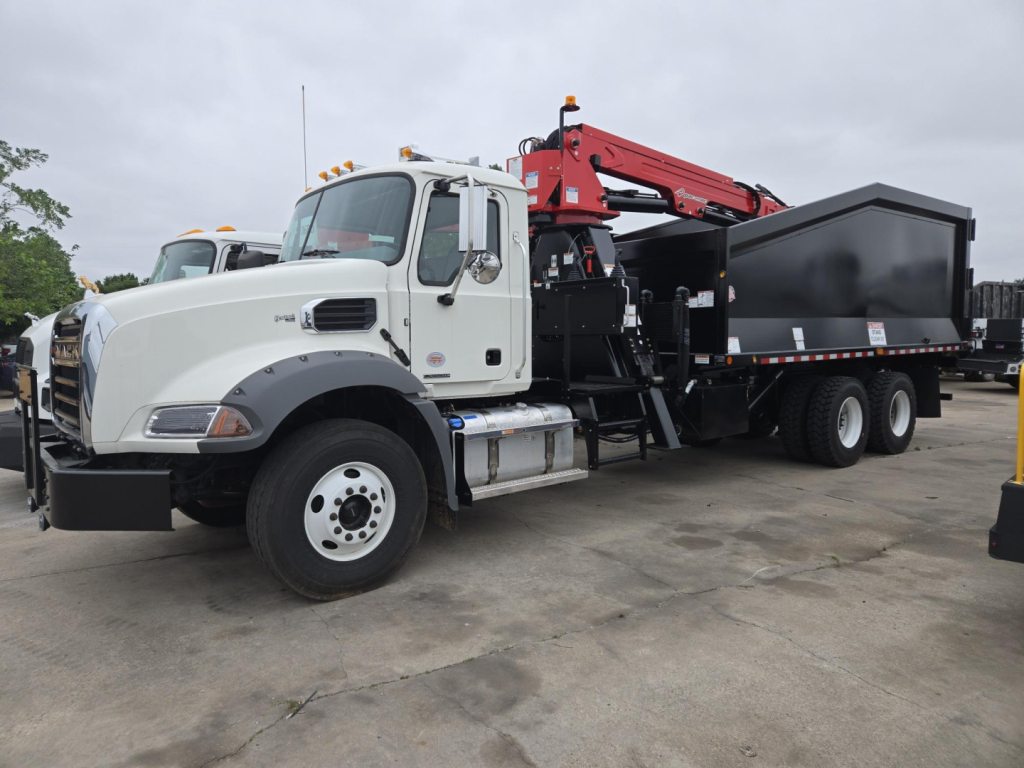
On the equipment side, many new grapple trucks are set up with a high-sided debris body, rear barn doors or a tailgate, and a body-tilt design for cleanout at the dump site. Boom lengths around 20 feet are common, and many units offer roughly 270-degree rotation for curbside pickup and efficient loading. Pilot-operated hydraulic joysticks are popular because they give the operator smoother control and better precision around fences, parked vehicles, and overhead obstructions. Hydraulic system design deserves a close look. Pump capacity, reservoir size, hose routing, and valve accessibility all affect uptime and serviceability. LED work lighting, backup camera systems, tarp options, and outrigger configuration can also make a real difference in daily operation and safety.
A new grapple truck appeals to buyers who want current emissions equipment, warranty coverage, and a fresh hydraulic system with no unknown wear history. It also gives fleets the chance to standardize controls, parts, and training across multiple trucks. When comparing listings, look past the model name and focus on payload balance, crane manufacturer, body construction, frame reinforcement, PTO setup, and how the truck is intended to load and dump in real service. The best spec is the one that matches the material stream and route profile. A tree and brush truck, a municipal bulk pickup truck, and a storm debris unit may all be called grapple trucks, but the right configuration can be very different from one application to the next.
Frequently Asked Questions
What is a grapple truck used for?
A grapple truck is used to load, haul, and dump bulky debris with a hydraulic boom and grapple rather than manual labor. Common applications include tree limbs, storm debris, municipal brush pickup, construction debris, pallets, logs, and other oversized waste. The combination of a loader and debris body lets one operator handle material quickly in areas where a roll-off or rear loader is less efficient.
What specs matter most when buying a new grapple truck?
The most important specs are boom reach, lift capacity, rotation, body size, axle ratings, wheelbase, and hydraulic performance. Buyers should also review crane placement, outrigger design, PTO and pump setup, suspension, and tailgate or rear door configuration. These details determine how well the truck handles the intended material, how stable it is during loading, and how much usable payload remains after the crane and body are installed.
Why are heavy axle ratings important on a grapple truck?
Heavy axle ratings are important because the crane, body, subframe, and debris load add substantial weight before the truck ever leaves the yard. A grapple truck often carries uneven and shifting loads, especially during brush and storm cleanup work. Adequate front and rear axle capacity helps with legal payload, steering control, brake performance, and long-term durability of the chassis and suspension.
Are grapple trucks a good fit for Texas operations?
Grapple trucks are widely used in Texas because they perform well in municipal cleanup, utility work, tree service, and post-storm debris collection. Texas buyers often prioritize cooling capacity, durable vocational suspensions, and components that hold up under long idle periods and high ambient temperatures. Route density, dump-site distance, and local bridge and axle laws should also be considered when choosing a body length and overall chassis spec.
What is the advantage of buying a new grapple truck instead of a used one?
A new grapple truck offers warranty coverage, current emissions compliance, and known service history from day one. It also allows the buyer to choose the exact crane, body, axle, and control configuration needed for the work. For fleets, a new unit can reduce downtime tied to hydraulic wear, electrical issues, and unknown structural repairs while improving consistency in driver training and maintenance planning.