
New 2025 Grapple Trucks For Sale
Shop new 2025 grapple trucks with loader, debris body, and hydraulic controls for brush, storm cleanup, waste, and municipal hauling.
Learn more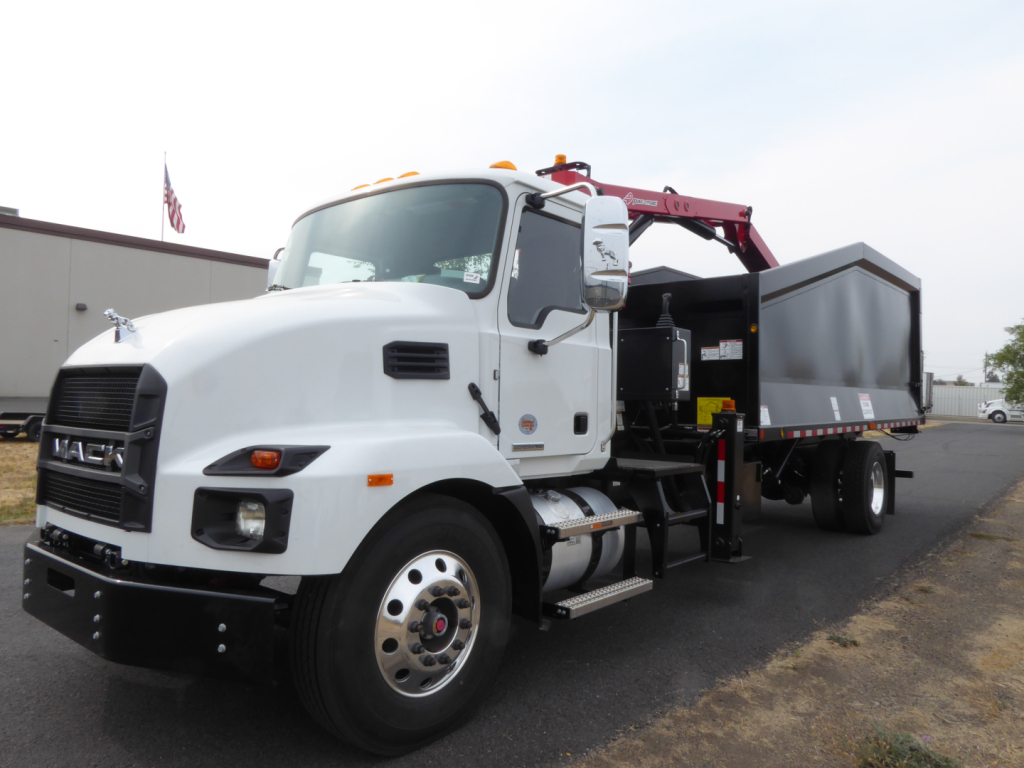

Have new 2025 grapple truck to sell? List it here to reach thousands of buyers.
About New 2025 Grapple Trucks
The most important spec decisions are chassis class, axle ratings, body size, and loader configuration. Common 2025 builds in this category range from medium-duty platforms around 33,000 GVWR up to heavier tandem and tri-axle trucks with 18,000 lb front axles and 40,000 lb to 46,000 lb rear ratings. Engines in this class are often matched to automatic or automated manual transmissions, with Allison automatics and vocational mDRIVE-style transmissions both common depending on duty cycle and driver preference. Loader packages frequently include 18 ft to 20 ft booms, 270-degree rotation, pilot-operated hydraulic joystick controls, clam-shell or waste grapples, H-style outriggers, and body tilt for complete cleanout. Hardox or similar abrasion-resistant debris bodies are popular because they hold up better under repetitive loading and shifting waste streams.
Body design matters as much as crane spec. A grapple truck used for brush and storm debris often carries a 20 to 25 cubic yard body on a medium-duty chassis, while larger rear-mount grapple trucks can move into much higher volume bodies for lighter materials. Rear access can be configured with single or double barn doors, and door style affects unload speed, site clearance, and cleanup at the dump location. Wheelbase, axle spacing, and loader placement all affect turning radius, bridge law compliance, and how well the truck balances payload against front axle loading. Buyers should also look closely at hydraulic reservoir capacity, PTO setup, lighting, camera systems, tarp systems, differential locks, suspension type, and brake choice because those details have a direct impact on uptime and operator efficiency.
For buyers comparing new 2025 grapple trucks for sale, the best value usually comes from matching the truck to the material stream and route density, not simply choosing the biggest boom or body. Tight urban tree work may favor a more compact chassis with strong visibility and quick outriggers, while county storm response and land clearing often justify tandem-axle capacity and heavier loader packages. A well-spec'd new unit should be easy to clean out, stable during loading, legal at working weight, and durable enough for repeated off-road entries, transfer station traffic, and seasonal storm demand.
Frequently Asked Questions
What is a grapple truck used for?
A grapple truck is used to load, haul, and dump bulky loose material without a separate loader. Common applications include tree debris, storm cleanup, brush, logs, construction and demolition debris, municipal waste, and right-of-way maintenance. The hydraulic boom and grapple let one operator pick up irregular material quickly, which reduces labor and improves jobsite productivity.
What should I look for when buying a new 2025 grapple truck?
Start with the material you handle most often, then match body size, loader reach, and axle capacity to that work. Brush and storm debris usually call for higher cubic yard bodies and fast hydraulic cycle times, while heavier waste streams may require stronger body construction, higher rear axle ratings, and careful payload planning. It is also important to review boom length, grapple type, outrigger design, wheelbase, transmission choice, and cleanout features because these specs directly affect stability, maneuverability, and daily uptime.
How long is the boom on a typical grapple truck?
Many grapple trucks in this class are equipped with booms in the 18 ft to 20 ft range, often with about 270 degrees of rotation. Exact reach depends on the loader make, mounting position, and grapple attachment. Longer reach can improve loading flexibility, but it also needs to be balanced against chassis stability, outrigger performance, and the type of work area the truck will operate in.
What body material is best for a grapple truck?
Hardox and other abrasion-resistant steel bodies are widely preferred for grapple truck applications because they resist wear from repeated loading, shifting debris, and dump cycles. They are especially useful in mixed waste, storm debris, and municipal applications where the body sees constant impact and abrasion. Buyers should also consider body floor thickness, sidewall design, rear door configuration, and whether the body tilts for full cleanout.
Is a medium-duty or tandem-axle grapple truck the better choice?
A medium-duty grapple truck is often the right fit for urban tree service, lighter municipal work, and jobs where maneuverability matters more than maximum payload. A tandem-axle truck is usually better for larger debris volumes, more demanding waste applications, and routes that require higher legal carrying capacity. The better choice depends on payload density, dump frequency, road restrictions, and how much off-road or storm-response work the truck is expected to handle.