
Used 2018 Garbage Trucks For Sale
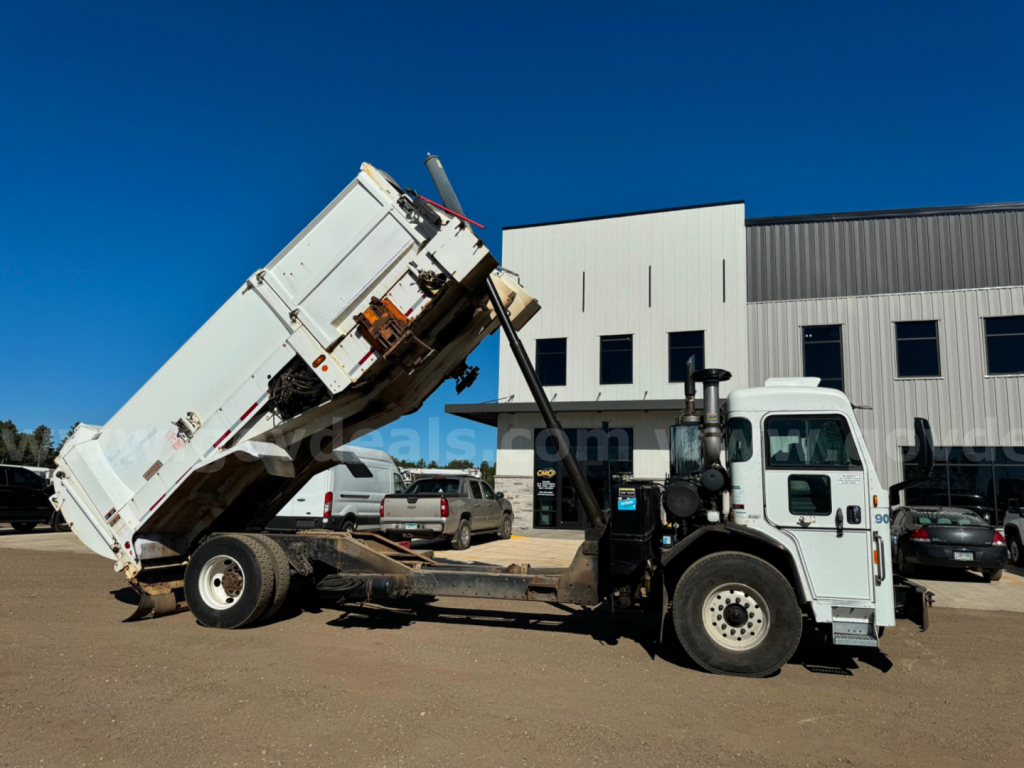

Have used 2018 garbage truck to sell? List it here to reach thousands of buyers.
Used 2018 Garbage Trucks
The most important buying decision is matching the truck to the route, not just the price. Front loaders are often rated in the 32 to 40 yard range and usually ride on heavier front axle capacities to support fork operation and loaded carry weight. Automated side loaders commonly fall in the 24 to 32 yard range and depend heavily on arm condition, packer cycle performance, and hydraulic responsiveness. Rear loaders vary widely, but buyers should pay close attention to hopper size, packer design, and whether the body was used in residential curbside service or commercial stop-and-dump work. On a 2018 model, look closely at body hours, total engine idle time, PTO operation, tailgate seals, cylinder leakage, and floor, sidewall, and hopper wear. In garbage applications, body condition often matters as much as the chassis.
Powertrain and axle specs on 2018 garbage trucks usually center on diesel or CNG configurations, automatic Allison transmissions, and tandem axle setups in higher-GVWR applications. Cummins L9, ISL, and ISL-G engines are common in this year range, especially in municipal and private refuse fleets. CNG units can offer lower fuel cost in the right market, but tank certification dates, fuel system maintenance history, and local service support need to be verified before purchase. Diesel models may be simpler for some second owners, but they still require careful review of DPF, SCR, DEF, and regeneration history because refuse duty cycles are heavy on starts, stops, and idle time. Buyers should also confirm axle ratings, wheelbase, bridge compliance, turning radius, and suspension setup, especially if the truck will operate in alleys, dense residential streets, or transfer station environments.
A used 2018 garbage truck should be evaluated like a complete route machine, not just a cab and engine. Inspect the packer, forks, cart tipper, arm, hoist, hydraulics, body mounts, frame rails, and cab structure as a single system. Ask for maintenance records covering hydraulic hoses, body wiring harnesses, air leaks, PTO repairs, transmission service, and any recurring fault codes. Low-entry cabs are common in this category because they improve visibility and driver access, but door wear, steering components, and brake condition deserve extra attention in stop-and-go service. For many buyers, the best 2018 refuse truck is the one with the clearest maintenance history, the right body for the route, and enough remaining service life in both the chassis and the compaction system to support daily collection work.
Frequently Asked Questions about Used 2018 Garbage Trucks
What should I look for first when buying a used 2018 garbage truck?
Start with body type and route fit. A front loader, rear loader, and automated side loader are built for different collection patterns, and the wrong configuration can hurt productivity every day. After that, inspect the body and hydraulic system closely. Refuse trucks live hard lives, so packer wear, arm performance, tailgate sealing, floor corrosion, cylinder leaks, and PTO function often tell you more than odometer mileage alone.
Are 2018 garbage trucks commonly diesel or CNG?
Both are common in the 2018 model year. Diesel units are widely used and usually easier to place into mixed fleet operations, while CNG garbage trucks are also common in municipal and private refuse service, especially on low-entry cab chassis. A CNG truck should be checked for tank age, fuel system service records, and local technician support. A diesel truck should be reviewed for emissions system history, including DPF cleaning, SCR performance, and regeneration issues tied to stop-and-go duty cycles.
How many yards does a 2018 garbage truck body usually hold?
Capacity depends on body style. Rear loaders often run in the mid-20 yard range and up, automated side loaders commonly fall around 24 to 32 yards, and front loaders are frequently larger, often around 32 to 40 yards. Body capacity should be matched to route density, transfer distance, axle ratings, and legal payload limits, because a larger body does not always mean a more productive truck on every route.
Why are low-entry cabs so common on garbage trucks?
Low-entry cabs are popular because they improve visibility, driver access, and safety in constant stop-and-go service. Refuse routes involve frequent ingress and egress, tight turns, alley work, and heavy pedestrian exposure. A low-entry design reduces driver fatigue and speeds up route work, but buyers should still inspect door hardware, suspension components, steering wear, and brake condition because these trucks accumulate hard vocational use.
Is mileage or engine hours more important on a used garbage truck?
Engine hours and body hours are usually more important than mileage alone. Garbage trucks spend a large part of their lives idling, powering hydraulics, and working short routes with constant stops. A truck with moderate mileage can still have heavy wear if idle time is high and the body has seen demanding daily service. The best assessment combines mileage, hours, maintenance records, PTO use, and a full inspection of the compaction system and chassis.