
Peterbilt Garbage Trucks For Sale
Browse Peterbilt garbage trucks built for refuse collection, including side loaders, front loaders, and rear loaders with durable vocational chassis.
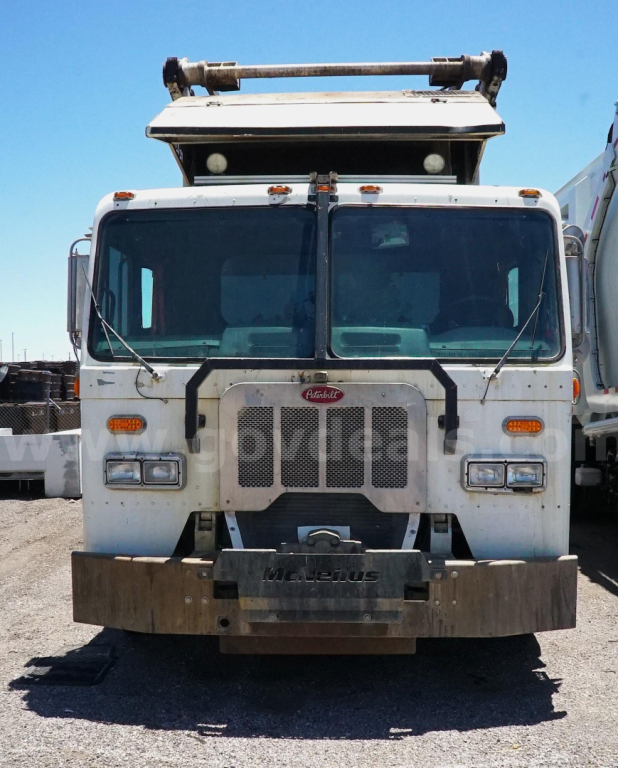
Selling a peterbilt garbage truck? List your peterbilt garbage truck for sale and reach thousands of commercial buyers.
Peterbilt Garbage Trucks
A serious comparison starts with the route. Automated side loaders with grabber arms are common for residential cart service and can improve pickup speed while reducing crew size. Rear loaders are still a strong fit for manual routes, bagged trash, and mixed collection patterns where flexibility matters more than maximum automation. Front loaders are typically chosen for commercial dumpsters and industrial accounts that need higher lift capacity and repeated container service. Body capacity is often measured in cubic yards, and buyers should match hopper size, packer design, and payload capability to the density of the waste stream. Full eject bodies, compaction systems, and arm reach all affect how productive the truck will be over a full day.
On the truck side, pay close attention to axle ratings, steering axle capacity, tag axle setup, suspension, and transmission choice. Refuse trucks live under constant starts, stops, and PTO demand, so drivetrain durability matters more than highway speed. Allison automatic transmissions are common, and engines are typically selected for strong low-rpm torque rather than top-end horsepower. Buyers should also inspect the hydraulic system closely, including pumps, cylinders, hoses, valve banks, and PTO operation, because hydraulic performance is central to packer cycle times and arm function. Cab condition matters too. Frequent entry and exit puts wear on seats, doors, steps, and interior controls faster than many other vocational truck classes.
A Peterbilt garbage truck can be a strong fit for municipalities, private haulers, and contractors that need a durable vocational chassis with good service access and operator visibility. When reviewing listings, it helps to confirm the refuse body manufacturer, cubic yard rating, arm type, maintenance intervals, frame condition, and signs of corrosion around the body mounts and hopper area. Front axle wear, steering components, brake life, and tag axle condition deserve close attention because refuse routes are hard on chassis parts. The best buying decision usually comes from matching the truck to the collection method first, then validating remaining useful life in the body, hydraulics, and axle components.
Frequently Asked Questions about Peterbilt Garbage Trucks
What Peterbilt model is most common for garbage truck applications?
The Peterbilt 320 is one of the most common refuse chassis choices, especially for automated side loader and residential collection work. Its cabover design provides a tight turning radius, strong visibility, and easier maneuvering in alleys, cul-de-sacs, and dense neighborhoods. Depending on the route, buyers may also see other Peterbilt vocational platforms equipped with refuse bodies, but the 320 is a frequent benchmark in this category.
What is the difference between a side loader, rear loader, and front loader garbage truck?
A side loader is designed to service carts or containers from the side of the truck, often with an automated arm that reduces manual labor and speeds up residential routes. A rear loader is loaded from the back and is commonly used for manual pickup, mixed waste streams, and routes where workers need flexibility at each stop. A front loader uses lifting forks at the front of the body to service commercial dumpsters and is typically chosen for business, industrial, and multifamily container collection.
What should I inspect first on a used Peterbilt garbage truck?
Start with the refuse body and hydraulic system because those components do the hardest work on the truck. Check packer operation, arm movement, PTO engagement, cylinder condition, hose wear, and any leaks around pumps or valve banks. Then inspect axle components, steering wear, brakes, suspension, frame rails, and corrosion around the hopper, body mounts, and tailgate or ejector sections. Service records are especially valuable on refuse trucks because frequent preventive maintenance is critical in this application.
Are automatic transmissions standard on Peterbilt refuse trucks?
Automatic transmissions are very common in garbage truck service because refuse collection involves constant stopping, starting, and PTO-related operation. Allison automatics are widely used for their durability and ease of use on residential and commercial routes. The right transmission should be matched to route density, gross vehicle weight, and the hydraulic demands of the body, not just engine output.
How do I choose the right body size for a garbage truck?
Body size should be matched to route volume, waste density, legal payload limits, and disposal cycle time. A larger cubic yard body may reduce trips to the dump or transfer station, but payload can still be limited by axle ratings and local weight laws. Buyers should look at cubic yard capacity, compaction performance, hopper design, and whether the route handles light residential trash, dense commercial waste, or recyclables that require different body configurations.