
Freightliner Garbage Trucks For Sale
Shop Freightliner garbage trucks including M2 106 refuse chassis, rear loaders, and side loaders built for municipal and private collection work.
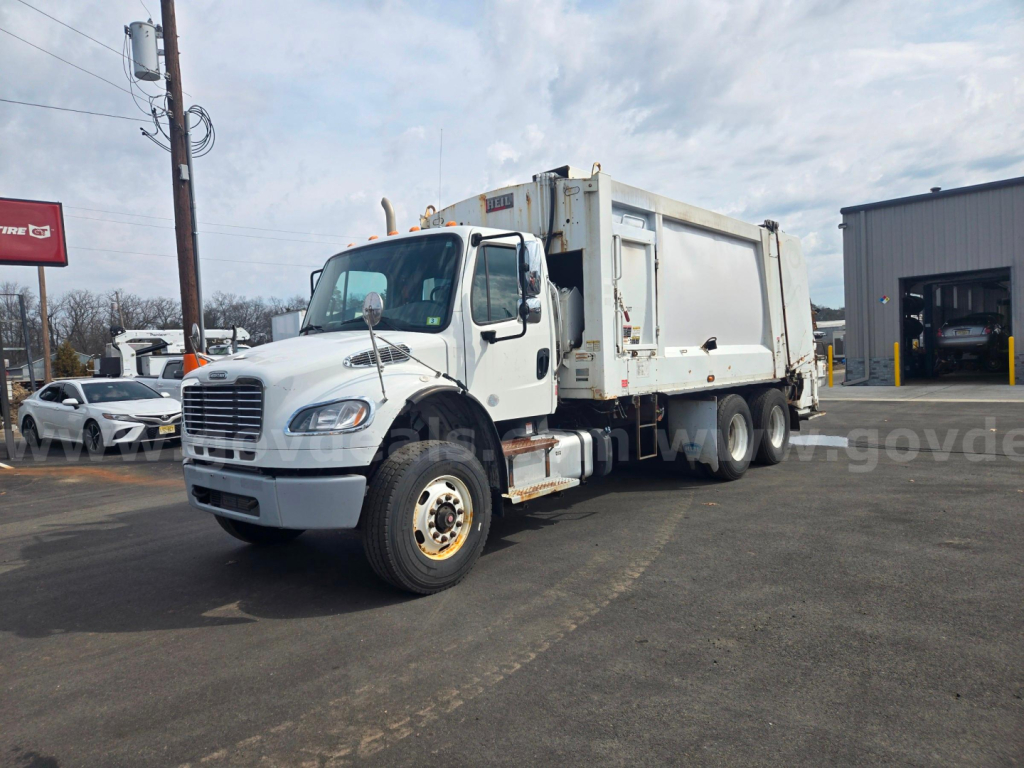
Selling a freightliner garbage truck? List your freightliner garbage truck for sale and reach thousands of commercial buyers.
Freightliner Garbage Trucks
The body and loading system matter as much as the chassis. Rear loaders are still a strong fit for manual or semi-automated routes and are commonly found in 20-yard class configurations, though capacities vary by body manufacturer. Side loaders, including automated and dual-side setups, are built for faster residential collection with fewer crew members. Some units are configured with specialty equipment such as leaf vac systems or dual steer arrangements to improve route efficiency in tight neighborhoods. Buyers should pay close attention to hopper condition, packer blade wear, floor wear from abrasive material like glass, tailgate seal condition, hydraulic cylinder leaks, and the overall state of the body structure, since refuse bodies often age differently than the truck underneath them.
On the chassis side, Freightliner refuse trucks commonly use Cummins diesel engines paired with Allison automatic transmissions, a proven combination for repeated starts, PTO operation, and low-speed route work. Axle ratings, suspension type, wheelbase, and brake configuration should be matched to the body and route density. Mileage alone does not tell the whole story on a garbage truck. Engine hours, PTO hours, idle time, and maintenance intervals are more important indicators of remaining life. A lower-mile truck that spent years on dense residential service may show more wear in the packer, steering, and suspension than a higher-mile truck used on lighter duty work. Cab condition also matters because route trucks see constant entry and exit, so seat wear, switchgear condition, HVAC performance, and visibility equipment should all be evaluated.
A good Freightliner garbage truck is one that fits the route, body style, and maintenance capability of the operation. Buyers comparing listings should confirm body manufacturer, cubic yard capacity, automated arm type if equipped, legal payload target, and whether the truck has features like dual steering, camera systems, or cart tipper compatibility. It is also worth checking for frame corrosion, hydraulic hose age, PTO engagement quality, and records showing regular chassis service and body inspections. Freightliner remains a practical option in refuse work because the trucks are widely understood in the field, and that can make a real difference when uptime, route completion, and repair turnaround are the priority.
Frequently Asked Questions about Freightliner Garbage Trucks
What Freightliner model is most common for garbage truck applications?
The Freightliner M2 106 is one of the most common platforms used for garbage and refuse applications. It is popular because it balances maneuverability, GVWR capability, service access, and driver visibility. Many rear loaders, side loaders, and automated residential units are built on the M2 106 chassis, often with Cummins diesel power and an Allison automatic transmission.
What should I inspect first on a used Freightliner garbage truck?
Start with the refuse body before the paint and cab cosmetics. Inspect the hopper, packer, floor, tailgate, body mounts, hydraulic cylinders, hoses, and all safety interlocks. Then review engine hours, PTO operation, transmission behavior, steering play, suspension wear, and brake condition. On a refuse truck, body wear and hydraulic condition often determine repair cost faster than odometer mileage.
Is a rear loader or side loader better on a Freightliner chassis?
That depends on the route design. A rear loader is usually better for manual collection, mixed waste streams, and operations that need flexibility across commercial and residential stops. A side loader is usually better for repetitive residential routes with standardized carts and a focus on labor efficiency. The Freightliner M2 chassis can support either configuration effectively, but the body style should match how the truck will be dispatched every day.
Do engine miles matter less than hours on a garbage truck?
Yes. On refuse equipment, hours often tell more than miles because these trucks spend much of their life in low-speed stop-and-go service with frequent PTO use and extended idle time. A truck with moderate miles but high engine and hydraulic hours may have more wear than expected. Buyers should compare miles, engine hours, PTO hours if available, and documented maintenance history together instead of relying on mileage alone.
Are Freightliner garbage trucks practical for municipal fleet maintenance?
They are widely used in municipal and contractor fleets because parts access, technician familiarity, and chassis support are generally strong. That matters in refuse work where uptime is critical and repairs often need to be turned quickly. The practical advantage is not just the chassis itself, but the fact that many shops already know how to diagnose and maintain Freightliner M2-based trucks in severe stop-and-go duty.