
Used 2004 Freightliner Trucks For Sale in New York
Browse used 2004 Freightliner trucks in New York. Compare specs, engines, cabs, axles, and applications across medium and heavy-duty models.
Selling a used 2004 freightliner truck? List your used 2004 freightliner truck for sale and reach thousands of commercial buyers.
Used 2004 Freightliner Trucks in New York
On heavy-duty 2004 Freightliner trucks, common platforms include Columbia, Century Class, and early Business Class models, with day cabs and sleepers both widely seen on the used market. Engine choices in this era often include Detroit Diesel Series 60, Caterpillar C12 or C15, Mercedes-Benz diesel options, and Cummins ISX in certain applications. Many were paired with Eaton-Fuller 10-speed, 13-speed, or 18-speed manual transmissions, though some automated manuals also appear. Rear axle ratios, suspension type, and fifth wheel setup matter more than badge alone. A day cab with a shorter wheelbase and 3.70 to 4.10 gearing suits local and regional work differently than a sleeper tractor geared for fuel mileage and steady highway speeds.
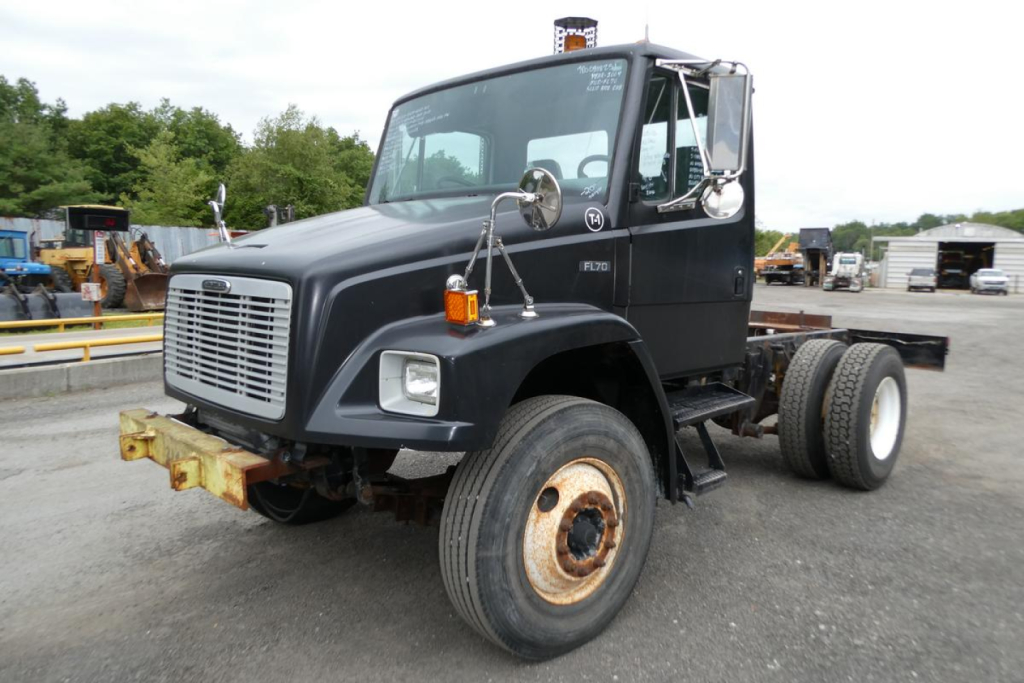
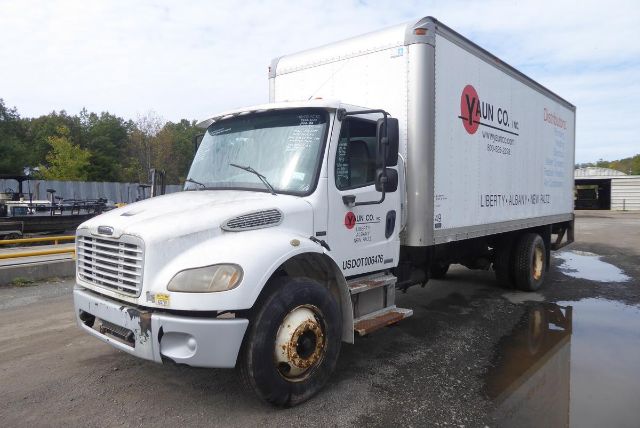
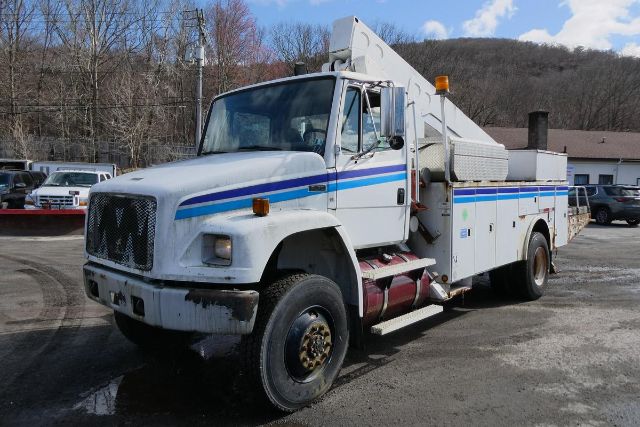
For medium-duty and vocational 2004 Freightliner trucks, buyers may see FL-series or Business Class M2 configurations used as box trucks, flatbeds, dump trucks, hooklift trucks, stake bodies, and utility bodies. Front axle capacity, rear axle rating, frame section, PTO provision, and brake type are key checkpoints. A delivery truck in Manhattan or the boroughs benefits from compact overall length and good cab visibility, while an upstate work truck may need higher ground clearance, locking rear differential, or heavier spring suspension. Rust and corrosion should be inspected closely on any Northeast truck, especially at cab mounts, crossmembers, spring hangers, brake lines, fuel tank straps, and the lower cab structure.
Condition is everything on a 2004 model year truck. Maintenance records, ECM history when available, engine blow-by, clutch wear, injector performance, suspension bushing condition, and signs of prior frame repair all deserve a hard look. On older Freightliner trucks, electrical condition can be just as important as the driveline, especially if the truck has body equipment, liftgates, work lights, or PTO-driven hydraulics. A strong buyer compares not just mileage, but engine hours, prior application, and how the truck is equipped today versus the work it needs to do next.
Frequently Asked Questions about Used 2004 Freightliner Trucks in New York
What should I look for first on a used 2004 Freightliner truck?
Start with the truck’s application, GVWR or GCWR, axle ratings, wheelbase, and cab style, then move to engine, transmission, and frame condition. On a 2004 Freightliner, maintenance history and structural condition usually matter more than appearance. Check for rust on the frame and cab structure, inspect suspension wear, verify tire and brake condition, and look for oil, coolant, or air system issues. If the truck is a tractor, confirm the fifth wheel type, rear ratio, and suspension spec match the intended load and route profile.
Are 2004 Freightliner trucks still practical to run in New York?
They can be practical if the truck matches the job and passes all applicable state and federal requirements. New York buyers should pay close attention to corrosion, lighting, brake condition, steering play, and emissions requirements tied to the truck’s class and use. Older trucks are often attractive because of lower acquisition cost and simpler mechanical systems, but downtime risk rises if previous maintenance was inconsistent. A strong pre-purchase inspection is especially important for Northeast equipment.
Which engines are commonly found in 2004 Freightliner trucks?
Common engines in 2004 Freightliner trucks include the Detroit Diesel Series 60, Caterpillar C12 and C15, Mercedes-Benz diesel engines, and Cummins options in certain models and applications. The best choice depends on intended use, local service support, and the buyer’s preference for parts availability and diagnostic familiarity. Engine condition should be verified with a cold start, blow-by check, fluid inspection, and ideally an ECM review or professional inspection.
Is a 2004 Freightliner better suited for local work or highway use?
That depends entirely on the truck’s configuration. A short-wheelbase day cab with the right axle ratio can work well for local and regional hauling, port work, or yard spotting. A sleeper with highway gearing, larger fuel capacity, and a long wheelbase is better suited for over-the-road service. Freightliner offered enough variation that buyers should judge the truck by spec sheet and condition, not just by make and year.
Why do axle ratio and wheelbase matter so much on an older Freightliner?
Axle ratio and wheelbase have a direct effect on drivability, fuel economy, maneuverability, and payload suitability. A shorter wheelbase improves turning in tight urban areas and can be a better fit for New York delivery or vocational routes. A deeper rear ratio improves low-speed pulling power but may increase engine rpm at highway speed. On a used 2004 Freightliner, those spec choices often tell you what the truck was built to do and whether it still fits your operation today.