
New Kenworth Flatbed Trucks For Sale
Shop new Kenworth flatbed trucks with durable specs, strong PTO and chassis options, and configurations built for construction and delivery work.
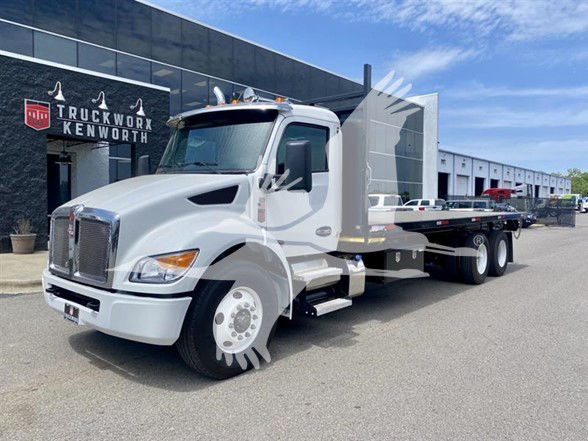
Selling a new kenworth flatbed truck? List your new kenworth flatbed truck for sale and reach thousands of commercial buyers.
New Kenworth Flatbed Trucks
Kenworth flatbed trucks are commonly based on medium-duty and vocational platforms such as the T380 or T480, with diesel engines like the PACCAR PX-7 or PX-9 depending on the GVWR and expected duty cycle. Horsepower and torque should match the work, not just the gross weight rating. A truck carrying building materials in city traffic has different gearing needs than one running longer regional routes with a mounted crane or heavier bed package. Ratios in the mid-to-high 4s are common on vocational specs where startability and low-speed control matter. Buyers should also look closely at front axle capacity, rear axle rating, tandem versus single axle layout, suspension type, tire size, and brake package, especially if the truck will see uneven surfaces, concentrated loads, or frequent stop-and-go operation.
Body equipment matters just as much as the cab and chassis. Flatbed setups vary from basic steel or aluminum decks to heavier vocational builds with stake sides, headache racks, toolboxes, dunnage storage, and integrated tie-down points. If the truck will be forklift loaded from the side, deck clearance and rub rail design matter. If it will carry steel, lumber, or machinery, trailer-style securement features such as winches, chain trays, and multiple anchor locations can be important. Some buyers need a knuckleboom, stiff-boom crane, or Moffett mounting provision, which affects wheelbase, frame space, and axle loading. A new truck gives the advantage of ordering the chassis around the body instead of compromising around an older upfit.
Kenworth is a strong fit for buyers who value serviceability, a vocational cab layout, and a chassis that can be tailored to the application. When comparing new Kenworth flatbed trucks for sale, look past the basic model name and compare GVWR, usable payload after body installation, frame spec, upfitter access, cab-to-axle dimension, and turning radius. Those details determine how well the truck will perform in real work, how easily the body can be mounted, and how efficiently the truck can load, secure, and deliver freight every day.
Frequently Asked Questions about New Kenworth Flatbed Trucks
What should I look at first when buying a new Kenworth flatbed truck?
Start with the intended payload and body design, then work backward to the chassis. GVWR, front and rear axle ratings, wheelbase, cab-to-axle dimension, and suspension all need to support the deck length and the way the load is positioned. A truck that looks similar on paper can have very different real-world performance once a flatbed body, toolboxes, crane, or lift equipment is installed.
Which Kenworth models are commonly used as flatbed trucks?
Kenworth flatbed trucks are often built on medium-duty and vocational chassis such as the T380 and T480. The right model depends on gross weight, body length, and whether the truck will stay in urban delivery service or handle more severe vocational work. Buyers choosing between models usually compare engine options, axle capacities, and how much frame space is available for the body and accessories.
Is a tandem axle necessary on a flatbed truck?
Not always. A single axle flatbed truck can be the right choice for lighter payloads, tighter maneuvering, and lower operating cost. A tandem axle setup makes more sense when the truck needs higher legal payload, better weight distribution, or support for heavier body equipment such as cranes. The decision should be based on actual axle loading after the body and equipment are installed, not just on the cargo rating listed for the chassis.
What engine and gearing works best in a new flatbed truck?
The best engine and ratio depend on route profile, gross weight, and loading conditions. Medium-duty Kenworth flatbeds often use PACCAR diesel engines in horsepower ranges that support delivery, construction supply, and municipal work without over-spec'ing the truck. Lower gearing such as a 4.88 ratio is common in vocational applications where launch performance, gradeability, and low-speed control are more important than highway cruise speed.
Can a new Kenworth flatbed be configured for cranes or other upfits?
Yes. Many buyers choose a new chassis specifically because it can be matched to a crane, compressor, Moffett setup, or specialized storage package. The important factors are frame strength, wheelbase, axle placement, PTO availability, and remaining payload after the upfit is installed. Planning those details before the body is mounted usually results in a more balanced truck, better legal axle weights, and fewer compromises in service.