
Used Hino Flatbed Trucks For Sale
Browse used Hino flatbed trucks with medium-duty diesel power, practical payload capacity, and body lengths suited for delivery and jobsite work.
Learn more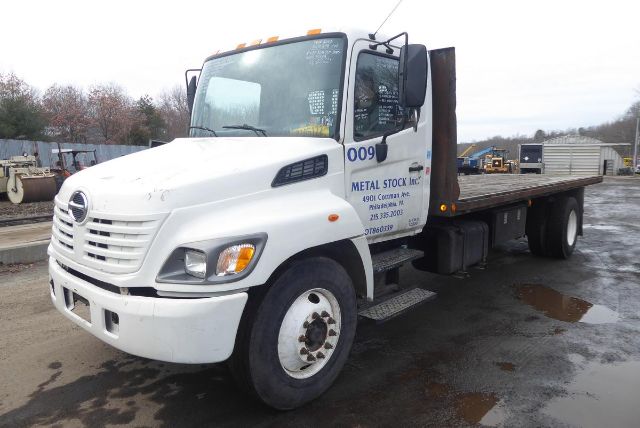
Have used hino flatbed truck to sell? List it here to reach thousands of buyers.
About Used Hino Flatbed Trucks
The main buying decisions usually come down to GVWR, cab-to-axle dimension, deck length, and tie-down setup. Many used Hino flatbeds in the market fall in the medium-duty range around Class 6 or Class 7, with diesel engines such as the Hino J08 series paired to 5-speed or 6-speed manual transmissions, or automatic options on some units. Buyers should match wheelbase and cab-to-axle measurements to the body they need, because those numbers determine usable deck space and how the truck carries weight across the axles. It is also worth checking rear axle ratio, suspension type, brake system, and tire size, since those specs affect launch under load, highway cruise rpm, and maintenance cost.
Body spec matters as much as chassis spec on a used Hino flatbed. Common features include wood or steel floors, headache racks, rub rails, stake pockets, ratchet strap storage, and underbody toolboxes. For freight that shifts or drags, scuff-resistant side protection, secure tie-down points, and a solid floor condition are more important than cosmetic appearance. Buyers hauling forklifts, bundled materials, pipe, or jobsite equipment should inspect deck crossmembers, frame condition, and any evidence of overloading or concentrated point loading. If the truck has air brakes, that may be a plus for fleets standardizing driver qualification and service procedures, while hydraulic brake setups can make sense for lighter-duty local routes.
Hino has a strong reputation in local and regional vocational service, and that shows up in the flatbed segment where uptime, maneuverability, and straightforward diesel service matter more than luxury features. A used Hino flatbed is often chosen for urban delivery routes, contractor supply runs, and short-haul applications where a reliable cab, good visibility, and predictable operating costs are key. The best fit depends on how the truck will be loaded every day, not just the listed GVWR. Buyers should compare actual empty weight, body length, axle ratings, and securement equipment to make sure the truck can legally and efficiently handle the freight they plan to move.
Frequently Asked Questions
What are used Hino flatbed trucks commonly used for?
Used Hino flatbed trucks are commonly used for local and regional delivery of lumber, steel, palletized materials, landscape products, pipe, generators, and light equipment. Their open-deck design allows loading from the sides, rear, or overhead by forklift or crane, which makes them well suited for jobsite and contractor work. They are especially useful when freight is oversized, irregularly shaped, or better secured with straps and chains than enclosed in a van body.
What specs matter most when buying a used Hino flatbed truck?
The most important specs are GVWR, front and rear axle ratings, wheelbase, cab-to-axle length, body length, and the truck's empty weight. Those numbers determine payload, deck size, and how the load will balance on the chassis. Buyers should also check engine model, horsepower, transmission type, rear axle ratio, suspension, brake system, and tire size because those affect performance under load, route suitability, and operating cost.
How do I choose the right flatbed body length on a Hino truck?
Body length should be matched to the freight you haul most often and to the chassis dimensions, especially cab-to-axle and wheelbase. A longer deck can improve cargo flexibility, but it also changes turning radius, weight distribution, and rear overhang. For material delivery and urban routes, many buyers look for a balance between usable deck space and maneuverability rather than simply choosing the longest body available.
Are Hino flatbed trucks good for contractor and city delivery work?
Hino flatbed trucks are generally a strong fit for contractor, municipal, and city delivery work because they combine medium-duty chassis capacity with relatively compact dimensions and good cab visibility. They are commonly used in stop-and-go service where drivers need to access freight quickly and operate in tighter streets or yards. Their diesel platforms are also familiar to many service shops, which helps fleets manage maintenance and uptime.
What should I inspect on a used flatbed body before buying?
Inspect the deck floor, crossmembers, rub rails, stake pockets, headache rack, tie-down points, and any underbody storage for cracks, corrosion, repairs, or signs of repeated overloading. Look closely at the frame rails and mounting points to confirm the body is properly secured and the chassis has not developed stress damage. If the truck comes with straps, ratchets, or other securement gear, treat that as secondary to the actual condition and structural integrity of the bed itself.