
Hino Flatbed Trucks For Sale
Shop Hino flatbed trucks with medium and heavy-duty specs, diesel power, versatile bed lengths, and options for delivery, building, and equipment hauling.
Selling a hino flatbed truck? List your hino flatbed truck for sale and reach thousands of commercial buyers.
Hino Flatbed Trucks
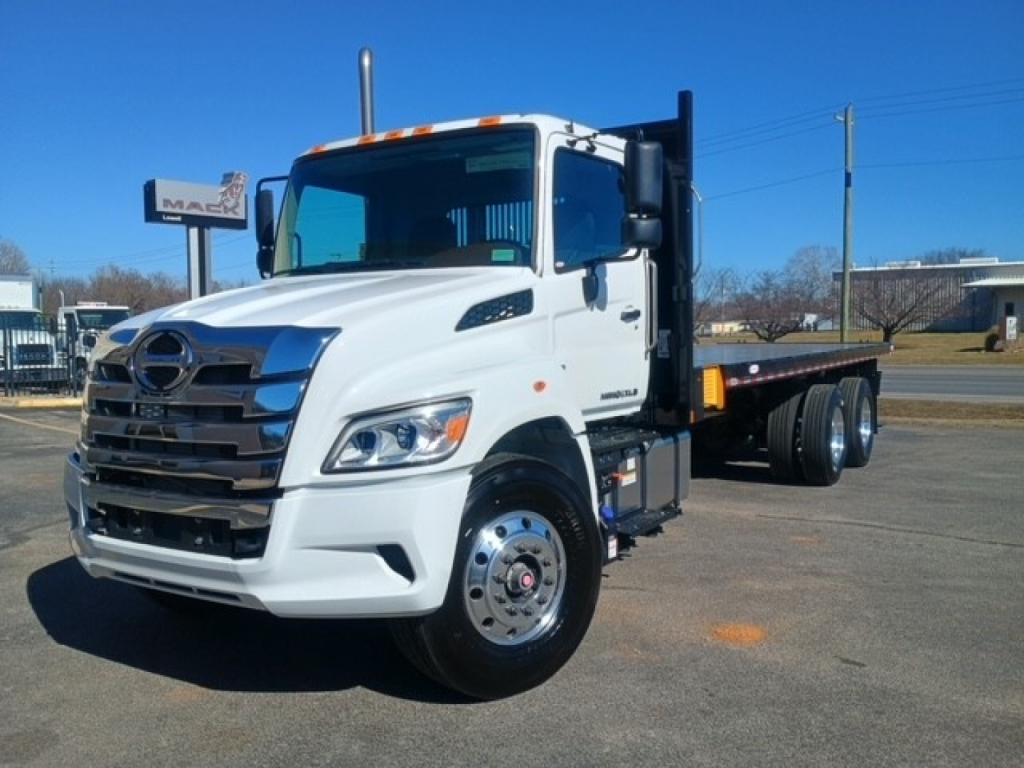
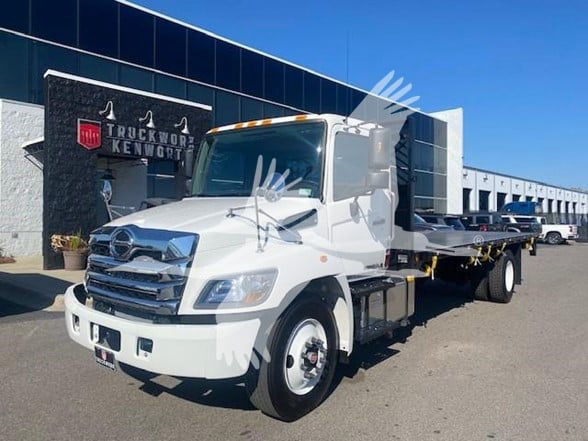
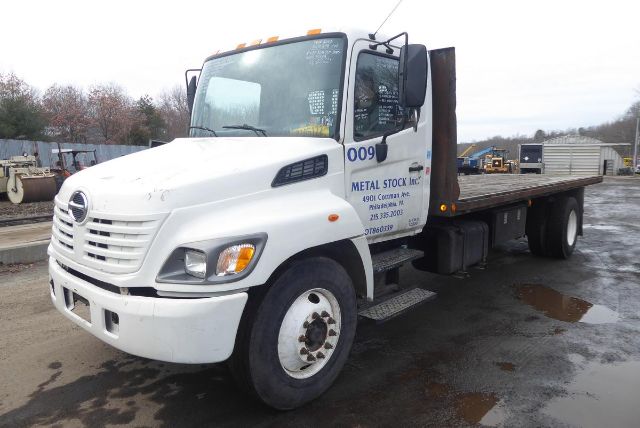
The first buying decision is usually body and axle configuration. Single-axle Hino flatbeds are common in 22-foot to 26-foot lengths and work well for local delivery, lumber, landscape materials, steel, and general contractor use. Tandem-axle Hino flatbeds, often built on XL chassis, open the door to heavier deck loads, truck-mounted forklift packages, and more stable performance when the job includes dense freight or repeated loading by dock and machine. Bed construction matters too. Wood floors are still common because they handle mixed cargo well and are practical for chained or strapped loads, while body details such as headache racks, rub rails, stake pockets, winches, toolboxes, and liftgates can make a major difference in day-to-day productivity.
Powertrain specs on Hino flatbed trucks tend to favor durability and easy operation over unnecessary complexity. Typical horsepower in this category falls around 260 to 360 HP, with rear axle ratios often selected to support stop-and-go routes, loaded starts, and vocational duty cycles. Allison automatics are especially common because they simplify urban delivery work and PTO applications, though some older trucks may carry manual transmissions for buyers who prefer lower upfront cost and direct driver control. Suspension choice also affects how the truck will work. Spring suspension is common on medium-duty flatbeds used in rougher vocational service, while air ride can improve load stability and ride quality for higher-value cargo or more highway-oriented routes.
A buyer comparing Hino flatbed trucks should look closely at cab-to-axle measurement, wheelbase, actual bed length, liftgate rating, and axle ratings before focusing on price alone. These trucks are often upfitted for specific work, so the right spec depends on how the deck will be loaded, what the freight weighs, and whether the truck needs forklift compatibility, lumber dump capability, or simple open-deck hauling. Hino flatbeds are also known as flatbed delivery trucks or platform trucks, and the best units are the ones with a chassis and body combination that matches your freight profile without leaving you under-spec'd on capacity or overbuilt for the route.
Frequently Asked Questions about Hino Flatbed Trucks
What are the most common applications for a Hino flatbed truck?
Hino flatbed trucks are commonly used for building supply delivery, palletized freight, steel and pipe transport, equipment hauling, landscaping materials, and municipal or contractor work. Their open deck design makes loading from the side, rear, or by forklift much easier than with a van body. Buyers often choose them when freight is oversized, irregularly shaped, or unloaded at jobsites rather than standard docks.
What is the difference between a Hino single-axle flatbed and a tandem-axle flatbed?
A single-axle Hino flatbed is usually the better fit for local delivery, tighter routes, and moderate payloads. It is easier to maneuver, simpler to maintain, and commonly found with 22-foot to 26-foot bodies. A tandem-axle Hino flatbed is designed for heavier payloads and more demanding upfits, including truck-mounted forklift kits and larger deck bodies. It generally provides higher axle ratings, better load distribution, and more stability under dense cargo.
Which engine and transmission combinations are common in Hino flatbed trucks?
Older Hino flatbed trucks often use Hino J08 diesel engines, frequently in the 260 HP range, paired with either manual transmissions or Allison automatics. Newer Hino L Series and XL Series flatbeds are commonly equipped with Cummins B6.7 or L9 engines and Allison 2500, 3000, or 3500 series automatic transmissions. This setup is popular in flatbed service because it balances reliability, drivability, and compatibility with vocational body and PTO needs.
What specs matter most when buying a Hino flatbed truck?
The most important specs are GVWR, front and rear axle ratings, wheelbase, cab-to-axle length, bed length, suspension type, and gear ratio. Buyers should also check body details such as floor material, stake pockets, rub rails, tie-down points, winches, headache rack height, and liftgate capacity. These details determine how much freight the truck can carry, how easily it can be loaded, and whether it fits the intended route and work cycle.
Are Hino flatbed trucks good for forklift-mounted delivery setups?
Yes, certain Hino flatbed trucks are well suited for truck-mounted forklift applications, especially heavier chassis with the axle capacity and frame strength to support the added rear weight. Buyers should confirm that the body includes the correct forklift mounting kit and that the wheelbase, rear overhang, and axle ratings are properly matched to the forklift and payload. This is particularly important on lumber, masonry, and jobsite delivery applications where self-unloading capability is part of the business model.