
Freightliner Flatbed Trucks For Sale in Florida
Browse Freightliner flatbed trucks with specs, body options, GVWR ranges, and hauling features suited for equipment, materials, and delivery work.
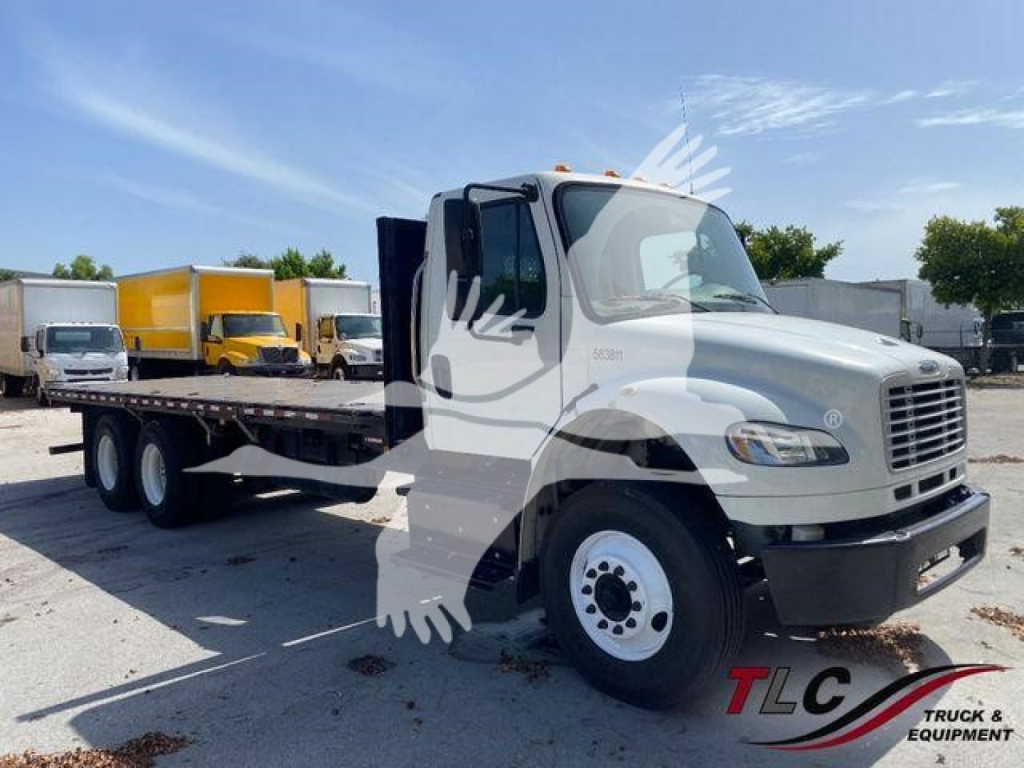
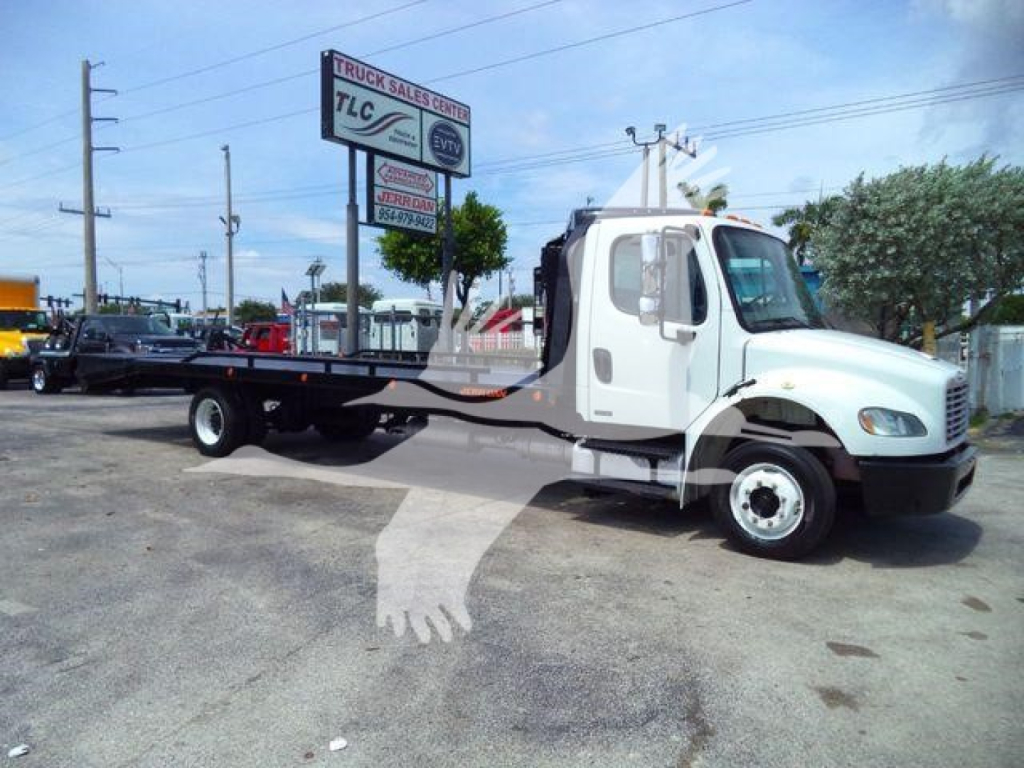
Selling a freightliner flatbed truck? List your freightliner flatbed truck for sale and reach thousands of commercial buyers.
Freightliner Flatbed Trucks in Florida
The chassis matters as much as the bed. Buyers usually start with GVWR, axle rating, suspension type, brake system, and wheelbase because those specs determine payload, body length, and how the truck behaves under load. Freightliner flatbeds in this class are often built around the Cummins 6.7L diesel and an Allison automatic, a combination that is widely used in fleet service and generally well understood by technicians. Air brakes are common, and suspension may be spring or air ride depending on the intended use. Air ride can help protect sensitive cargo and improve ride quality, while spring suspension is simple and durable for harder jobsite use. In Florida, corrosion exposure, cooling system condition, tire age, and A/C performance deserve close attention because heat, humidity, and stop-and-go service tend to show up in those areas first.
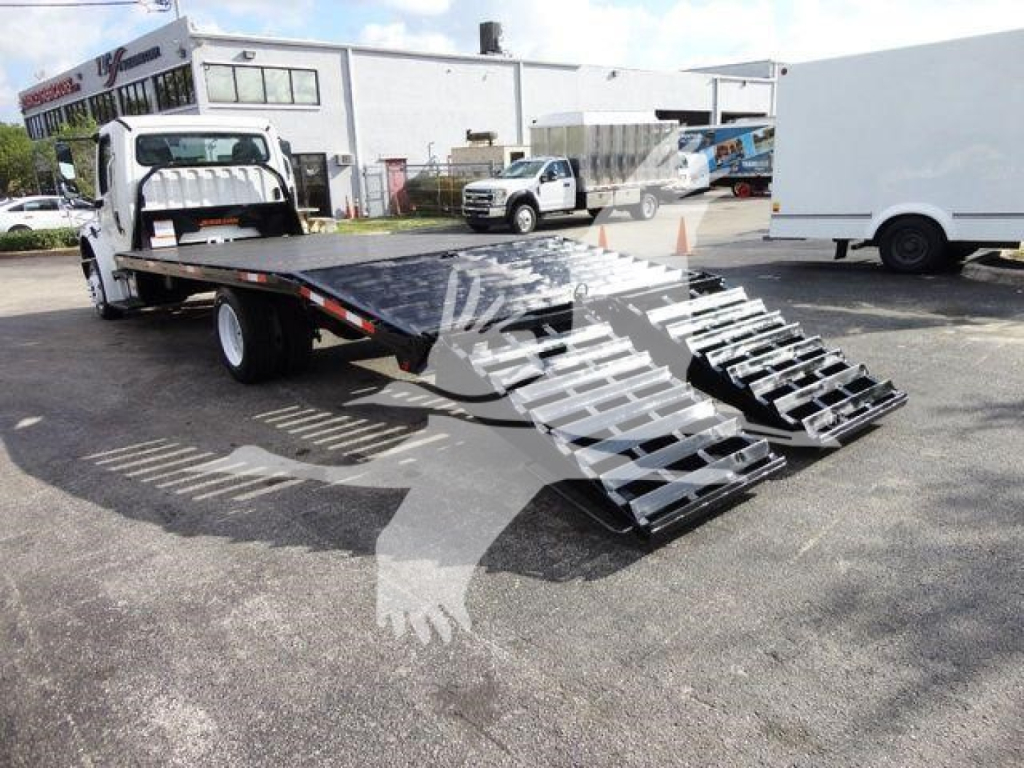
Body configuration is where one Freightliner flatbed can differ sharply from another. Bed length, deck width, deck material, headboard design, stake pockets, rub rail setup, removable side rails, and ramp capacity all affect day-to-day usefulness. A steel deck with diamond plate is popular for equipment loading and rough service, but it adds weight compared with aluminum. Beavertail designs improve loading angle for low-clearance machinery, and an electric winch can be a major advantage if disabled equipment or non-running units are part of the workload. Buyers should also verify tie-down points, headboard strength, rear approach angle, and whether the body was installed recently or has seen long-term use. A newer body on a proven chassis can be a practical combination if the installation quality is solid and the frame shows no issues around mounting points.
For buyers comparing listings, the smartest approach is to match the truck to the work first, then compare condition and spec. A 25,500 GVWR Freightliner flatbed may fit contractors, rental fleets, landscape suppliers, or municipal work, but the right deck length and loading setup will matter more than cosmetic differences. Review maintenance records, confirm actual payload after body installation, inspect ramp hinges and winch wiring, and look at driveline wear if the truck spent years in city routes. Freightliner has a strong presence in medium-duty service networks, which helps on parts and support, but the best value still comes from buying the right body, wheelbase, and suspension combination for the cargo you move most often.
Frequently Asked Questions about Freightliner Flatbed Trucks in Florida
What are Freightliner flatbed trucks commonly used for?
Freightliner flatbed trucks are commonly used for transporting building materials, palletized freight, jobsite equipment, landscape materials, and small machinery. Many medium-duty Freightliner flatbeds are also configured with beavertails and ramps for loading forklifts, skid steers, scissor lifts, and other wheeled or tracked equipment. Their versatility makes them a strong fit for contractors, rental companies, supply houses, and local delivery operations.
What should I look for in a used Freightliner flatbed truck?
Start with GVWR, axle setup, wheelbase, engine, transmission, and brake type because those core chassis specs determine payload and operating cost. Then inspect the flatbed itself for deck wear, cracked welds, rust, frame-mount condition, stake pocket damage, and ramp or winch functionality. Service history is especially important on fleet-operated trucks, and buyers should verify that the bed installation matches the intended load rather than assuming a longer deck automatically means better capacity.
Is a beavertail flatbed better than a straight deck?
A beavertail flatbed is usually better for loading equipment because the sloped rear section reduces the loading angle and helps low-clearance machines get on deck more easily. A straight deck may provide more level cargo space for palletized materials, pipe, lumber, or general freight. The better choice depends on the job mix. If the truck will regularly haul rolling equipment, the beavertail setup is often the more practical specification.
Are Freightliner M2 flatbed trucks good for local and regional hauling?
Yes. Freightliner M2 flatbed trucks are widely used in local and regional service because they balance maneuverability, payload capability, and driver comfort well. Common specs such as the Cummins 6.7L diesel, Allison automatic transmission, and single-axle 4x2 layout are familiar to many fleets and repair shops. That makes them easier to service and practical for businesses that need a straightforward medium-duty flatbed for daily work.
How important is suspension type on a Freightliner flatbed?
Suspension type has a direct effect on ride quality, cargo protection, and operating feel. Spring suspension is durable and simple, which suits rougher jobsite conditions and heavier-duty daily use. Air ride suspension can improve ride quality, reduce shock to sensitive cargo, and sometimes help with loading height or body stability. Buyers should choose based on cargo type, road conditions, and how often the truck will operate fully loaded.