
New Hino Dump Trucks For Sale
New Hino dump trucks built for municipal, landscape, and construction work with durable dump bodies, diesel power, and CDL or non-CDL specs.
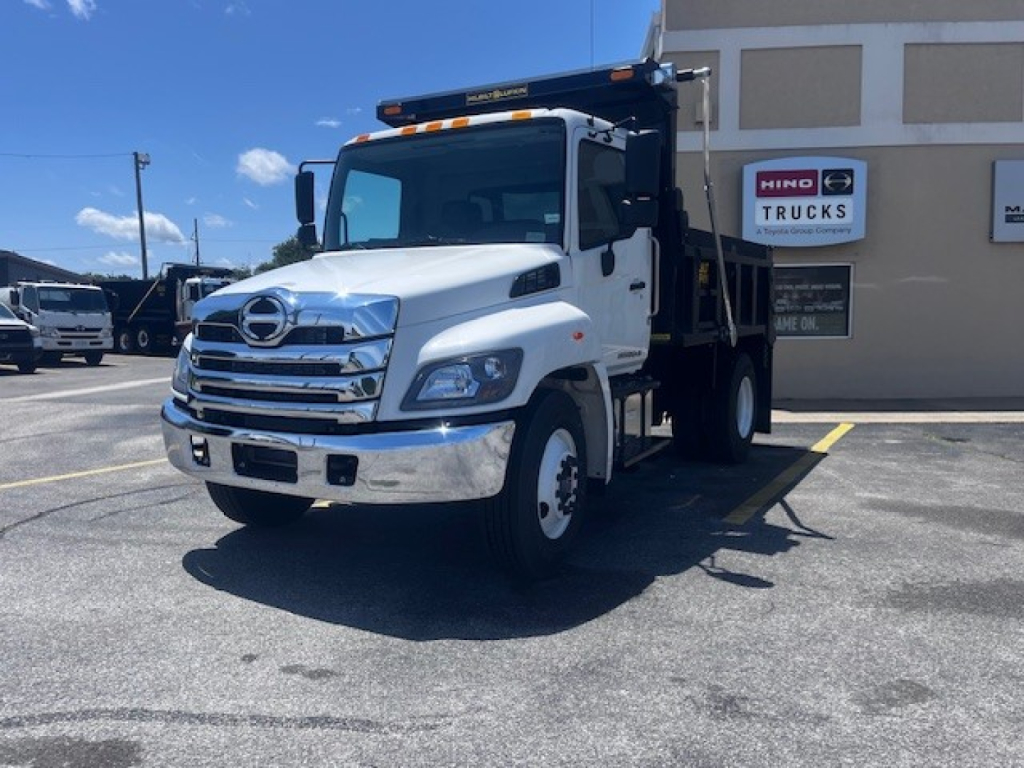
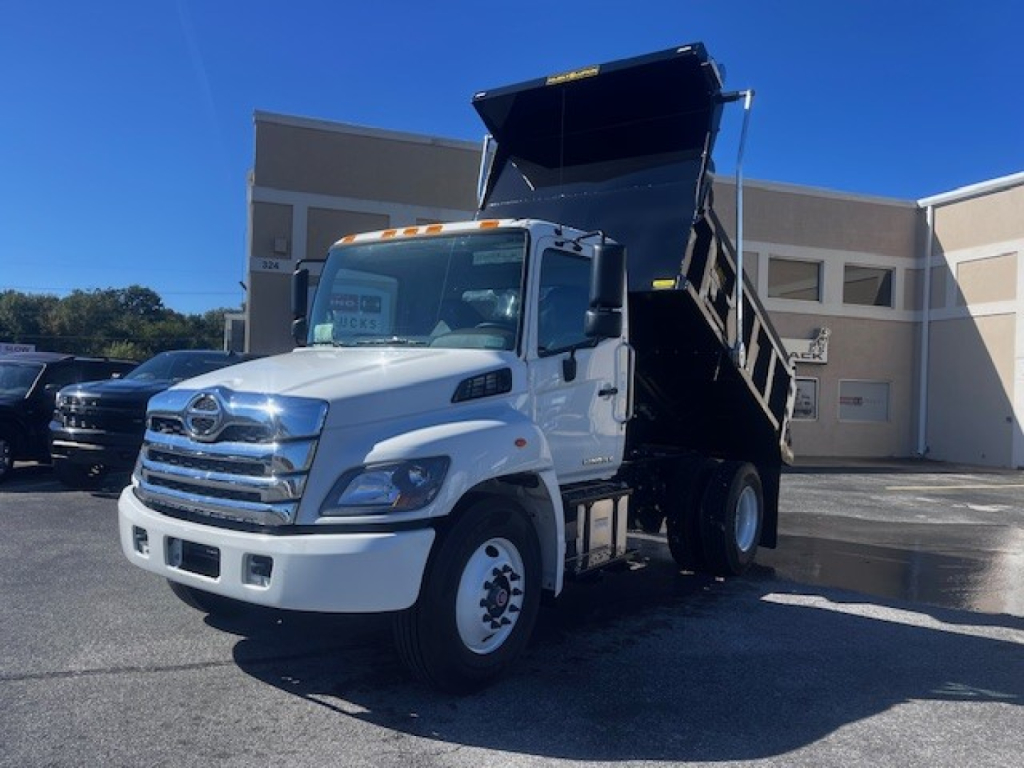
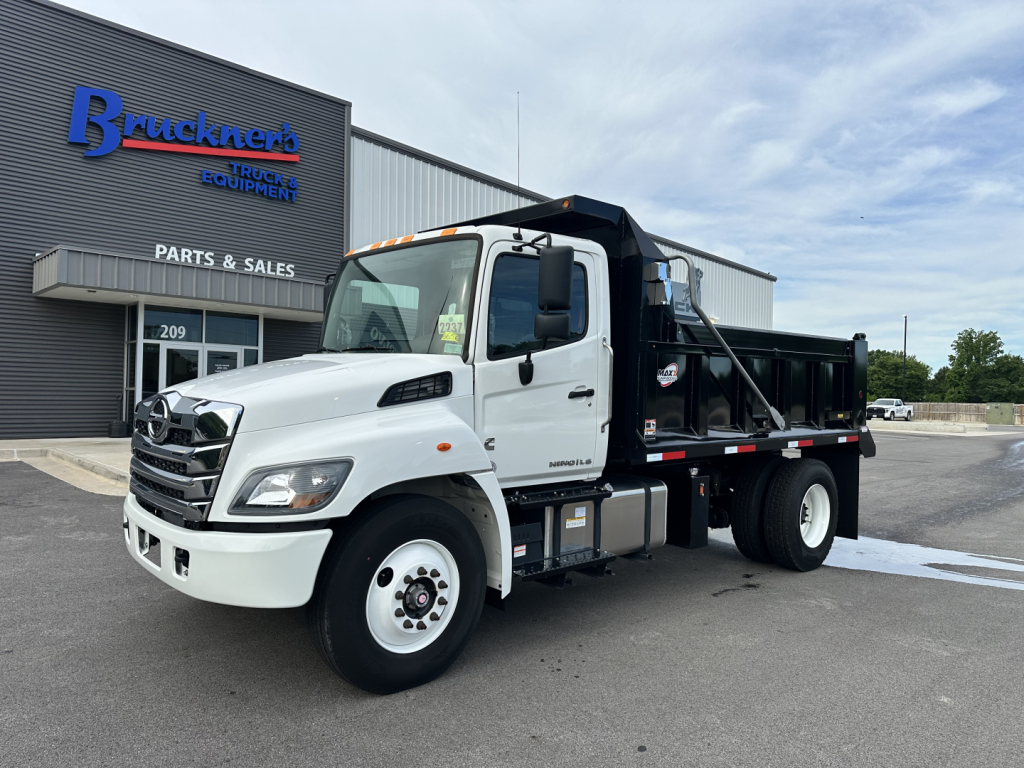
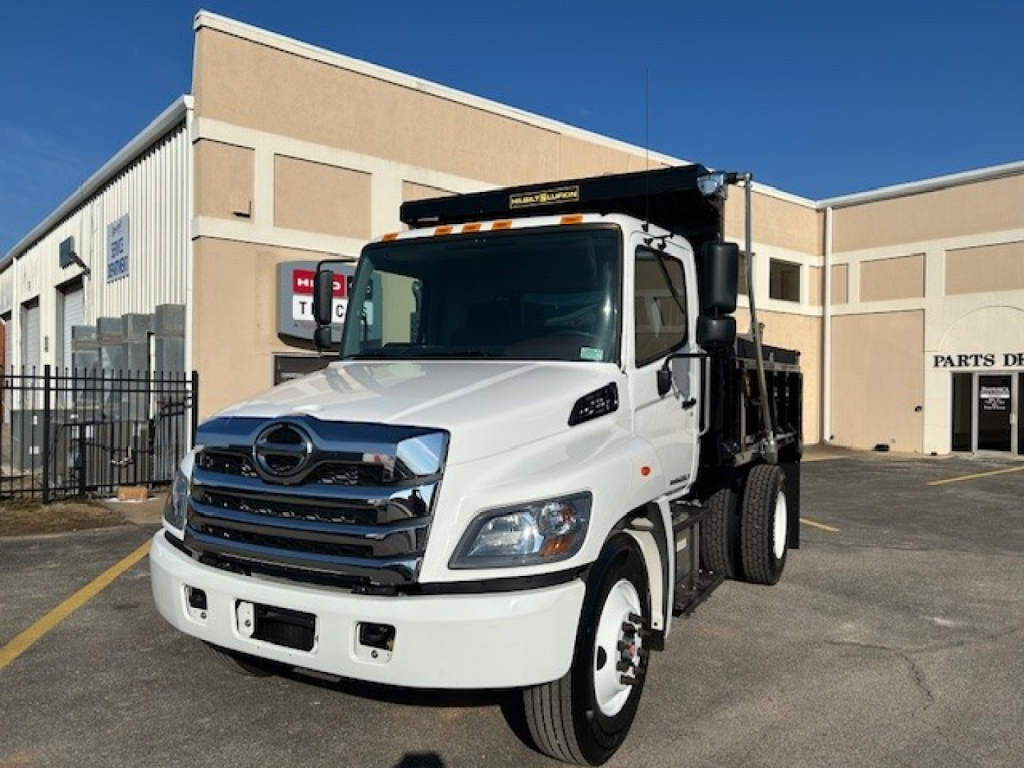
Selling a new hino dump truck? List your new hino dump truck for sale and reach thousands of commercial buyers.
New Hino Dump Trucks
A typical new Hino dump spec includes a Cummins B6.7 or ISB6.7 diesel in the 260 hp range paired with an Allison automatic such as a 2500 RDS or 3500 RDS. That combination is popular because it is easy to train drivers on, well suited for stop-and-go work, and proven in municipal and contractor applications. Buyers should pay close attention to axle ratings, rear ratio, and wheelbase because those numbers directly affect payload, maneuverability, and body fit. Listings in this class often show a 12,000 lb front axle, a 23,000 lb rear axle, spring suspension, and rear ratios in the 5.38 to 6.14 range. A shorter wheelbase can improve turning radius on tight jobsites, while a longer wheelbase may better support a larger body or accessory package.
Body configuration is just as important as the chassis. New Hino dump trucks in this size range commonly carry a 10-foot dump body in roughly the 5 to 7 yard class, often with steel construction and abrasion-resistant floor or side material such as AR450 for harder service. Common vocational options include pintle hitch and hitch plate packages for towing equipment, electric or manual tarp systems, backup cameras, toolbox mounting, and trailer brake controls. If the truck will haul rock, broken concrete, millings, or demolition debris, bed material thickness and hoist design deserve a close look. If the truck is meant for mulch, topsoil, or lighter aggregate, body cubic capacity and side height may matter more than heavy-duty wear specs.
The main advantage of a new Hino dump truck is that it gives buyers a modern medium-duty cab, straightforward diesel powertrain, and a chassis that can be tailored for contractor or municipal work without excessive complexity. The best spec depends on what the truck will do most often, not just its maximum payload on paper. Buyers comparing listings should look at CDL versus non-CDL setup, transmission series, axle ratio, dump body brand, bed steel, hitch capacity, and wheelbase before focusing on price alone. A truck hauling dense material every day needs a different configuration than one assigned to parks, utility support, or landscape delivery, and matching the spec to the route and material is what drives long-term value.
Frequently Asked Questions about New Hino Dump Trucks
What size dump body is common on a new Hino dump truck?
A common setup on a new Hino dump truck in the medium-duty class is a 10-foot dump body with about 5 to 7 cubic yards of capacity. That size works well for mulch, soil, gravel, asphalt support, and general jobsite debris while keeping the truck maneuverable in tighter areas. Actual payload depends on body weight, chassis GVWR, axle ratings, and the density of the material being hauled, so body volume should always be evaluated alongside legal weight capacity.
Are new Hino dump trucks available in under-CDL configurations?
Yes. Some new Hino dump trucks are configured or derated to operate under the 26,001 lb CDL threshold, depending on local regulations and final chassis certification. This can be useful for landscape companies, rental fleets, and contractors that want more flexibility in driver assignment. The tradeoff is lower legal payload compared with a full 33,000 to 35,000 GVWR setup, so buyers need to balance licensing convenience against how much material the truck must carry on a normal day.
What engine and transmission are typical in a new Hino dump truck?
A typical new Hino dump truck in this class uses a Cummins B6.7 or ISB6.7 diesel rated around 260 horsepower, matched to an Allison automatic such as the 2500 RDS or 3500 RDS 6-speed. This is a common vocational combination because it is durable, easy to operate, and well suited for stop-and-go work, backing, PTO-related applications, and mixed-driver fleets. The exact transmission series matters because it can reflect the intended duty cycle and overall body and payload spec.
What should I compare first when shopping new Hino dump trucks?
Start with GVWR, axle ratings, wheelbase, rear axle ratio, and dump body specifications. Those details tell you more about how the truck will perform than model year alone. A short-wheelbase truck with a lighter body may be ideal for city maneuvering and landscape work, while a heavier body with thicker steel, a stronger hoist, and a towing package may be better for construction support. Also compare whether the unit has a pintle hitch, tarp system, body steel upgrades, and the transmission model, since those items can change the truck's real-world usefulness.
Is a single-axle Hino dump truck a good fit for construction and municipal work?
For many applications, yes. A single-axle Hino dump truck is a strong fit for municipalities, utility crews, paving support, small excavation jobs, parks departments, and landscape supply delivery. It offers better maneuverability and generally lower operating complexity than a tandem-axle truck, which is useful on residential streets, alleys, and tighter jobsites. The limitation is payload and body size, so buyers hauling heavy aggregate or larger daily volumes may need to compare the medium-duty Hino platform against heavier vocational trucks.