
Freightliner Digger - Derrick Trucks For Sale in Washington
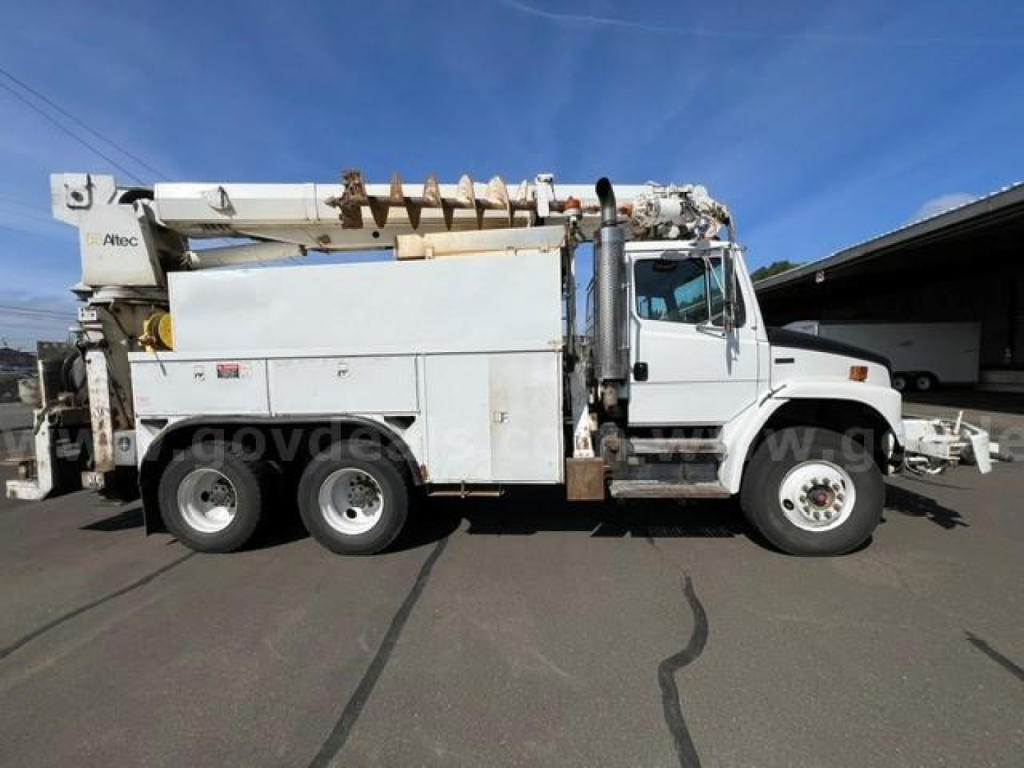

Have freightliner digger - derrick truck to sell? List it here to reach thousands of buyers.
Freightliner Digger - Derrick Trucks in Washington
The first buying decision is usually application-specific capacity. Digger derrick trucks vary widely in boom class, sheave height, auger torque, digging depth, pole handling tools, and winch rating. Utility contractors and municipalities often look for rear-mounted derricks with pole guides, heel winches, and auger storage that match distribution line work, while telecom and traffic-signal fleets may prioritize a lighter setup with enough reach for smaller poles, anchors, and drilled pier work. Common upfit names include Altec, Terex, and Elliott, and buyers should verify the actual derrick model, maximum lifting chart, auger drive options, remote-control functions, and whether the truck includes anchor handling gear, pole grabs, or a riding console.
On the Freightliner side, M2-series trucks are popular because parts support is strong and the chassis accepts a wide range of body lengths and axle ratings. Typical spec points include diesel engines in the medium-duty class, automatic or manual transmissions, air brakes, and PTO-driven hydraulics. Front axle capacity, rear axle ratio, wheelbase, and GVWR matter more than many buyers expect because a digger derrick can be stable in one configuration and overloaded in another once tools, cribbing, augers, and crew equipment are added. Outrigger design is equally important. A truck with well-maintained outriggers, solid hydraulic response, and a clean structural inspection is usually more valuable than one with attractive miles but limited documentation.
For Washington buyers, roadability and regional job conditions deserve extra attention. Mountain grades, wet weather, and mixed paved-to-soft-shoulder work can expose weak tires, marginal brakes, and sloppy suspension components quickly. Rust is often less severe than in heavy salt markets, but hydraulic leaks, body corrosion around tool compartments, and wear in boom pins, turntable components, and auger drives still need a close inspection. Ask for dielectric history if applicable, annual boom inspections, PTO and hydraulic service records, and confirmation that safety equipment, backup camera systems, remotes, and work lights are functioning. A well-matched Freightliner digger derrick should fit the lift chart, drilling requirement, axle capacity, and crew workflow of the work being done, because the wrong spec can create expensive downtime even when the truck itself runs well.
Frequently Asked Questions about Freightliner Digger - Derrick Trucks in Washington
What should I check first on a used Freightliner digger derrick truck?
Start with the derrick and hydraulic system, not just the cab and engine. Confirm the boom model, lifting chart, auger drive performance, winch operation, outrigger function, and any recent structural or annual inspections. Then review the Freightliner chassis details including GVWR, axle ratings, wheelbase, PTO setup, brake condition, and tire condition. A clean-running truck is only part of the package if the derrick body has deferred maintenance or missing documentation.
Is a Freightliner M2 106 a good chassis for a digger derrick body?
Yes, the Freightliner M2 106 is a common and practical platform for digger derrick applications. It is widely used by utilities, municipalities, and contractors because it offers good maneuverability, serviceability, and compatibility with major derrick body manufacturers. The key is making sure the specific M2 has the right wheelbase, front axle capacity, rear suspension, PTO provisions, and overall weight rating for the derrick and the tools it carries.
What capacity matters most on a digger derrick truck?
The most important capacity depends on the work, but buyers usually focus on boom lifting chart, sheave height, auger torque, digging depth, and payload carried on the chassis. Pole setting work may require more lifting performance and pole-handling equipment, while anchor and foundation drilling may put more emphasis on auger speed, down pressure, and tool storage. It is important to compare rated capacity at working radius, not just the headline maximum rating.
Are digger derrick trucks only for electric utility work?
No. Electric utility fleets are major users, but digger derrick trucks are also used in telecom construction, streetlight installation, traffic signal projects, foundation drilling, sign installation, and municipal public works. The body configuration determines how specialized the truck is. Some setups are optimized for distribution pole work, while others are better suited to lighter drilling and material handling tasks.
Why do outriggers and weight distribution matter so much on this category?
Outriggers and weight distribution directly affect safe lifting and drilling performance. A truck can have a strong boom but still be limited by poor chassis balance, inadequate axle capacity, or worn outrigger components. Buyers should verify that the outriggers deploy correctly, hold pressure, and match the lift chart assumptions for the body. Proper weight distribution also affects tire wear, steering, braking, and legal road operation between jobs.