
Freightliner Digger - Derrick Trucks For Sale
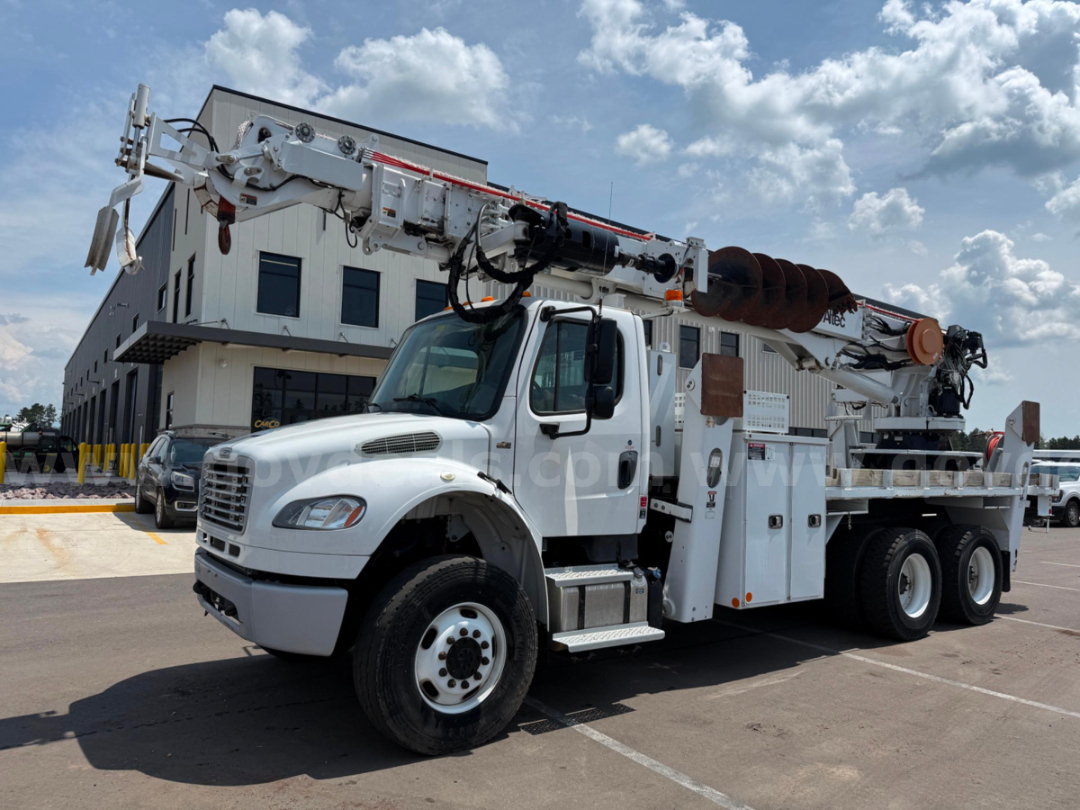
Shop Freightliner digger derrick trucks for utility, telecom, and pole-setting work. Compare chassis, boom, auger, PTO, and GVWR specs.

Have freightliner digger - derrick truck to sell? List it here to reach thousands of buyers.
Freightliner Digger - Derrick Trucks
The derrick itself is where the application gets more specific. Many Freightliner units in this class carry Altec equipment, but buyers should focus on rated lifting capacity, sheave height, auger torque, auger storage, and hydraulic performance instead of brand name alone. Pole handling gear, anchor drives, operator stations, and remote controls can make a major difference in daily productivity. On used digger derrick trucks, unit hours on the upper are often just as important as truck miles. A chassis with moderate mileage can still be a strong candidate if the boom, rotation bearing, PTO system, outriggers, and auger drive have been maintained correctly.
Stability and legal operating weight deserve close attention. Digger derricks are heavy by nature, and the combination of crane structure, tool storage, winch, augers, and material handling equipment can push a truck into a very different weight class than a standard service body. Check axle ratings, suspension spec, brake type, and outrigger footprint before comparing trucks side by side. Buyers working in snow, mud, or rural utility right-of-way often prioritize 6x6 drivetrains, locking differentials, and more aggressive tire setups. Urban and municipal fleets may put more value on maneuverability, automatic transmissions, backup cameras, and lower operating hours over extreme off-road capability.
A good Freightliner digger derrick should match the work cycle, not just the price tag. For distribution line work, streetlight installation, sign foundations, and telecom pole setting, look for a balance of reach, lifting capacity, auger performance, and chassis serviceability. Freightliner trucks generally have a broad service network and familiar medium-duty parts support, which can be an advantage for mixed fleets. When evaluating a used unit, buyers should review dielectric testing records if applicable, inspect subframe and mounting points for cracking or corrosion, confirm PTO engagement under load, and verify that all boom, winch, and auger functions operate smoothly from both platform and remote controls.
Frequently Asked Questions about Freightliner Digger - Derrick Trucks
What should I look at first on a used Freightliner digger derrick truck?
Start with the upper structure, not just the chassis mileage. Review boom and winch operation, auger drive performance, outrigger function, hydraulic leaks, PTO engagement, and rotation smoothness. Unit hours, maintenance records, and evidence of structural repairs around the pedestal, subframe, and outriggers are usually more important than cosmetic condition. The truck side still matters, especially engine, transmission, axle ratings, brakes, and tire condition, but the derrick system is typically the higher-cost area to repair.
Are Freightliner M2 106 digger derricks suitable for utility work?
Yes. The Freightliner M2 106 is a widely used medium-duty chassis for utility and municipal applications because it offers good cab visibility, straightforward service access, and flexible body builder compatibility. It is commonly spec'd with automatic transmissions and diesel engines that fit stop-and-go work well. Final suitability depends on the derrick package, GVWR, axle capacity, and whether the truck is configured as a 4x2 or 6x6 for the terrain you expect to cover.
How important are upper hours compared to miles on a digger derrick?
Upper hours are very important because they reflect how much the hydraulic and derrick system has actually worked. A truck can show relatively low miles but still have significant wear in the boom, winch, auger drive, and PTO-related components if it spent years on stationary jobsite duty. Buyers should compare both numbers together and ask how the truck was used, such as municipal line work, contractor pole setting, or storm response, because usage pattern affects wear as much as the totals themselves.
Do I need a 6x6 digger derrick truck or will a 4x2 work?
That depends on access conditions. A 4x2 digger derrick can be the right fit for paved municipal work, roadside utility service, and jobs with firm ground and easy approach angles. A 6x6 becomes more valuable when crews operate in soft soil, undeveloped right-of-way, winter conditions, or remote job locations where traction is critical. The heavier and more specialized the work environment, the more a front drive axle and off-road oriented spec can justify the added complexity.
What common features improve productivity on a digger derrick truck?
Remote controls, pole grabs, anchor drives, backup cameras, work lighting, tool storage, and well-designed outrigger controls all help crews work faster and safer. Buyers also tend to value automatic transmissions, trailer brake provisions, and inverter systems for support equipment. On the derrick side, practical features like adequate auger storage, smooth winch control, and a properly matched lifting chart can have a bigger effect on jobsite efficiency than raw horsepower alone.