
Used Freightliner Digger - Derrick Trucks For Sale
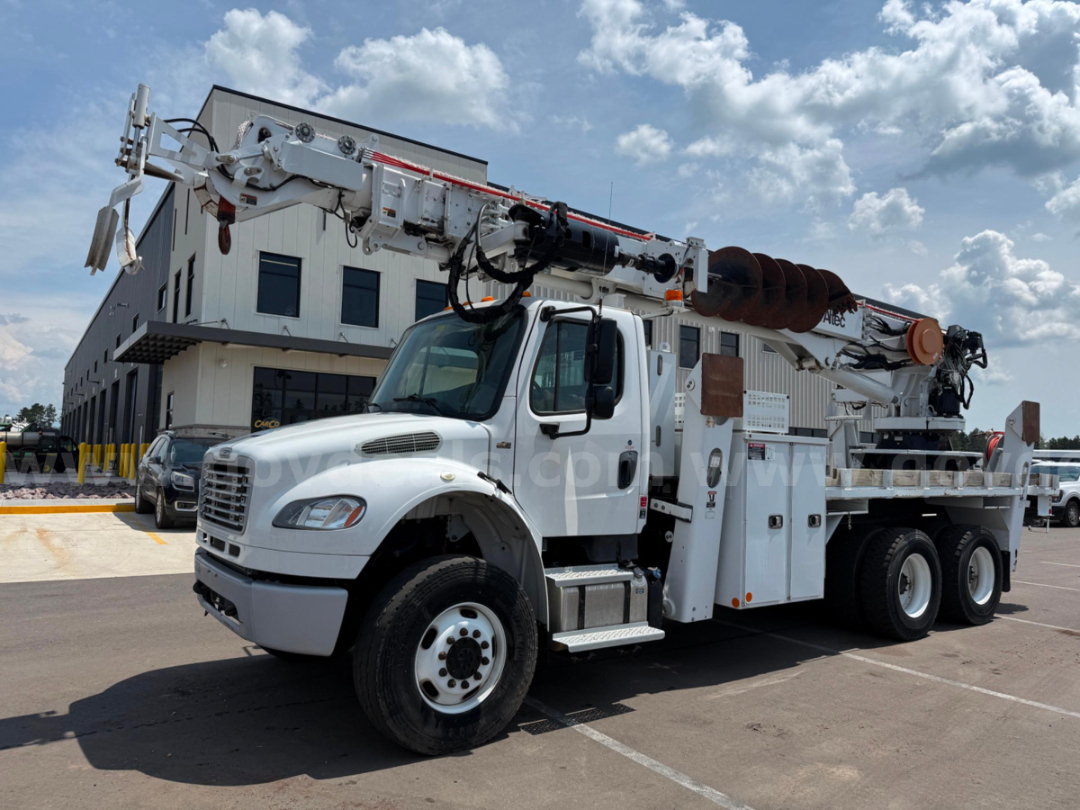

Have used freightliner digger - derrick truck to sell? List it here to reach thousands of buyers.
Used Freightliner Digger - Derrick Trucks
The chassis matters as much as the derrick. Freightliner digger derrick trucks are often equipped with diesel engines in the medium-duty range, automatic transmissions, and GVWR ratings that support a fully outfitted body, outriggers, auger tooling, and payload. Buyers should pay close attention to axle ratings, suspension type, wheelbase, and whether the truck is 4x2, 4x4, or 6x6. A 6x6 or front-wheel-assist setup can make a major difference on soft rights-of-way, unimproved access roads, and storm-response work. Air brakes, trailer brake provisions, and onboard inverters are also common on fleet-specified units.
On the body side, the important decisions are digger derrick model, sheave height, digging depth, lifting capacity, and auger drive configuration. Many used units include pole grabs, anchor handling capability, remote controls, and operator stations that support both seated and ground operation. Outrigger design, boom condition, hydraulic leaks, and unit hours deserve the same scrutiny as engine miles. On a used digger derrick, service records for hydraulic components, turntable wear, auger drives, PTO operation, and dielectric or annual inspections can tell you more than appearance alone. If the truck came from municipal or utility fleet service, that can be a plus when maintenance history is documented.
A good used Freightliner digger derrick should match the terrain, pole class, and crew workflow you deal with every day. For distribution work and telecom placement, maneuverability and setup speed may be more important than maximum lift chart. For heavier utility work, chassis capacity, rear stability, and derrick performance under load move to the top of the list. Buyers comparing listings should look beyond year and mileage and confirm body manufacturer, boom specifications, engine hours, unit hours, remote setup, and any title or inspection issues before making a decision.
Frequently Asked Questions about Used Freightliner Digger - Derrick Trucks
What is a Freightliner digger derrick truck used for?
A Freightliner digger derrick truck is used for drilling holes, setting utility poles, placing anchors, and handling line construction materials. These trucks are common in electric utility, telecom, municipal, and contractor fleets because they combine a roadable chassis with a hydraulic derrick and auger system that can perform several field tasks with one unit.
What should I inspect first on a used digger derrick truck?
Start with the boom and hydraulic system, then verify the chassis. Buyers should check outriggers, boom structure, turntable condition, winch operation, auger drive, PTO engagement, and any visible hydraulic seepage or cylinder damage. On the truck side, confirm engine hours, transmission operation, axle ratings, brake system type, tire condition, and signs of frame stress or corrosion. Service records and inspection documentation are especially valuable on utility equipment.
Are Freightliner M2 106 trucks common in the digger derrick market?
Yes. The Freightliner M2 106 is a common platform for digger derrick bodies because it offers a good balance of maneuverability, GVWR capacity, serviceability, and operator familiarity. Many fleets use the M2 106 for municipal and utility applications where the truck needs to travel paved roads but still handle jobsite access, PTO hydraulic demands, and body upfit weight.
How important are engine hours and unit hours on a used digger derrick?
Both matter, and they measure different kinds of wear. Engine hours help show how long the chassis has spent idling or operating, while unit hours indicate use on the derrick and hydraulic equipment itself. A truck with modest road miles can still have significant body wear if the digger derrick has seen heavy daily operation, so buyers should evaluate both numbers together rather than relying on odometer mileage alone.
Should I choose a 4x2, 4x4, or 6x6 digger derrick truck?
The right drivetrain depends on your terrain and access conditions. A 4x2 truck may be sufficient for paved routes and developed job sites, but utility work often benefits from added traction. A 4x4 or 6x6 configuration is better suited for muddy easements, rural rights-of-way, storm restoration, and undeveloped access roads where a standard rear-drive truck may struggle to get positioned safely.