
New 2026 Mack Crane Trucks For Sale in Texas
Have new 2026 mack crane truck to sell? List it here to reach thousands of buyers.
New 2026 Mack Crane Trucks in Texas
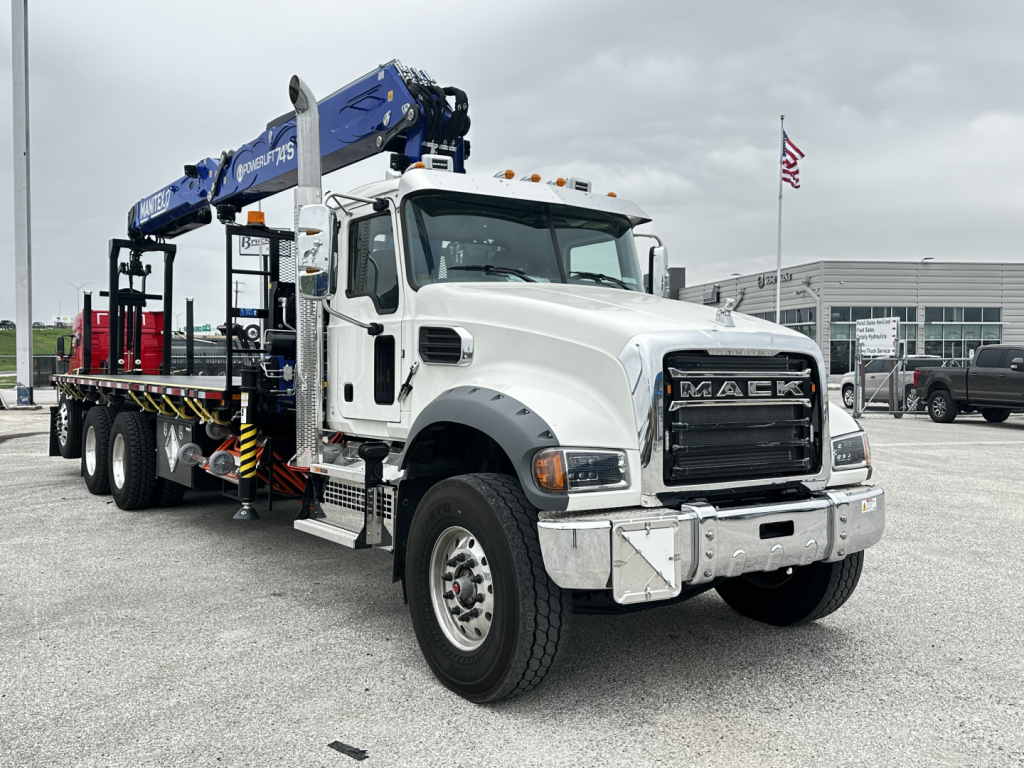
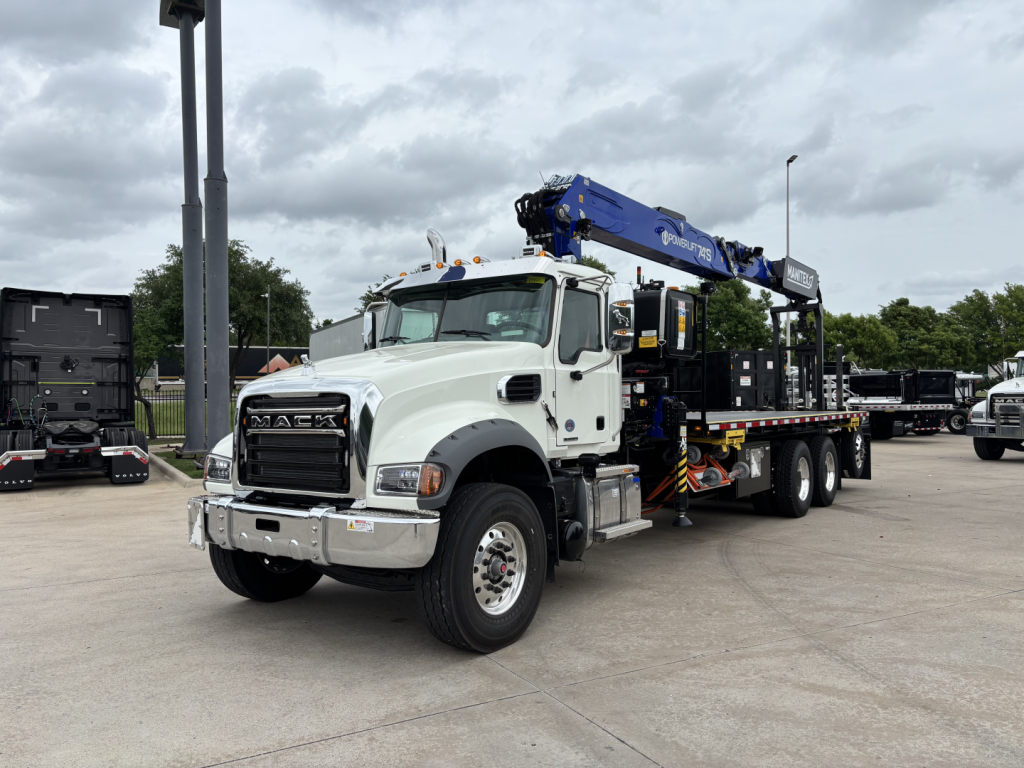
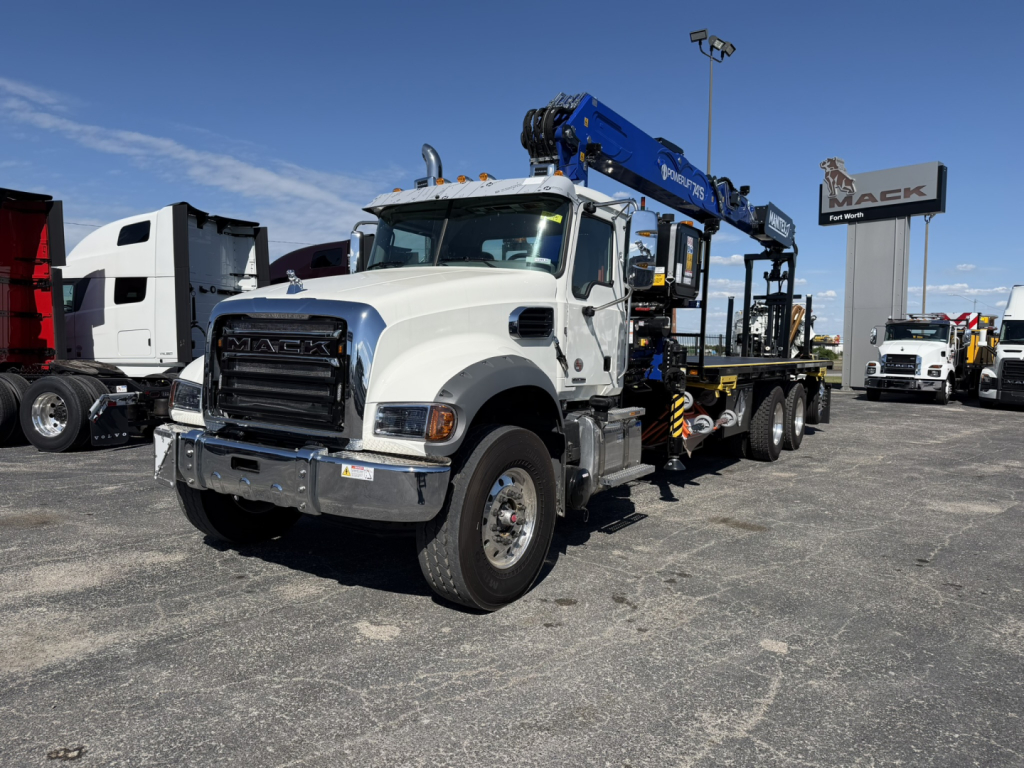
The spec decisions that matter most start with the crane and body combination. Buyers should look closely at crane make and model, lifting moment, boom reach, outrigger spread, and whether the truck is set up for drywall boom work, knuckleboom material handling, or a stiff-boom crane application. Body length, deck construction, rub rail layout, winch track placement, stake pockets, and tie-down provisions all affect how useful the truck will be on real delivery routes. On many new Mack crane trucks, you'll also see heavy flatbeds, wallboard bodies, toolboxes, ladders, dunnage storage, and work-ready accessories that reduce upfit time.
Chassis ratings are just as important as the crane itself. A typical vocational setup in this category may include a 20,000-pound front axle, tandem rears in the 40,000 to 46,000-pound range, a heavy-duty suspension, and a rear ratio chosen to balance startability with road speed. Mack MP-series diesel engines and mDRIVE HD automated transmissions are common in this equipment class, especially when low-speed control, creeper gearing, and reverse maneuverability matter on tight jobsites. Buyers in Texas should also pay attention to bridge law considerations, axle spacing, overall GVWR, and how the crane, body, and payload interact so the truck stays compliant and productive.
A well-spec'd crane truck can replace multiple pieces of equipment on a delivery because it transports the material and unloads it without relying on a separate machine at the site. That makes uptime, stability, and service access critical. Look for clean PTO and hydraulic integration, practical outrigger placement, easy-to-service body components, and a cab layout that supports local and regional vocational work. If the job mix includes multi-stop building material delivery, a new Mack crane truck offers the combination of chassis strength, operator control, and upfit flexibility that buyers usually want in a dedicated crane body truck, also known in some applications as a boom truck or truck-mounted crane truck.
Frequently Asked Questions about New 2026 Mack Crane Trucks in Texas
What is a Mack crane truck typically used for?
A Mack crane truck is typically used for delivering and placing heavy building materials without needing a separate unloading machine on site. Common applications include wallboard delivery, roofing supply delivery, trusses, steel, HVAC units, and palletized construction materials. The exact use depends on the crane type, bed design, and axle ratings, but most trucks in this category are built for vocational routes that combine transport and material placement.
What specs matter most when buying a new 2026 Mack crane truck?
The most important specs are crane capacity, boom reach, body length, axle ratings, PTO and hydraulic setup, and payload distribution. Buyers should also verify front axle capacity because crane trucks often carry substantial weight over the steer axle. Transmission choice, suspension rating, outrigger design, and deck configuration are also critical because they affect low-speed control, lift stability, and how efficiently the truck can handle real delivery work.
Is a Mack Granite a good chassis for a crane truck?
Yes, the Mack Granite is a strong fit for crane truck applications because it is designed as a vocational chassis with the frame strength, axle options, and drivetrain availability needed for demanding upfits. It is commonly used where buyers need durability, solid maneuverability, and compatibility with PTO-driven hydraulic systems. For many crane body applications, the Granite platform provides the front axle capacity and heavy-duty spec flexibility that this equipment class requires.
What should Texas buyers pay attention to on a crane truck?
Texas buyers should pay close attention to axle spacing, registered weight, bridge compliance, and how the crane and body upfit affect legal payload. Route conditions also matter because local delivery work can involve a mix of highway miles, urban jobsites, and unimproved surfaces. Cooling package capacity, heavy-duty suspension specs, and practical storage for rigging and jobsite equipment can make a meaningful difference in day-to-day performance in Texas service.
What is the difference between a crane truck, boom truck, and truck-mounted crane truck?
These terms are often used interchangeably, but they can describe slightly different configurations depending on the industry. A crane truck is the broad category. A boom truck often refers to a truck with a mounted lifting boom used for placing materials, while truck-mounted crane truck is a more literal description of the equipment. The real differences usually come down to the crane style, such as wallboard boom, stiff-boom, or knuckleboom, rather than the name alone.