
2026 Mack Crane Trucks For Sale in Texas
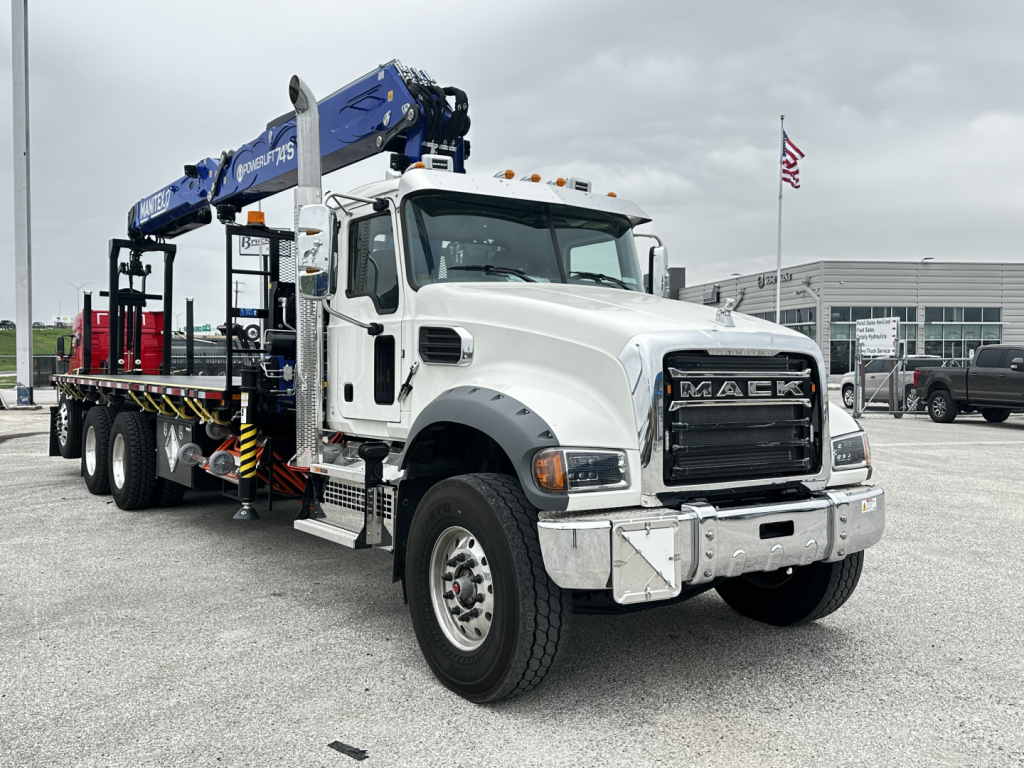
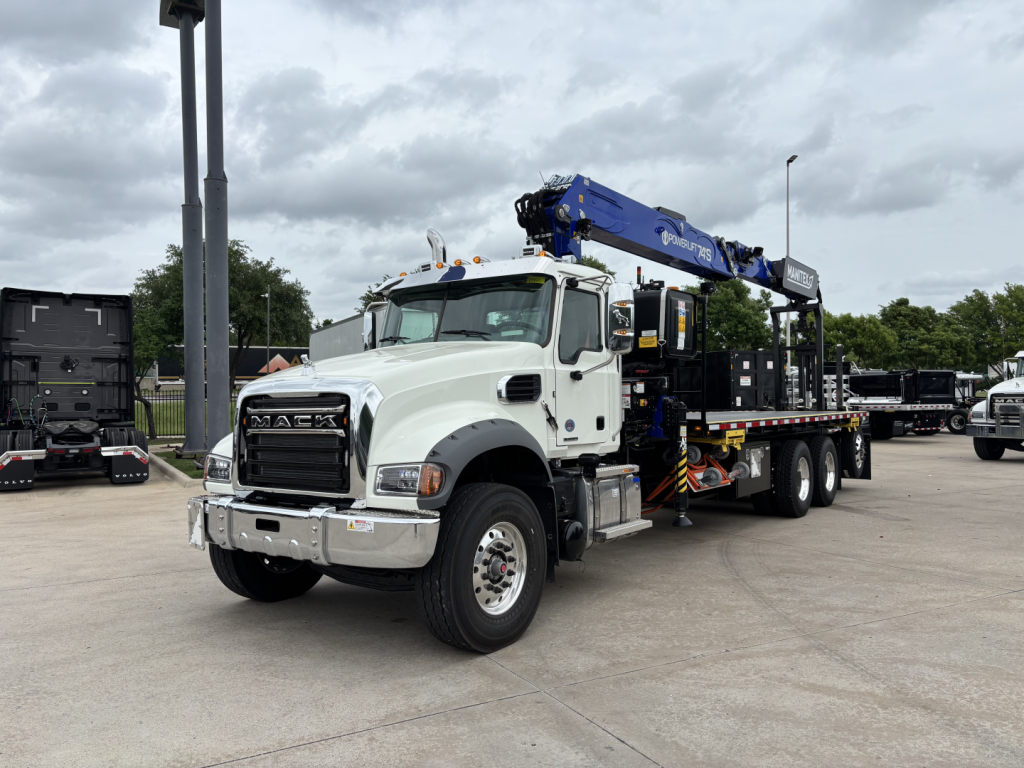
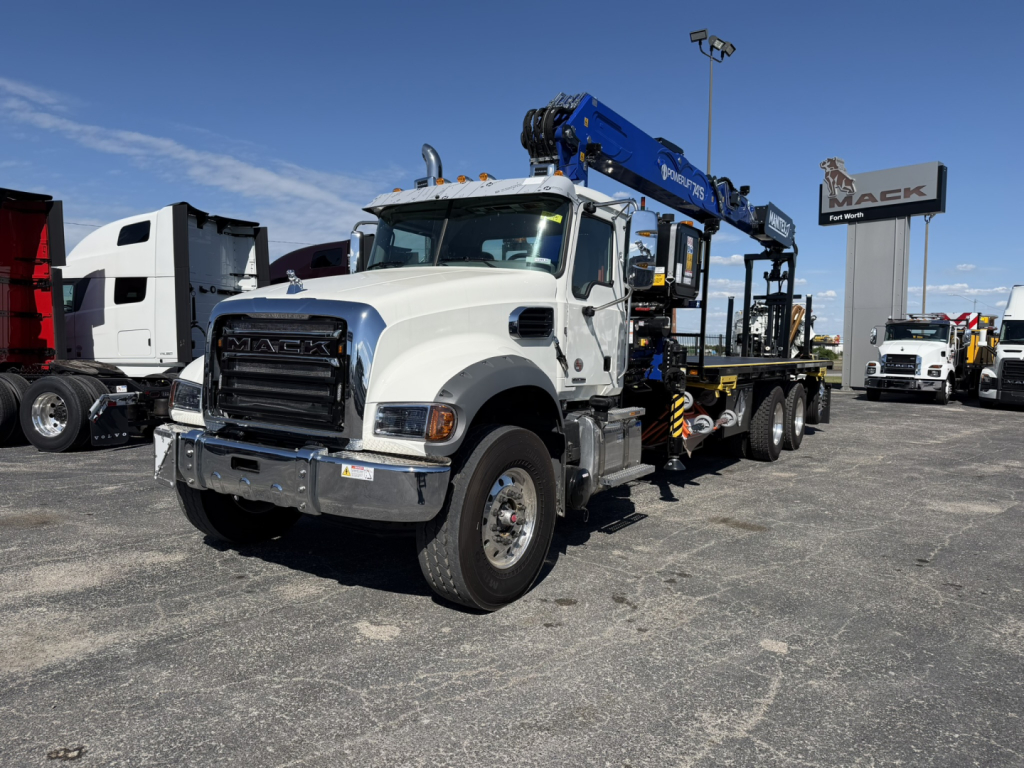
Have 2026 mack crane truck to sell? List it here to reach thousands of buyers.
2026 Mack Crane Trucks in Texas
On current Mack crane truck setups, the key decisions start with axle ratings, wheelbase, and transmission spec before the crane brand or boom length is even considered. Typical buyer checkpoints include a 20,000 lb front axle, tandem rears in the 40,000 to 46,000 lb range, and in some applications a lift axle to spread payload and bridge weight. Mack MP8 power in the mid-400 horsepower range is common for heavier crane bodies, especially when the truck needs to move dense building products or operate in stop-and-go urban delivery cycles. The mDRIVE automated manual transmission is a strong fit for this category because it improves low-speed control, reduces driver fatigue, and can be ordered with creeper gearing and multi-speed reverse for precise positioning on uneven jobsites.
Crane selection should match the material and reach requirement, not just maximum lifting capacity. Knuckle boom cranes are popular for drywall, wallboard, roofing material, trusses, and palletized construction products because they fold compactly, reach over obstacles, and offer accurate placement close to structures. Straight boom cranes are often favored when longer horizontal reach and simpler lifting geometry matter more than compact stowage. Buyers should pay close attention to the crane chart at specific radii, outrigger spread requirements, subframe design, and how much bed space remains after installation. Safety systems such as load moment indicators, anti-two-block protection, overload protection, and well-laid-out remote controls are not minor features in this class. They directly affect operator confidence, setup time, and jobsite compliance.
Texas buyers often put extra focus on cooling performance, vocational durability, and legal axle distribution because these trucks see heat, traffic, and mixed highway-jobsite use. Frame reinforcement, suspension tuning, PTO and hydraulic integration, and body upfit quality all matter as much as the badge on the hood. A well-spec'd Mack crane truck should feel balanced with the crane stowed, stay stable with outriggers deployed, and leave enough payload capacity for the material being delivered. For most fleets and owner-operators, the best unit is the one with the right crane style, usable deck length, axle package, and serviceable hydraulic system for the work performed every day.
Frequently Asked Questions about 2026 Mack Crane Trucks in Texas
What is the difference between a crane truck, boom truck, and knuckle boom truck?
A crane truck is the broad category for a truck chassis fitted with a lifting crane. A boom truck often refers to a truck with a telescopic or straight boom crane, while a knuckle boom truck uses an articulating crane that folds in sections. Knuckle boom designs are usually better for tight jobsites, obstacle clearance, and precise material placement. Straight boom designs are often chosen for simpler lifts and longer reach in a more linear working range.
What should I look for first on a Mack crane truck?
Start with chassis capacity and weight distribution. Front axle rating, rear axle rating, wheelbase, frame strength, and any lift axle setup determine whether the truck can safely support the crane and still carry useful payload. After that, review engine horsepower, transmission gearing, PTO and hydraulic spec, and the actual crane load chart. Many buyers focus too quickly on maximum boom rating, but the chassis and installation quality determine how usable the truck is in real work.
Is a Mack mDRIVE transmission a good choice for crane truck applications?
Yes, in many vocational crane truck applications the mDRIVE automated manual is a strong choice. It helps with low-speed maneuvering, reduces clutch wear, and can improve consistency across multiple drivers. Specifying creeper gears and suitable reverse ratios is important when the truck must back into tight delivery spots or inch into position before crane setup. The right transmission calibration matters as much as the transmission model itself.
Are knuckle boom crane trucks better for building material delivery?
In many cases, yes. Knuckle boom cranes are widely used in building supply and wallboard delivery because they can fold compactly behind the cab, preserve workable deck space, and place material with good accuracy. They are especially effective where the operator must reach over fences, around structures, or onto elevated areas. The better choice still depends on lift radius, material weight, and how much bed length is needed for each load.
What matters most in Texas for a 2026 Mack crane truck?
Texas operations often demand strong cooling capacity, durable suspension and frame specs, and careful attention to axle spacing and legal weight distribution. Many trucks in this class split time between highway travel, city delivery, and rough jobsite access, so buyers should evaluate turning radius, bridge compliance, outrigger footprint, and service support for both the chassis and crane. Heat management and hydraulic reliability are especially important in long-duty-cycle construction and material handling work.