
2018 Conventional Sleeper Trucks For Sale in New York
Browse 2018 conventional sleeper trucks for sale in New York. Compare roof height, engine, transmission, wheelbase, gearing, and sleeper specs.
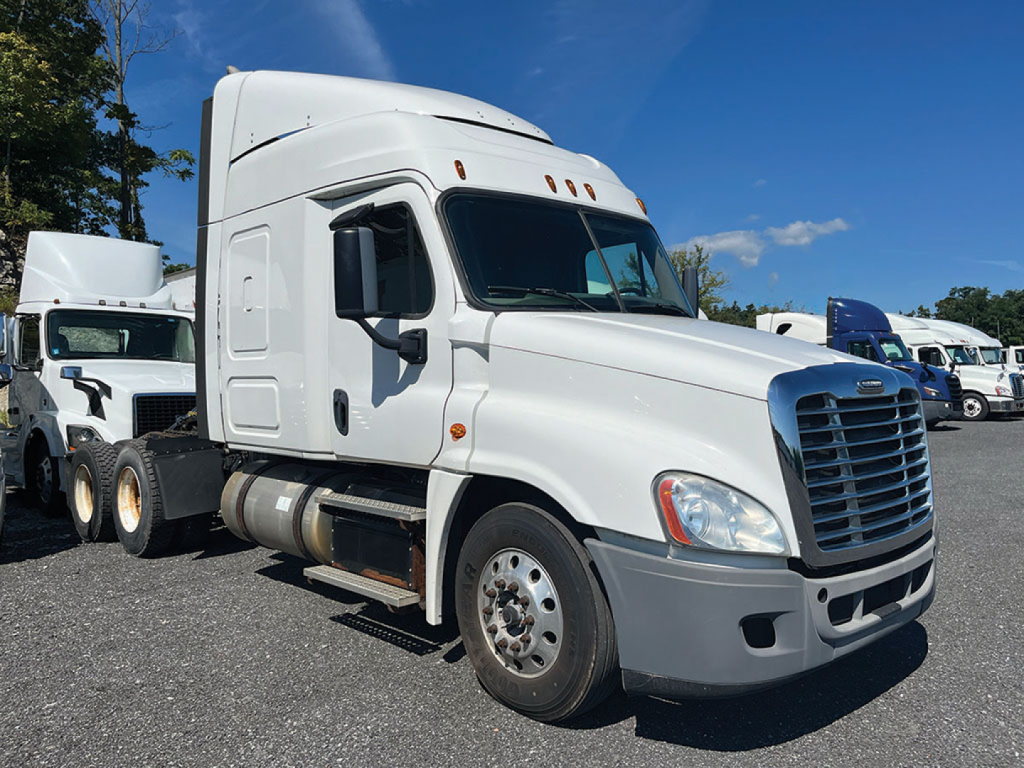

Have 2018 conventional sleeper truck to sell? List it here to reach thousands of buyers.
2018 Conventional Sleeper Trucks in New York
The main buying decisions usually come down to engine family, transmission spec, sleeper size, and rear axle ratio. A 2018 sleeper in this category often carries 400 to 500 horsepower, with popular engines including the Detroit DD15, Volvo D13, Cummins X15, and Navistar A26. Automated manuals such as the DT12, Volvo I-Shift, and Eaton Endurant are common, though 10-speed and 13-speed manual setups still appear. Typical rear axle ratings are 40,000 pounds with ratios like 2.47, 2.64, 2.85, or 3.08, and that gearing matters. Lower numerical ratios generally favor fuel economy on long interstate runs, while deeper ratios can better suit heavier freight, hill work, or more stop-and-go applications across the Northeast.
For New York buyers, sleeper configuration and wheelbase deserve close attention. Many 2018 conventional sleepers are set up with 60-inch to 80-inch sleepers, upper bunks, bunk heaters, refrigerators, and air slide fifth wheels. A wheelbase in the low 220-inch range can be a good compromise between ride quality and maneuverability, especially when the truck has to work tighter terminals, urban receivers, or congested distribution corridors. Fuel capacity, fairing condition, and corrosion around frame rails, battery boxes, crossmembers, and cab mounts are also worth checking in Northeast service. DEF system history, DPF maintenance records, and idle management setup can tell you a lot about how the truck was operated and what to expect on operating costs.
A strong 2018 conventional sleeper should be evaluated as a complete road package, not just by mileage or engine make. Look at service records, fault codes, clutch life on AMTs, suspension wear, tire match, brake condition, and signs of prior emissions repairs. Interior condition matters too because high-mileage linehaul trucks show wear first in bunks, seats, cabinet latches, and HVAC performance. When the specs are matched to the lane, this category can still deliver solid uptime, respectable fuel economy, and a sleeper environment that works for solo or team drivers running overnight freight.
Frequently Asked Questions about 2018 Conventional Sleeper Trucks in New York
What is a 2018 conventional sleeper truck?
A 2018 conventional sleeper truck is a highway tractor with a forward hood and an integrated sleeping compartment mounted behind the cab. It is designed for long-haul or overnight freight where the driver needs onboard living space. In this model year, most conventional sleepers were built with aerodynamic bodywork, tandem rear axles, and either a manual or automated manual transmission.
What engines are common in 2018 conventional sleeper trucks?
Common engine platforms in 2018 conventional sleepers include the Detroit DD15, Volvo D13, Cummins X15, PACCAR MX-13, and Navistar A26. Horsepower ratings typically fall between 400 and 500 horsepower, depending on the application. The best choice depends on the freight, terrain, service network preference, and how important fuel economy versus performance is in your operation.
What sleeper size should I look for in a 2018 highway tractor?
Sleeper size should match the way the truck will be used. A 60-inch sleeper can work well for regional haul or occasional overnights, while 72-inch to 80-inch high-roof sleepers are better suited for long-haul and team service. Larger sleepers usually provide more storage, better standing room, room for a refrigerator or bunk heater, and a better driver retention package, but they also add weight and length.
Are automated manual transmissions common in 2018 conventional sleepers?
Yes. By 2018, automated manual transmissions were widely used in conventional sleeper trucks, especially in fleet-spec highway tractors. Systems like the Volvo I-Shift and Detroit DT12 became common because they improved shift consistency, reduced driver fatigue, and often helped fuel economy. A buyer should still review clutch calibration history, software updates, and transmission fault records before making a decision.
What should New York buyers inspect on a used 2018 conventional sleeper?
New York buyers should pay close attention to frame and cab corrosion, suspension wear, emissions system history, and overall maneuverability for Northeast routes. Winter road treatment can accelerate rust on crossmembers, brackets, and hardware, so an undercarriage inspection matters. Wheelbase, axle ratio, and sleeper height should also be considered in relation to toll roads, warehouse access, city deliveries, and long interstate runs.