
Used Freightliner Conventional Daycab Trucks For Sale in California
Shop used Freightliner conventional daycab trucks in California. Compare Cascadia specs, DD13 engines, axle setups, and local-duty configurations.
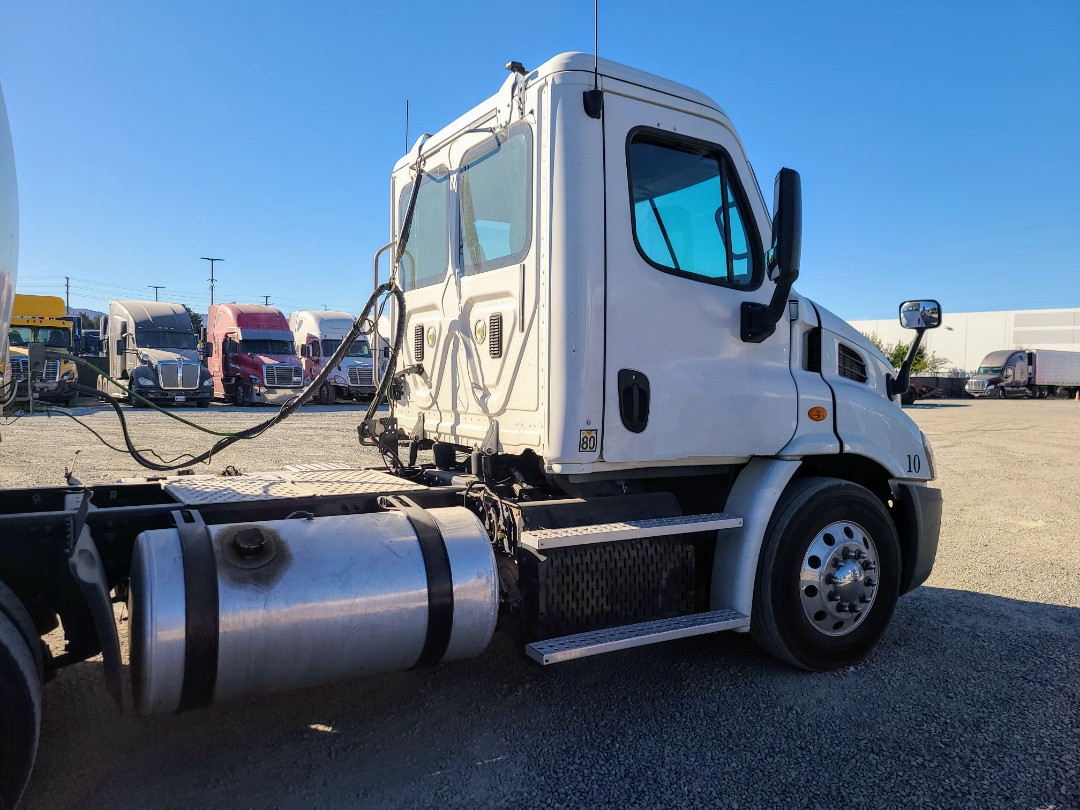

Looking for the easiest place to sell your used freightliner conventional daycab truck? List it here to reach thousands of buyers.
Used Freightliner Conventional Daycab Trucks in California
The main buying decisions usually come down to engine, transmission, wheelbase, and axle spec. Many used Freightliner daycabs in this segment carry Detroit power, often a DD13 for a strong balance of fuel economy, serviceability, and horsepower in regional applications. Power ratings around 350 to 450 hp are common, and torque output matters more than peak horsepower if the truck will spend its life starting heavy loads from a stop. Buyers should also compare manual versus automated transmissions, rear axle ratios, and whether the truck is spec'd as a lightweight regional tractor or a heavier-duty unit for vocational or port-related work. Fuel tank size, frame layout, PTO provisions, and fifth wheel position also affect how well a truck fits its intended route structure and trailer mix.
California buyers should pay close attention to emissions equipment and operating compliance. On used Freightliner daycabs, that means reviewing the aftertreatment system, ECU history, fault codes, and repair records for components such as the DPF, DEF system, sensors, and control modules. A lower-priced truck can become expensive quickly if it needs major emissions or electronic repairs, so it is worth verifying active codes, regen history, and any recent work to the CPC, ACM, or wiring harness. Front axle rating, suspension type, brake configuration, and tire condition are also worth checking closely on local-service trucks because repeated stop-and-go work can accelerate wear in ways highway mileage does not always show.
A well-matched Freightliner daycab can be a cost-effective tractor for fleets and owner-operators that value parts availability, familiar service networks, and a driver-friendly cab layout. Freightliner conventionals are widely used, which helps with maintenance support and resale liquidity. When comparing listings, look beyond model year and focus on the full operating spec: engine family, transmission model, miles, idle hours, axle ratio, GVWR and GCWR, wheelbase, and maintenance documentation. Those details will tell you far more about how the truck will perform in California duty cycles than the badge on the hood alone.
Frequently Asked Questions about Used Freightliner Conventional Daycab Trucks in California
What is a Freightliner conventional daycab truck best used for?
A Freightliner conventional daycab is best suited for regional and local tractor work where the driver does not need a sleeper. Common applications include port drayage, warehouse shuttles, local flatbed hauling, dump trailer pulls, tanker work, and dedicated delivery routes. The shorter cab-to-axle layout improves maneuverability and can make backing, docking, and city driving easier than a comparable sleeper tractor.
What engines are common in used Freightliner daycab trucks?
Used Freightliner daycabs commonly come with Detroit engines, especially the DD13 in regional-haul specs. Depending on model year and original application, buyers may also find other Detroit platforms or higher-output engines in heavier tractors. The right engine depends on gross combination weight, terrain, and start-stop frequency. For many California fleets, a mid-range Detroit setup offers a good mix of fuel economy, torque, and service support.
What should I inspect on a used Freightliner daycab before buying?
Start with the emissions system, engine fault codes, transmission operation, suspension wear, brake condition, and signs of frame or fifth wheel stress. On Freightliner trucks, electronic modules and aftertreatment history deserve close attention because unresolved issues with the CPC, ACM, DPF, or DEF system can create downtime and unexpected repair cost. Service records, idle hours, tire wear patterns, and evidence of regular PM intervals are often as important as the odometer reading.
Are manual or automated transmissions better in a Freightliner daycab?
Neither is universally better. A manual transmission can appeal to buyers who want a lower-cost drivetrain and direct control in specialized applications, while an automated manual transmission can improve driver consistency and reduce fatigue in heavy traffic. In California local and regional service, the best choice usually depends on driver preference, route density, maintenance capability, and how often the truck starts heavy loads from a stop.
Why does wheelbase and axle ratio matter on a daycab tractor?
Wheelbase affects turning radius, trailer clearance, ride quality, and how the truck balances fuel capacity with maneuverability. Axle ratio influences launch performance, cruising rpm, and fuel economy. A shorter wheelbase may be better for yard access and urban work, while the right axle ratio can help a daycab stay productive in stop-and-go freight or on heavier regional routes. These specs have a direct effect on operating cost and should be matched to the trailer and load profile.