
2024 Volvo Cab and Chassis Trucks For Sale in Texas
Shop 2024 Volvo cab and chassis trucks in Texas. Compare VHD specs, axle setups, wheelbases, PTO options, and vocational upfit readiness.
Selling a 2024 volvo cab and chassis truck? List your 2024 volvo cab and chassis truck for sale and reach thousands of commercial buyers.
2024 Volvo Cab and Chassis Trucks in Texas
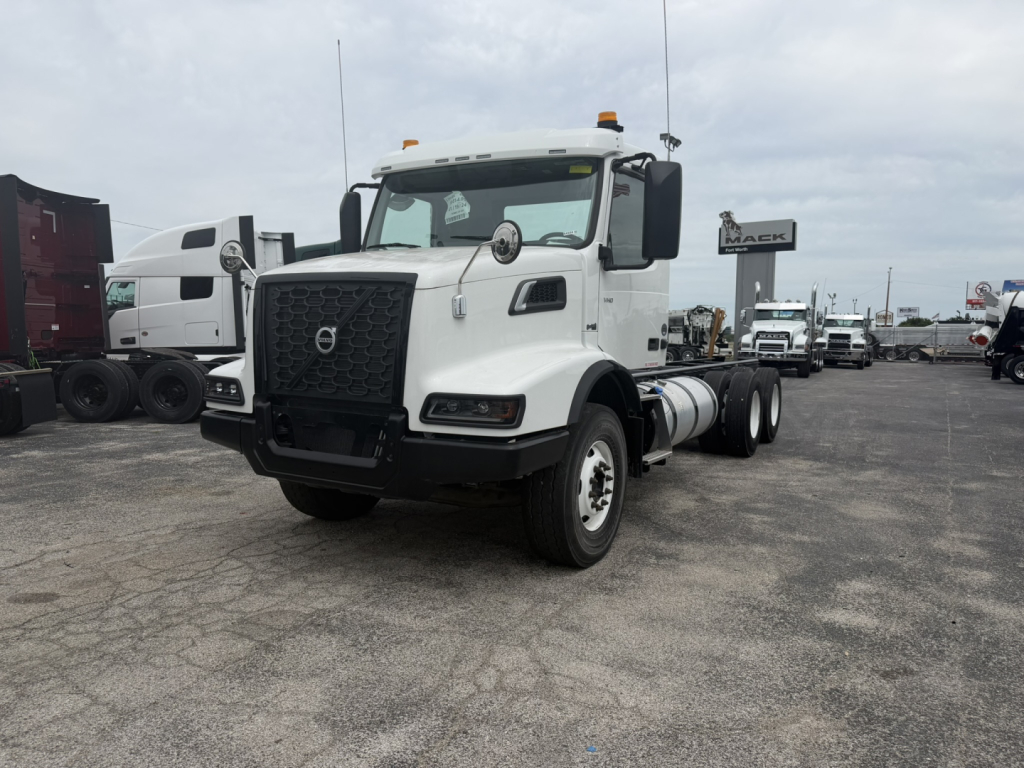
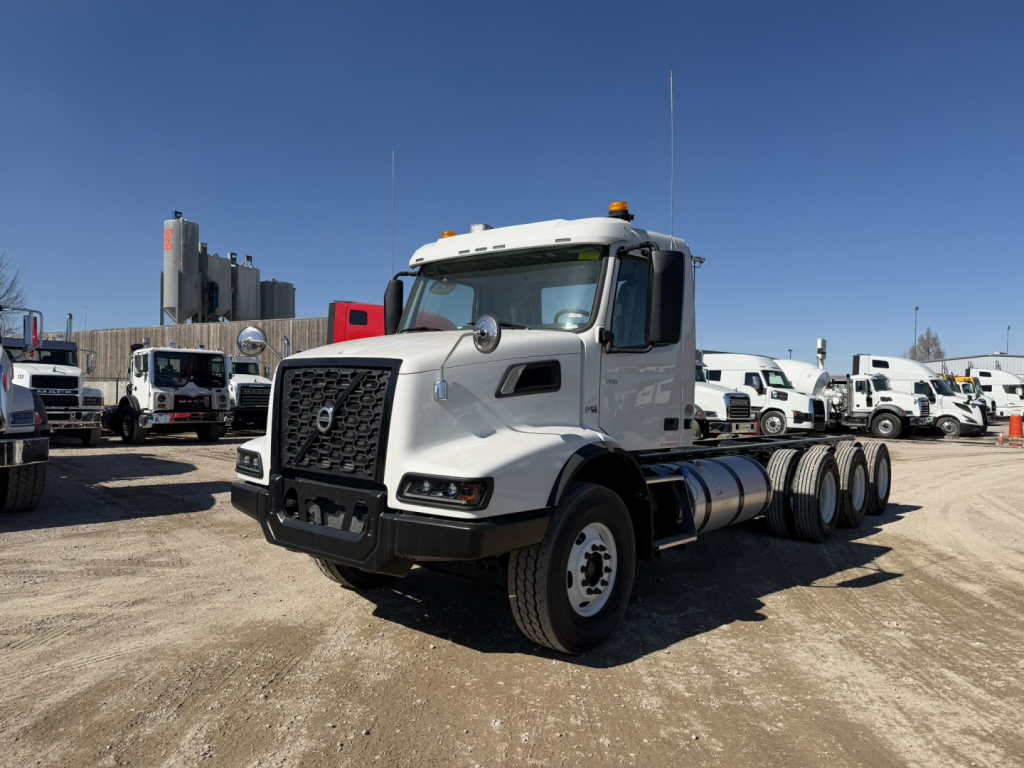
The big spec decisions usually start with axle configuration and wheelbase. Many 2024 Volvo cab and chassis trucks are set up as tandem or tri-drive units, with tri-drive models aimed at high-traction, high-GVWR work where flotation and pulling power are critical. Common vocational engine choices include the Volvo D13, often in the 425 HP range with torque suited to heavy starts and hydraulic workloads. Manual transmissions such as an Eaton Fuller 8LL remain relevant in severe-service applications because deep reduction gearing helps in mud, grades, and precise low-speed maneuvering. Buyers should also confirm PTO provisions, cooling capacity, front axle rating, and the exact cab-to-axle dimension, since those details directly affect what body can be mounted and how well the finished truck will perform.
Suspension and brake choices tell you a lot about what a cab and chassis was built to do. Multi-leaf front suspension, heavy steer axles, vocational air suspensions like Hendrickson PRIMAAX EX, and aggressive rear axle ratios are common on trucks intended for cranes, winch trucks, water tanks, and heavy dump bodies. A truck with interaxle differential lock, vocational rubber, and a high-capacity cooling package is generally better suited for slow-speed, high-load work than a lighter on-road chassis. Wheelbase is another critical point. A longer wheelbase may support certain body lengths or equipment layouts, while a shorter one can improve maneuverability on crowded jobsites. Fuel tank placement, battery box location, and frame clearances also need to match the planned upfit.
For buyers comparing 2024 Volvo cab and chassis trucks for sale, the smartest approach is to match the chassis to the finished application before focusing on price alone. Check the GVWR and axle ratings against the payload, body, and equipment weight. Verify transmission gearing for startup load and terrain. Review frame strength, PTO compatibility, and any factory vocational prep that reduces upfit time. A properly spec’d Volvo cab and chassis can be a long-service platform for severe-duty work, but the wrong wheelbase, axle package, or gearing can create expensive compromises after the body is installed.
Frequently Asked Questions about 2024 Volvo Cab and Chassis Trucks in Texas
What is a 2024 Volvo cab and chassis truck used for?
A 2024 Volvo cab and chassis truck is used as a base platform for vocational upfits such as dump bodies, water tanks, service bodies, cranes, vacuum units, mixers, roll-off systems, and oilfield equipment. It leaves the factory without the final body so the buyer or upfitter can match the chassis to a specific job. In Texas, these trucks are often chosen for energy, construction, municipal, and utility work where frame strength, PTO capability, and axle capacity are more important than highway fuel economy alone.
What should I check before buying a Volvo cab and chassis for an upfit?
The most important items are wheelbase, cab-to-axle measurement, frame section, axle ratings, suspension type, PTO openings, and transmission gearing. Those specs determine whether the chassis can physically accept the body and whether it will carry the finished load legally and efficiently. Buyers should also confirm cooling capacity, fuel tank placement, battery box location, and any factory-installed vocational options that may simplify the body installation.
Why do some Volvo cab and chassis trucks use an Eaton Fuller 8LL manual transmission?
An Eaton Fuller 8LL is common in severe-duty vocational work because it provides deep reduction gearing for low-speed control under heavy load. That matters when starting on grades, moving through soft ground, backing into tight jobsite positions, or powering equipment that demands precise truck movement. It is a practical transmission choice for applications like oilfield service, heavy dump, and construction support where durability and crawl-speed control are priorities.
Are tri-drive Volvo cab and chassis trucks better for off-road work?
Tri-drive Volvo cab and chassis trucks are often a better fit for severe off-road work because the added driven axle improves traction, weight distribution, and load support. They are especially useful in muddy lease roads, pipeline construction, logging environments, and other conditions where tandem drives may struggle. The tradeoff is added weight, more complexity, and a larger turning footprint, so the application should justify the extra capacity and traction.
What Volvo model is most common in heavy vocational cab and chassis applications?
The Volvo VHD is one of the most common models used in heavy vocational cab and chassis applications. It is designed for demanding work that requires a durable chassis, vocational drivetrain options, and compatibility with specialized bodies and equipment. Buyers frequently look at VHD configurations when they need a truck for construction, municipal, utility, oilfield, or other severe-service jobs where uptime and body-builder flexibility matter.