
2026 Ford Cab and Chassis Trucks For Sale in Georgia
Shop 2026 Ford cab and chassis trucks in Georgia. Compare F-350 and F-450 specs, GVWR, wheelbases, engine choices, and body upfit options.
Have 2026 ford cab and chassis truck to sell? List it here to reach thousands of buyers.
2026 Ford Cab and Chassis Trucks in Georgia
Engine choice matters because it affects payload, operating cost, and daily use. Ford’s 7.3L gas V8 is a strong fit for fleets that want lower acquisition cost, straightforward maintenance, and trucks that spend more time on local routes with frequent stops. The 6.7L Power Stroke diesel is the better match when torque, trailer weight, and sustained heavy-duty use are the priority. Both are typically paired with Ford’s 10-speed automatic, which helps keep the truck in the right power band under load. On a chassis cab, buyers should look beyond horsepower and pay close attention to rear axle ratio, PTO compatibility if a hydraulic system will be added, and how the final body installation will affect curb weight and payload.
Body fit is where a cab and chassis truck either works well or becomes expensive to correct later. A 168-inch wheelbase is commonly used for 8-foot to 9-foot bodies, while heavier F-450 chassis can be a practical foundation for 8-foot to 10-foot dump bodies or 12-foot platform and van body applications, depending on the exact upfit and weight distribution. Frame dimensions, cab-to-axle measurement, and rear overhang all need to match the body builder’s requirements. Buyers in Georgia often prioritize trailer tow packages, integrated brake controller capability, rear camera prep, and engine block heaters less for winter severity and more for broader operating flexibility and resale appeal. If the truck will spend time on jobsites, also consider ground clearance, running boards, suspension tuning, and how the body design affects access to tools and materials.
A Ford cab and chassis is often the right choice when one truck needs to serve a specific trade for years, not just haul occasional loads. Landscapers, contractors, municipalities, rental fleets, and service companies use these trucks because the chassis can be matched to the job instead of forcing the job to fit the truck. The best buying approach is to confirm the intended body type, loaded weight, towing requirement, wheelbase, and axle ratings before comparing trim and convenience features. That order of operations usually leads to a truck that upfits cleanly, stays compliant on weight, and performs better over its service life.
Frequently Asked Questions about 2026 Ford Cab and Chassis Trucks in Georgia
What is the difference between a Ford cab and chassis truck and a regular pickup?
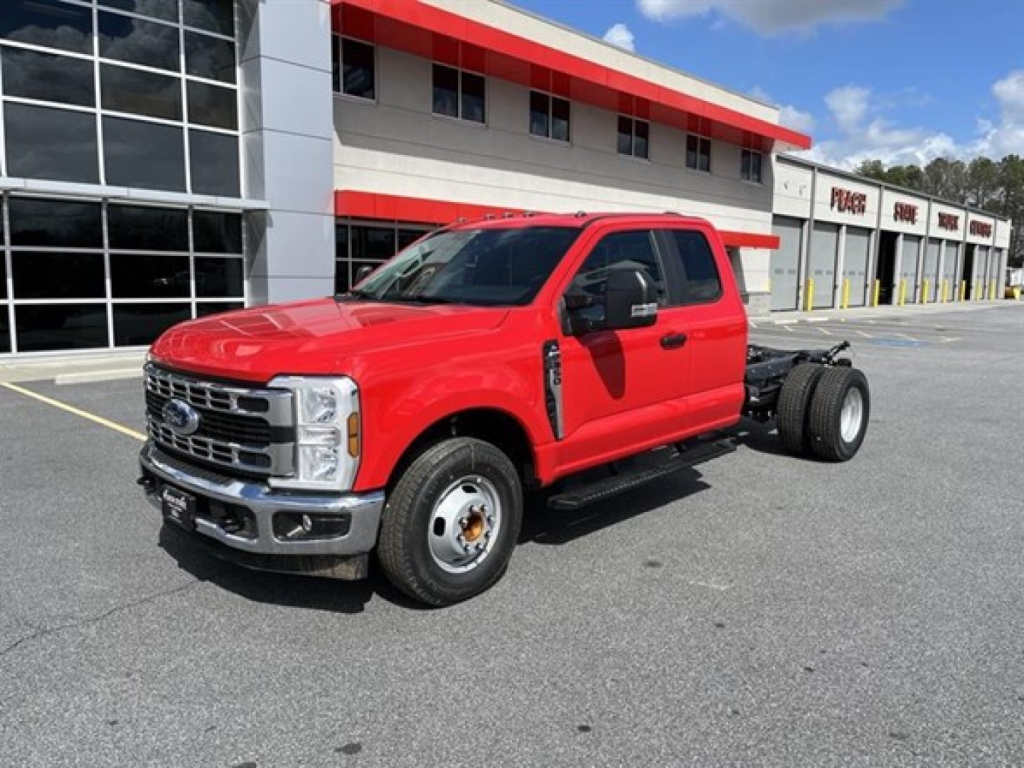
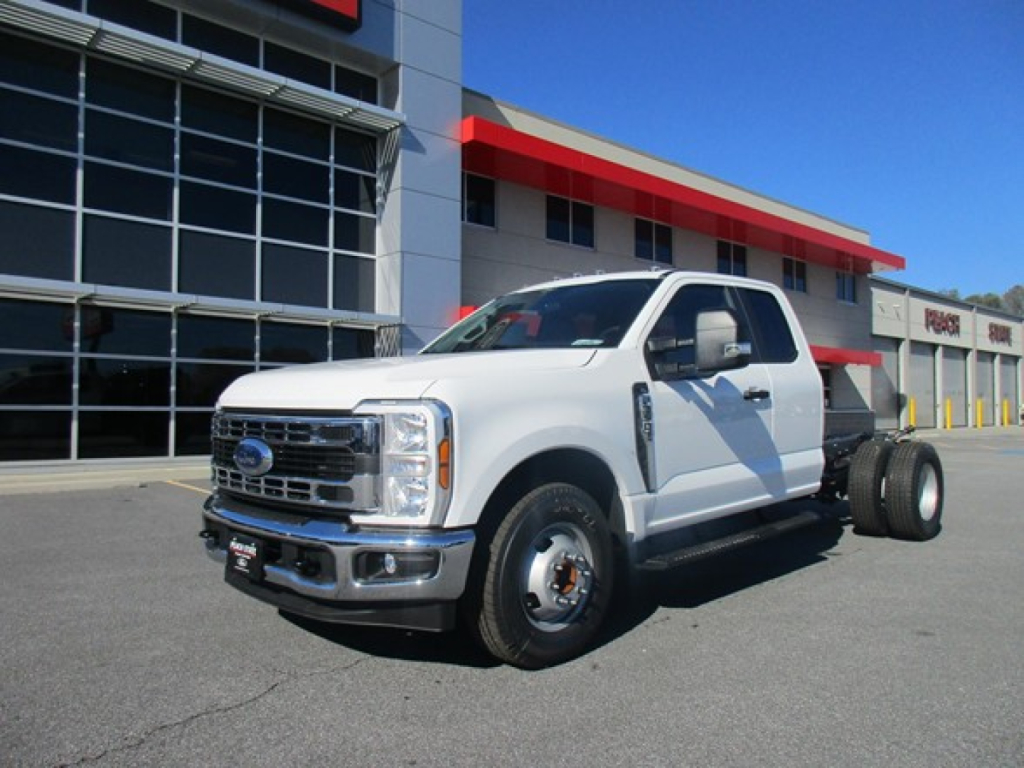
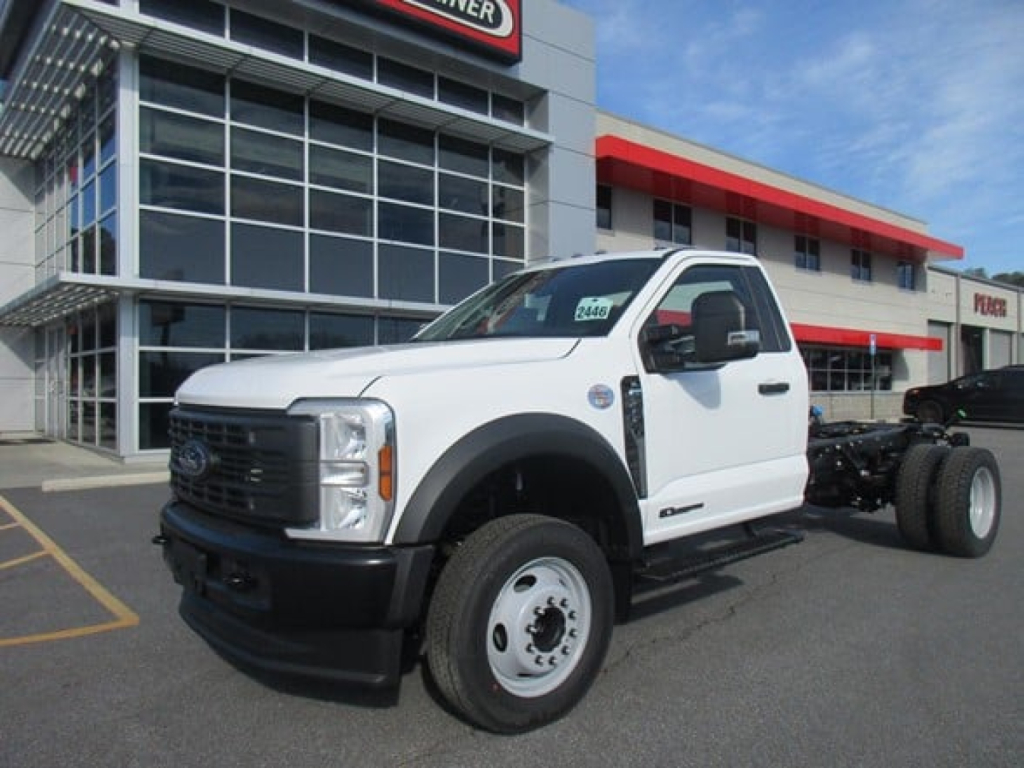
A Ford cab and chassis truck is delivered without a pickup bed so it can be fitted with a vocational body such as a flatbed, dump body, stake body, utility body, or box van body. The frame, axle ratings, and wheelbase options are intended for commercial upfits and work use. A regular pickup is better for mixed personal and light commercial use, while a cab and chassis is the better choice when body configuration, payload planning, and trade-specific equipment matter most.
Should I choose a 2026 Ford F-350 or F-450 cab and chassis?
The choice usually comes down to GVWR, payload target, towing demand, and the body being installed. An F-350 cab and chassis is often a strong fit for lighter flatbed, stake, service, and small dump applications around the 14,000-lb GVWR range. An F-450 cab and chassis is typically the better platform when the body is heavier, the payload is higher, or the truck will tow more aggressively, with common ratings around 16,500 lbs GVWR. Matching the truck to the final upfit is more important than choosing the bigger model by default.
Is the 7.3L gas engine or 6.7L Power Stroke diesel better for a Ford chassis cab?
The 7.3L gas V8 is attractive for fleets that want lower upfront cost, simpler maintenance, and reliable performance on local or regional work cycles. The 6.7L Power Stroke diesel is usually preferred for higher torque demand, heavier trailers, and applications where the truck runs loaded for long periods. The right answer depends on annual miles, idle time, body weight, towing frequency, and how long the truck will stay in service.
What body lengths work with Ford cab and chassis trucks?
Body length depends on wheelbase, cab-to-axle measurement, frame layout, and the type of body being installed. In many medium-duty vocational setups, an F-350 with a 168-inch wheelbase can support 8-foot to 9-foot body applications, while an F-450 may be used for 8-foot to 10-foot dump bodies or around 12-foot platform and van body configurations. Final body selection should always be confirmed with the upfitter because weight distribution and rear overhang are just as important as nominal body length.
What should buyers in Georgia pay attention to on a new Ford cab and chassis?
Buyers in Georgia should focus on cooling performance, towing equipment, axle ratio, and the body setup needed for local industries such as construction, landscaping, utility work, and municipal service. Rear camera prep, trailer brake controller capability, and high-capacity tow packages are especially useful if the truck will haul equipment or pull trailers regularly. It is also smart to consider resale-friendly specifications, since practical wheelbase and body combinations tend to move faster when fleet needs change.