
Commercial Trucks For Sale Near Burlingame, California

Have commercial truck to sell? List it here to reach thousands of buyers.
Commercial Trucks Near Burlingame, California
One of the biggest buying decisions is chassis class and intended payload. Class 3 to Class 5 trucks, including cab and chassis models, are common for service bodies, box bodies, flatbeds, dump inserts, and specialty upfits. These trucks are often selected based on wheelbase, cab-to-axle measurement, PTO compatibility, and suspension rating. Moving up into Class 6 to Class 8, buyers need to pay closer attention to engine displacement, transmission type, rear axle ratio, front axle capacity, and brake configuration. Tandem rear axles, higher GVWR ratings, and heavier frame specs matter when the truck will spend its life hauling bulk weight or supporting vocational equipment.
Powertrain selection matters more than ever in California. Diesel remains the standard for heavier payloads, longer routes, and PTO-driven vocational work, but electric cab chassis trucks are becoming more relevant for last-mile delivery, municipal fleets, and predictable urban routes. For an electric truck, buyers should focus on battery capacity, real-world range under load, charging speed, and how the body equipment affects available payload. For diesel units, service history, emissions system condition, idle hours, and intended duty cycle deserve close review, especially in stop-and-go or municipal applications where wear patterns differ from linehaul use.
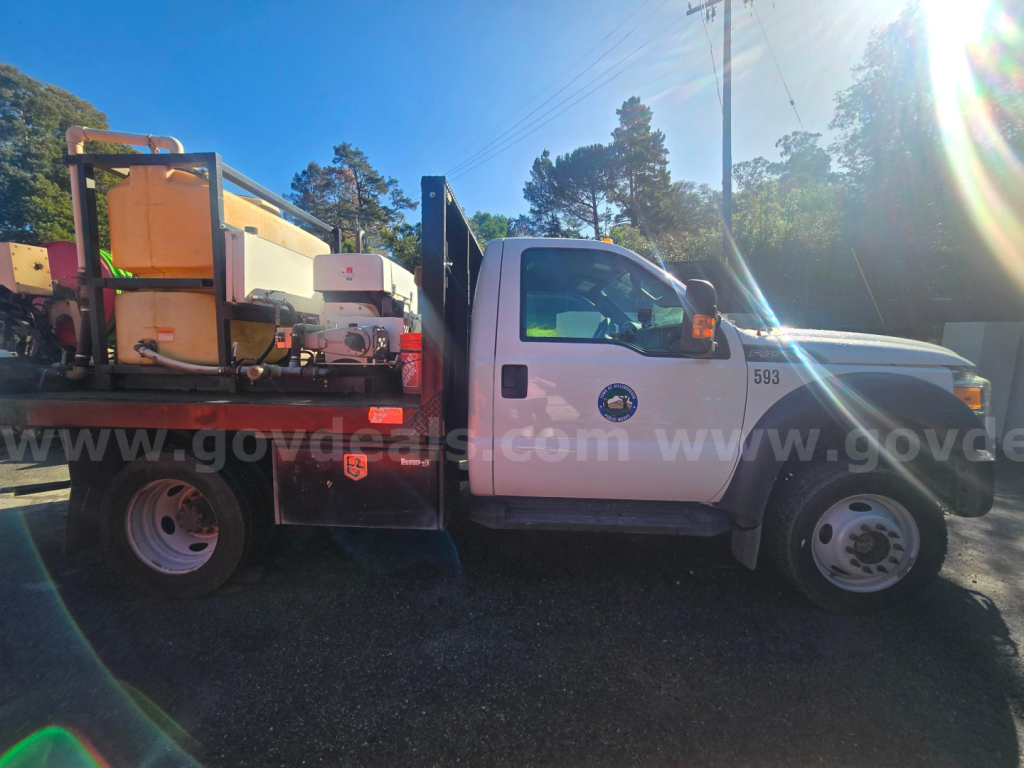
Body style and upfit can be as important as the truck itself. Box trucks are built around cube capacity, door configuration, liftgate needs, and dock-height compatibility. Water trucks, jetting units, and other specialty vocational trucks should be evaluated for pump specs, tank capacity, hose reels, accessory drives, and overall chassis support for the mounted equipment. A good truck purchase in this category is not just about make and model. It is about matching the truck’s class, wheelbase, drivetrain, and equipment package to the exact work it needs to perform in Burlingame and across the California operating environment.
Frequently Asked Questions about Commercial Trucks Near Burlingame, California
What should I look at first when comparing trucks for sale?
Start with the truck’s intended application and weight class. GVWR, payload requirement, axle setup, wheelbase, and body or upfit compatibility should be reviewed before brand or cosmetic condition. A delivery truck, utility service truck, water truck, and tandem highway unit all have different chassis requirements, and the wrong spec can limit payload, body fitment, or operating efficiency.
Are electric commercial trucks practical for fleet use in California?
Electric trucks can be practical when the route is predictable, daily mileage is controlled, and charging access is available. They are best suited to urban delivery, municipal work, and return-to-base operations. Buyers should verify battery capacity, loaded range, charging time, and the impact of the body installation on payload. Electric trucks are usually less suitable for long-distance or high-idle vocational work unless the operating pattern is tightly managed.
How important is wheelbase and cab-to-axle length on a truck?
Wheelbase and cab-to-axle dimensions are critical because they determine what body can be installed and how the truck will distribute weight. A truck may have the right GVWR but still be a poor fit for a box body, service body, dump body, or tank if the frame dimensions are wrong. These measurements also affect turning radius, bridge law considerations, and how the truck performs in tight urban service.
What matters most on a used diesel commercial truck?
Service records, engine hours, mileage, emissions system condition, and evidence of prior vocational use are the main points to review. Diesel trucks used in municipal or stop-and-go service can accumulate wear differently than over-the-road units. Buyers should pay attention to DPF and DEF system history, transmission operation, cooling system condition, suspension wear, brake life, and any signs that the truck regularly operated near its maximum rated capacity.
How do I choose between a straight truck and a cab and chassis?
A straight truck is the better choice when the body is already installed and matches the intended work, such as a box truck or specialty vocational unit. A cab and chassis is the better option when body selection, custom upfitting, or fleet standardization is still undecided. Buyers planning to install a service body, flatbed, reefer body, or utility upfit often prefer cab and chassis trucks because they offer more flexibility in wheelbase, frame layout, and equipment integration.