
Mack Boom Trucks For Sale
Mack boom trucks built on Granite and MD chassis, optimized deck strength, low tare, stable lifts, hydraulic cooling, and corrosion protection.
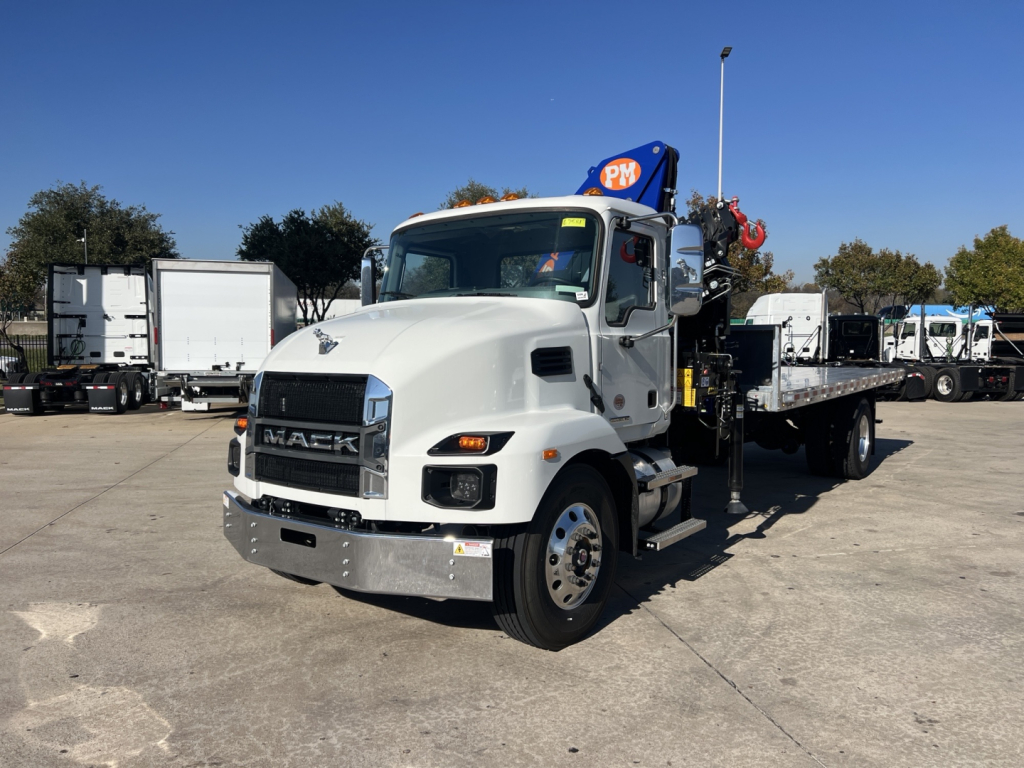
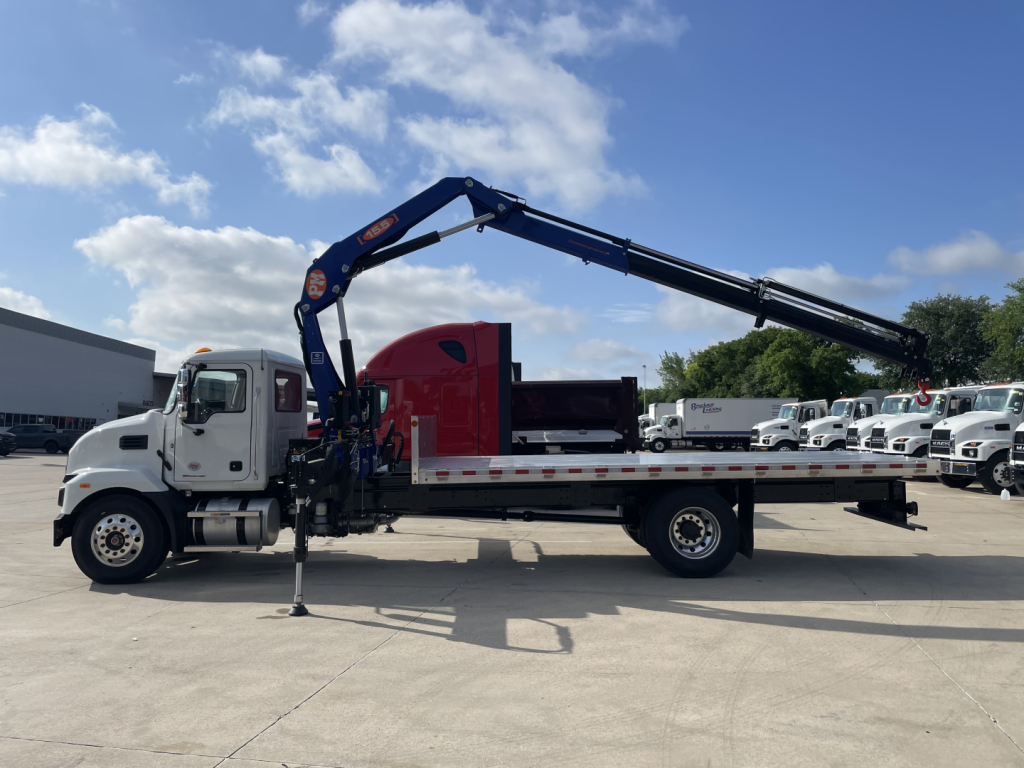
Selling a mack boom truck? List your mack boom truck for sale and reach thousands of commercial buyers.
Mack Boom Trucks
Deck and subframe design determine how well the truck handles point loads and side loads from the crane. Look for a torque box or crane subframe that ties into the frame rails with continuous welds where specified by the body builder, with proper reinforcement at the turntable. Bed floors vary, from 3∕16 to 1∕4 inch steel plate with closely spaced crossmembers, to steel decks with apitong or composite inserts for grip and impact resistance. Stake pockets, rub rails, and tiedown spacing matter for load securement, and scuff liners or wear strips help prevent deck damage from pallet forks and blocking. A straight, rigid deck resists flex that can feed back into the crane structure, protecting slew bearings and column weldments during off-center picks.
Tare weight is a core advantage with Mack vocational specs because you can balance durability with payload. Knuckle boom packages are compact with excellent side reach but carry more tare; telescopic stiff booms can be lighter for a given lift chart but need more rear overhang and tail swing clearance. Choosing aluminum toolboxes, lighter outrigger pads, and high-strength low-alloy steel bodies reduces tare without sacrificing strength. Match axle groups to the crane’s front and rear reactions, using 20K to 23K steer axles, 46K tandems, or steerable pushers or tags to stay legal on bridge while maintaining turning radius. Suspension choice influences stability and ride, with Camelback or mRIDE favored for lift stability and durability, and air ride improving ride quality when travel time is significant. PTO selection affects performance and serviceability, with front engine PTOs or transmission PTOs driving gear or piston pumps sized for the crane’s flow and pressure requirements.
Thermal integrity keeps hydraulic performance consistent across long duty cycles. Verify reservoir volume, return line filtration, and the presence of oil-to-air or oil-to-water coolers sized to the pump’s heat load; many fleets target oil temperatures under 180 F for seal life and consistent valve response. Mack cooling packages, high-capacity radiators, and viscous or on-off fan drives help manage engine and hydraulic heat when the truck idles for extended crane work. Corrosion resistance extends service life, particularly in snowbelt and coastal regions. Look for e-coated or epoxy-primed frames, galvanized or powder-coated crane subframes, sealed electrical harnesses with Deutsch connectors, stainless or zinc-nickel hardware, and underbody coatings. Boom sections benefit from quality paint systems and drain paths that prevent moisture traps; regular washout and dielectric protection on exposed connectors further slows corrosion.
Frequently Asked Questions about Mack Boom Trucks
Which Mack chassis platforms are most common for boom truck applications?
Mack Granite is the primary choice for heavy lift and long-reach cranes because it offers high RBM frame rails, double-frame options, and front axle ratings up to 23K with 46K tandems. The Mack MD Series suits lighter boom packages and urban delivery work up to 33K GVWR, where a shorter wheelbase and lower cab height help with access. Day cab highway platforms can be used for specific applications, but vocational frames, axle ratings, and cooling packages on Granite or MD typically align better with crane manufacturer requirements and outrigger reactions.
What affects payload and tare weight on a Mack boom truck?
Tare weight is driven by the boom type and capacity, subframe and deck construction, axle group configuration, and accessory choices like outriggers, toolboxes, and winch packages. Knuckle booms usually add weight but provide compact stow and superior side reach, while telescopic stiff booms can save weight for similar lift charts but require more rear overhang. Using high-strength low-alloy steel, aluminum boxes, and optimized crossmember spacing helps trim tare. Payload is then limited by GVWR and axle ratings, so verify steer, drive, and any pusher or tag axle capacities against the expected load and crane reaction loads to remain legal on bridge.
How do I evaluate deck or floor strength and the crane subframe?
Start with deck plate thickness and crossmember spacing, then review how the crane subframe ties into the chassis rails. A torque box or reinforced subframe that spreads turntable and outrigger forces reduces frame twist and deck distortion. Look for 3∕16 to 1∕4 inch steel floors, hardwood or composite wear surfaces where chains and dunnage contact the deck, and continuous welds as specified by the body builder. Inspect tiedown density, rub rails, and stake pockets for load securement. Evidence of minimal deflection under load, straight scuff lines, and no cracked paint near the turret or outrigger boxes are good signs of structural integrity.
What should I look for in hydraulic cooling and thermal control?
Match pump displacement and PTO ratio to the crane’s required flow at working RPM, then confirm the system has a reservoir sized for adequate dwell time, high-efficiency return filtration, and an oil cooler capable of holding temperatures under 180 F in hot weather. Oil-to-air coolers with thermostatic fans are common, while oil-to-water coolers leverage engine cooling capacity. Verify temperature sensors on the hydraulic tank, adequate hose routing to reduce radiant heat near the exhaust, and that the Mack chassis cooling package is spec’d for extended stationary operation so engine and hydraulic temperatures remain stable.
How do Mack boom trucks address corrosion resistance for long service life?
Look for e-coated or epoxy-primed frames, powder-coated or galvanized crane pedestals and outriggers, and sealed wiring using Deutsch connectors and heat-shrink splices. Stainless or zinc-nickel plated fasteners, underbody coatings, and well-sealed toolboxes slow rust in salt exposure. On the boom, quality paint systems, drain paths, and protected sheaves reduce corrosion pockets. Mack vocational chassis also offer robust underhood sealing and splash protection, and routine washing plus dielectric grease on exposed terminals helps maintain reliability over multiple winter seasons.