
Freightliner Boom Trucks For Sale
Browse Freightliner boom trucks built for lifting, loading, and service work, including knuckle boom and crane body configurations.
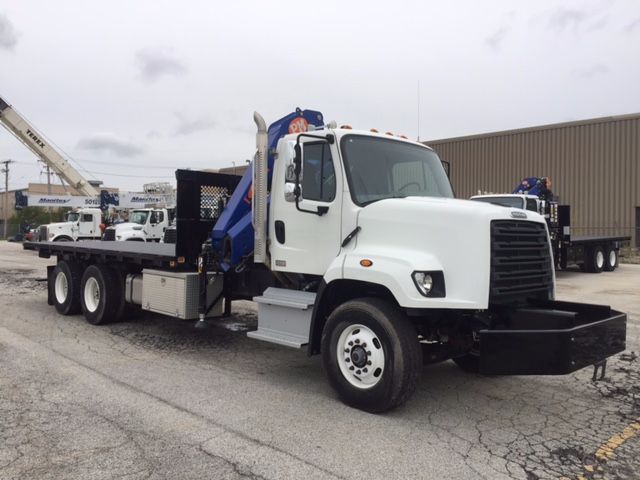
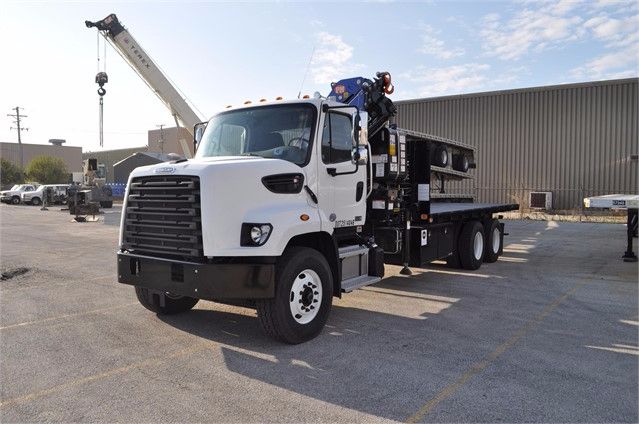
Selling a freightliner boom truck? List your freightliner boom truck for sale and reach thousands of commercial buyers.
Freightliner Boom Trucks
A key buying decision is matching crane capacity to chassis rating and wheelbase. Many Freightliner boom trucks in the market are 6x4 units with diesel power from Cummins, automatic transmissions from Allison, and front axle and suspension packages designed for concentrated body and crane weight. Lift ratings can vary widely, but cab-mounted knuckle boom setups commonly fall into the roughly 30,000 to 40,000-plus lb class at the boom, with actual usable capacity depending on load radius, outrigger spread, and body design. Buyers should verify GVWR, front and rear axle ratings, frame reinforcement, PTO setup, hydraulic tank size, and whether the truck uses a behind-cab crane, rear-mounted crane, or integrated service body crane arrangement.
On the crane side, the details matter as much as the truck. Look for load moment indicators, radio remote controls, anti-two-block or overload protection where applicable, and hydraulic outriggers with enough reach and down pressure for the work you do. A stow alarm in the cab, outrigger interlocks, hose routing protection, and clean hydraulic function under load are good signs of a well-specified unit. If the truck will spend time on jobsites or uneven terrain, differential locks, vocational tires, and stable outrigger geometry become more important than cosmetic condition. Body condition also deserves a close look, especially deck wear, subframe integrity, tool storage, tie-down points, and any cracking around crane mounts or torsional stress areas.
For used Freightliner boom trucks, maintenance history is a major value driver. Engine hours, PTO hours, crane inspection records, and evidence of regular hydraulic service can tell more than odometer mileage alone. A buyer should confirm the crane model year, annual certification status if required in the operating region, and whether replacement parts for the crane brand are readily available. Freightliner boom trucks can be a strong fit for operators who want a serviceable vocational chassis with straightforward controls and a wide range of body and crane combinations, but the best unit is the one whose axle spec, crane chart, and body layout actually match the lifts and travel demands of the job.
Frequently Asked Questions about Freightliner Boom Trucks
What are the most common Freightliner boom truck chassis in this category?
The most common Freightliner boom truck chassis are typically the M2 106 and 108SD. The M2 106 is often selected for medium-duty municipal, service, and delivery-with-lift applications, while the 108SD is more common in heavier vocational work where higher axle ratings, stronger frame options, and more demanding crane installations are needed. The exact fit depends on crane size, body weight, and how much payload the truck needs to carry in addition to lifting equipment.
What should I verify before buying a used Freightliner boom truck?
Start with the crane data plate, load chart, and inspection records, then match those details to the chassis specs. Confirm GVWR, axle ratings, wheelbase, PTO operation, hydraulic performance, outrigger condition, and any frame reinforcement tied to the crane installation. It is also important to review engine hours, PTO hours, service records, and signs of stress around crane mounts, body subframes, and outriggers. On a boom truck, condition and compatibility matter more than appearance alone.
Are Freightliner boom trucks usually equipped with automatic transmissions?
Many are. Allison automatic transmissions are common on Freightliner boom trucks because they are well suited to stop-and-go vocational use and make truck positioning easier on jobsites. Automatic transmissions can also reduce driver fatigue during repeated setup and relocation cycles. That said, transmission choice should still be evaluated alongside engine torque, PTO compatibility, and the truck's intended operating environment.
What is the difference between a knuckle boom and other boom truck crane setups?
A knuckle boom uses an articulated hydraulic arm that folds compactly when stowed and offers strong versatility in tight loading areas. It is often preferred for material handling, palletized loads, and placement work where reach and articulation are more useful than a simple straight lift path. Other boom truck crane setups may prioritize different lift geometry or body integration, so the right choice depends on the type of loads, required reach, and available setup space at the jobsite.
How important are outriggers on a Freightliner boom truck?
Outriggers are critical because they directly affect stability, safe lifting capacity, and the crane's working envelope. A truck with hydraulic in-and-out and down-up outriggers may handle uneven jobsite conditions better and allow more usable capacity when properly deployed. Buyers should inspect for leaks, cylinder wear, pad condition, and signs of damage from side loading or improper setup. Outrigger design is not a minor option on a boom truck. It is one of the main safety and performance factors.