
Ford Boom Trucks For Sale
Have ford boom truck to sell? List it here to reach thousands of buyers.
Ford Boom Trucks
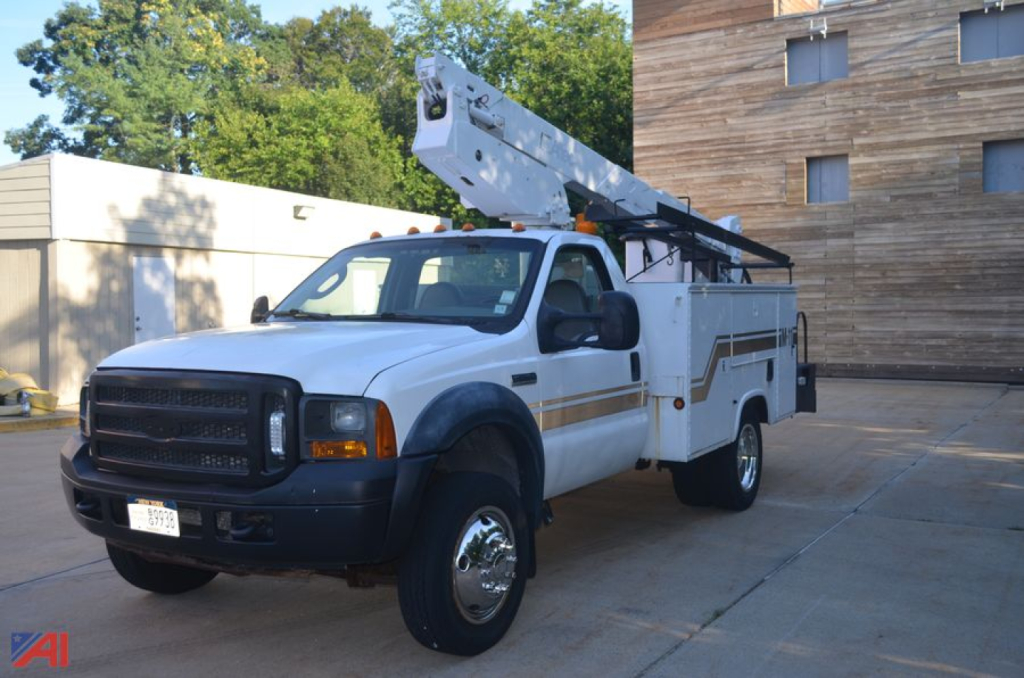
The boom itself is where the application gets specific. Some Ford boom trucks are set up as articulating or telescopic aerial units for personnel lifting, while others are configured as material handling cranes with a winch and hook. Working height, horizontal reach, platform capacity, boom rotation, and outrigger design all affect jobsite usefulness. A bucket-style unit for streetlight or communications work has different requirements than a crane-body truck used to set transformers or lift HVAC equipment. On used units, pay close attention to upper and lower controls, PTO engagement, hydraulic leaks, wear in pins and bushings, and the condition of outriggers, subframe, and turret.
Chassis spec is especially important on older Ford boom trucks because service history can vary widely by fleet use. Diesel versus gas, 4x2 versus 4x4, automatic transmission choice, and brake configuration all influence operating cost and where the truck can work. A 4x4 Ford F-550 boom truck may fit utility and off-pavement maintenance better, while a larger F-650 or F-750 can support heavier bodies and more substantial lifting gear. Buyers should also verify CDL implications, registered weight, PTO compatibility, and any state inspection requirements tied to aerial equipment or crane certification.
A strong Ford boom truck listing usually gives enough detail to match the truck to the job, not just the badge on the hood. Look for boom manufacturer, model number, maximum tip height, side reach, basket or crane capacity, body type, stabilizer setup, and current meter or hour reading if equipped. For fleet buyers, the value often comes down to how well the upfit was matched to the Ford chassis and how easy the unit will be to maintain, certify, and keep productive in daily service.
Frequently Asked Questions about Ford Boom Trucks
What should I check first when comparing Ford boom trucks?
Start with the chassis rating and the boom specifications together. GVWR, front and rear axle ratings, wheelbase, cab style, and drivetrain determine what the truck can carry and how stable the upfit will be. Then confirm the boom type, working height, side reach, platform or lifting capacity, and outrigger configuration. A truck can look similar on paper but be built for very different work depending on whether it is a personnel lift or a material handling unit.
Which Ford chassis are most common for boom truck applications?
Ford F-450 and F-550 chassis are common for lighter aerial and service applications, especially where maneuverability and 4x4 capability matter. F-650 and F-750 models are more typical when the body, crane, or aerial package is heavier and the job requires more stability or payload. The right choice depends on the installed equipment, legal weight, and the operating environment, not just the make and model.
Are Ford boom trucks used for personnel lifting or for crane work?
They can be either, but the equipment is not interchangeable. A bucket or aerial platform unit is designed for lifting personnel to a working position, usually for utility, telecom, lighting, or sign service. A material handling boom truck uses a crane-style boom, often with a winch, to lift equipment or materials. Buyers should verify the exact upfit, rated capacities, and certification requirements because personnel lifting units and crane units are governed and inspected differently.
What matters most on a used Ford boom truck inspection?
Focus on both the truck and the aerial device. On the chassis side, review engine condition, transmission operation, brake performance, suspension wear, tire condition, PTO function, and service records. On the boom side, inspect hydraulic hoses and cylinders, rotation smoothness, outrigger operation, subframe integrity, basket or hook condition, and any signs of structural repairs. It is also important to confirm annual inspections, dielectric testing if applicable, and whether safety decals, manuals, and load charts are present.
Do Ford boom trucks require a CDL?
Some do and some do not. CDL requirement depends primarily on the truck's GVWR or GCWR, plus local and state rules, not simply the fact that it is a boom truck. Many lighter F-450 and F-550 units can fall below CDL thresholds, while larger F-650 and F-750 trucks often do not. Buyers should also account for air brake endorsements, crane operator rules, and any licensing or certification tied to the aerial equipment itself.