
Volvo Agriculture Trucks For Sale
Explore Volvo agriculture trucks with heavy-duty specs, strong axle ratings, and vocational options for farm hauling, feed, grain, and field support.
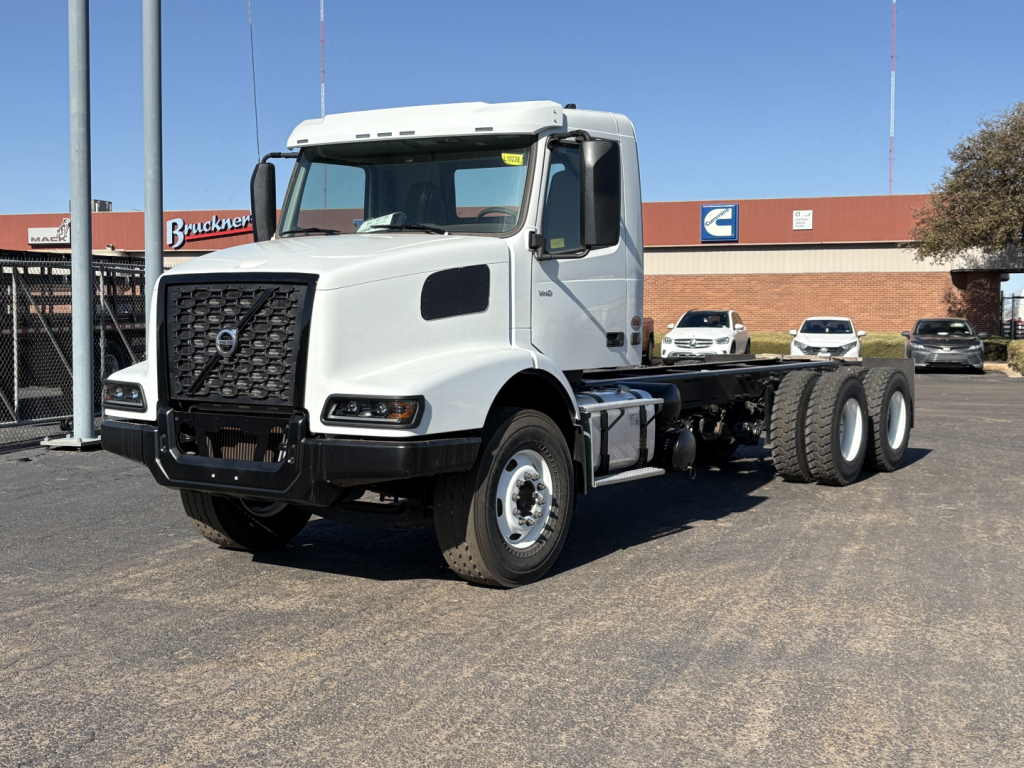
Selling a volvo agriculture truck? List your volvo agriculture truck for sale and reach thousands of commercial buyers.
Volvo Agriculture Trucks
A key buying decision in agriculture trucks is matching axle, suspension, and wheelbase to the body and commodity. Farm applications often call for front axle ratings in the 20,000-pound class, tandem rears in the 40,000 to 46,000-pound range, and wheelbases long enough to support dump bodies, nurse tanks, feed bodies, or other specialty upfits. Rear suspension choice matters on uneven farm roads and loaded yard conditions, and buyers often pay close attention to spring capacity, spacing, and ride control. Rear axle ratio is another major factor. A deeper ratio can improve startability and low-speed pulling power in soft ground or when grossing heavy, but it should be balanced against top-road speed and fuel economy for longer trips between farms, elevators, and suppliers.
Volvo powertrains are often selected in this segment for their drivability and transmission integration. Engines in the mid-horsepower range, such as the Volvo D11, are a practical fit for many agricultural operations because they provide enough torque for loaded starts and PTO-related work without stepping into unnecessary engine size. Automated manual transmissions like the Volvo I-Shift are increasingly common in farm truck service because they reduce driver fatigue, improve consistency across operators, and perform well in stop-and-go hauling. Buyers should still verify gearing, PTO compatibility, and software programming if the truck will run specialized equipment. On trucks expected to spend time off maintained roads, ground clearance, tire spec, locking differentials, and frame reinforcement deserve the same attention as horsepower.
The best Volvo agriculture truck is the one spec'd for the actual job, not just the highest-rated chassis on paper. Grain and silage hauling, tender truck work, manure service, and farm supply delivery all place different demands on frame strength, suspension travel, body clearance, and legal payload. It also helps to evaluate cab layout, visibility, service access, and emissions system support in your operating area, especially for operations that run hard during harvest and cannot afford downtime. A well-matched Volvo agriculture truck can serve as a dependable farm hauler, field support unit, or regional vocational truck with the road manners needed to move efficiently between properties.
Frequently Asked Questions about Volvo Agriculture Trucks
What is a Volvo agriculture truck typically used for?
A Volvo agriculture truck is typically used for hauling grain, feed, fertilizer, seed, water, and other farm-related materials. Depending on the chassis and body, it may serve as a grain truck, feed delivery unit, tender truck, dump truck, or field support vehicle. Many agricultural operations choose this type of truck because it can handle both on-road travel and demanding yard or farm-lane conditions.
What specs matter most when buying a Volvo agriculture truck?
The most important specs are GVWR, axle ratings, wheelbase, rear suspension, rear axle ratio, engine torque, and transmission setup. These determine how much payload the truck can legally and practically handle, how well it starts under load, and how suitable it is for a specific body style. Buyers should also confirm PTO provisions, tire size, differential options, and frame strength if the truck will run hydraulic equipment or operate on soft ground and rough farm roads.
Is the Volvo I-Shift a good transmission for farm use?
Yes, the Volvo I-Shift can be a strong choice for farm use when it is matched to the truck’s intended application. It helps reduce driver fatigue, shifts consistently across multiple operators, and performs well in repeated stop-and-start work. The main consideration is making sure the transmission gearing, PTO compatibility, and software settings align with the body equipment and the type of hauling the truck will do.
Why does rear axle ratio matter on an agriculture truck?
Rear axle ratio directly affects low-speed pulling power, startability, cruising speed, and fuel consumption. A deeper ratio, such as one often used in vocational or farm service, helps the truck move heavy loads from a stop and work better in soft or uneven conditions. The tradeoff is higher engine speed at highway travel, so the right ratio depends on how much time the truck spends in fields and yards versus longer road runs.
Are Volvo vocational models like the VHD suitable for agricultural applications?
Yes, Volvo vocational models such as the VHD are often well-suited for agricultural applications because they are built for heavier-duty work than a standard highway tractor. They can be configured with strong front and rear axle capacities, vocational suspensions, and wheelbases that support a range of ag bodies. For buyers who need durability, driver comfort, and a chassis that can handle mixed-use hauling, the VHD is a common and practical platform.