
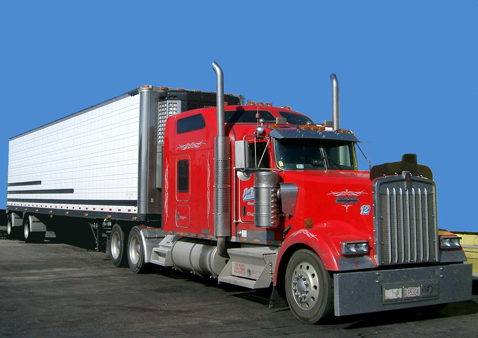
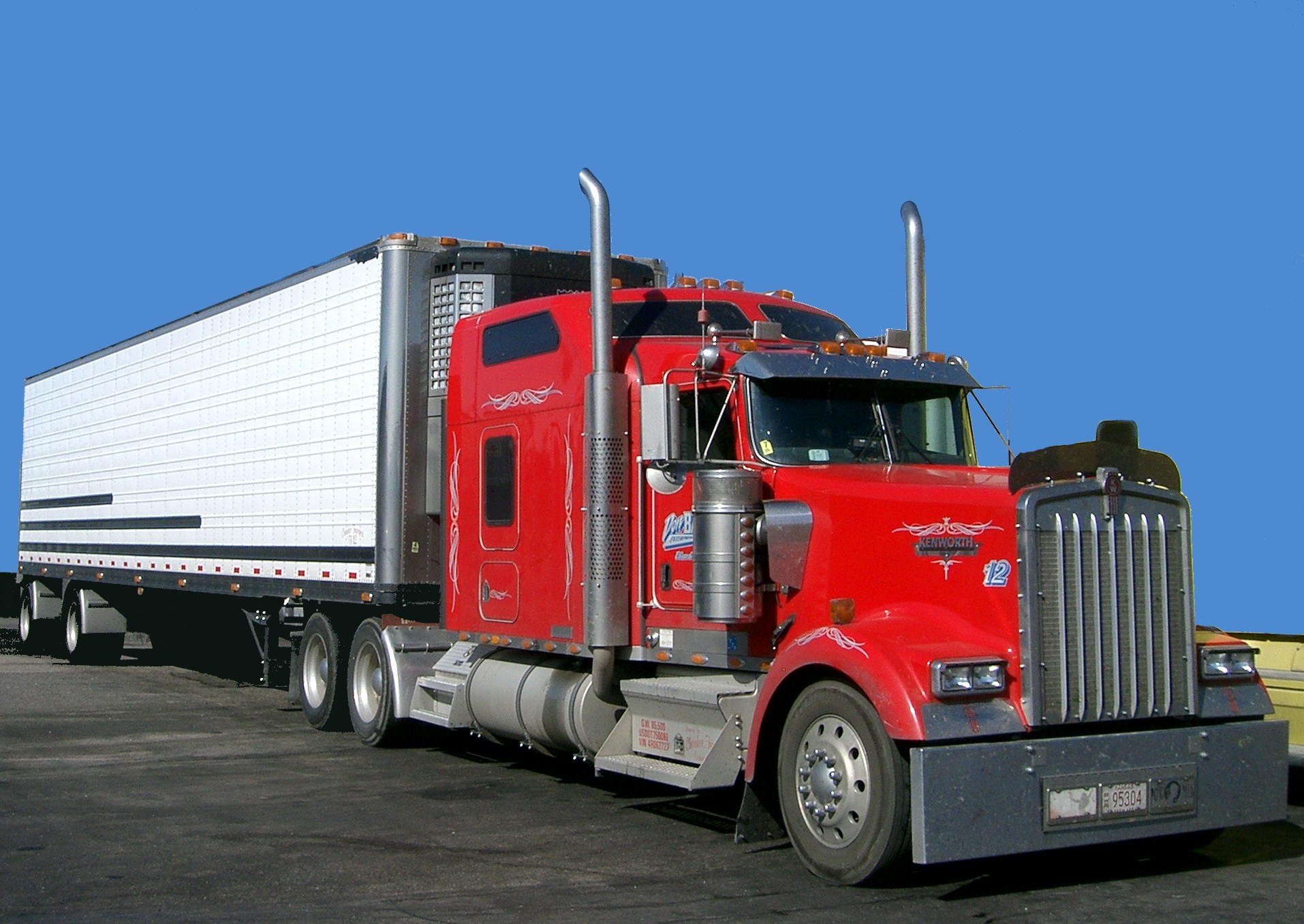
There are trucks, and then there's the Kenworth W900. For over six decades, the W900 has been the truck, the one on the poster in every kid's bedroom, the one in every trucker movie, and the one that owner-operators dreamed of parking in their driveway. Now, after 63 years and more than 280,000 units sold, Kenworth has announced that the W900 is reaching the end of the road.
On March 19, 2025, Kenworth confirmed it will sunset the W900, along with the T800W and C500, citing evolving emissions regulations and dwindling component supply as the industry moves toward EPA 2027 compliance. Production of the W900 will wrap up in 2026.
Whether you're a lifelong W900 owner, a buyer eyeing the used market, or just a fan of American trucking history, here's the full story of the truck that defined an industry, what it means for used truck values, and why the W900's legend is far from over.
63 Years on the Road: A Brief History of the W900
The W900 debuted in the early 1960s as part of a complete redesign of Kenworth's conventional cab lineup, the first major overhaul since 1939. What started as a workhorse quickly became an icon.
Key Milestones
- 1961-1964: The original narrow-hood W900 enters production at Kenworth's Renton, Washington facility.
- 1965: The W900A launches with a longer hood to accommodate bigger diesel engines and a larger radiator. Kenworth is now producing over 3,000 trucks per year.
- 1966: A new hood badge design is introduced the same badge being revived on the 2026 Legacy Edition.
- 1976: Kenworth introduces the Aerodyne sleeper cab for the W900A — the first factory-produced sleeper with a raised roof, distinguished by its twin skylight windows.
- 1982: The W900A gives way to the all-new W900B, featuring a raised hoodline, rectangular headlights, and modular electrical components.
- 1990: The W900L is born: an extended-hood variant stretching the bumper-to-back-of-cab measurement from 120 to 130 inches. Originally a limited edition, it becomes one of Kenworth's most popular models and the definitive "long nose" truck.
- 2025: Kenworth announces the W900 sunset. The Legacy Edition is unveiled at the Mid-America Trucking Show.
- 2026: Final production year. End of an era.
Over those 63 years, Kenworth sold more than 280,000 W900s, a staggering number for a Class 8 truck that was never the cheapest option on the lot. Truckers didn't buy the W900 because it was economical. They bought it because it was the W900.
Why Truckers Love the W900
Ask any long-haul driver what their dream truck is, and chances are the answer involves a long hood and a Kenworth badge. The W900 isn't just transportation, it's identity.
Kevin Haygood, Kenworth's assistant general manager for sales and marketing, put it best: "There has been a long love affair between drivers and the W900. The trucking industry features many generational families and owner-operators who have bought the W900 over all these years. It's The Driver's Truck."
What makes it special? A few things that no spec sheet can fully capture:
- The ride. The W900L's longer wheelbase allows it to "bridge" bumps and road imperfections more effectively, delivering a smoother, more stable ride over thousands of miles. Drivers who've spent a week in a W900L sleeper know the difference.
- The look. That massive chrome grille, the long hood stretching out ahead of you, the commanding presence on the highway, nothing else looks like a W900. It turns heads at truck stops and truck shows alike.
- The customization. Owner-operators treat the W900 as a canvas for self-expression. Chrome trim, lighting packages, custom wheels, elaborate paint schemes — the W900 is a fixture at Overdrive's Pride & Polish competitions and truck shows nationwide.
- The legacy. For many drivers, the W900 was their first truck, their father's truck, or the truck they spent a career saving up for. It represents independence, craftsmanship, and the romance of the open road.
Even its flaws became part of the charm. As one trucker joked: "It was a great truck with the turning radius of a planet." Another admitted: "It's a terrible truck with horrible vision and the worst turning circle possible", and then explained why he'd buy another one tomorrow.
The W900 in American Culture
The W900 didn't just haul freight, it became a cultural icon that transcended the trucking industry.
On the Big Screen
- Smokey and the Bandit (1977): Jerry Reed's "Snowman" drove a 1974 Kenworth W900A hauling 400 cases of Coors. Three W900As were used in filming two 1974 models and one 1973 50th-anniversary edition with a gold emblem. The film was so popular that CB radio sales jumped 250% afterward.
- Licence to Kill (1989): Kenworth provided 16 W900B trucks for the James Bond film's iconic tanker truck chase through the mountains. It remains one of the most spectacular truck sequences in cinema history.
- Movin' On (NBC, 1974-1976): Claude Akins drove a custom 1974 Kenworth W900 as trucker Sonny Pruitt. The show fueled the 1970s CB radio craze and made the W900 a household name. Even President Ford and his wife were fans.
In Gaming
The W900 is the most popular truck in American Truck Simulator, the hit PC game with millions of players worldwide. It's featured on more map expansion DLC covers, including Arizona, Oregon, and Kansas, than any other truck in the game. When the developers fully reworked the W900 model in 2023, it was treated as a landmark event by the community.
At Truck Shows
Walk through any major truck show in America and the W900 dominates. Custom-built show W900s regularly win top honors at Overdrive's Pride & Polish and similar competitions. Following the sunset announcement, truck shows across the country are planning tribute events with W900s taking center stage, with Kenworth sponsoring several.
Why Production Is Ending
The short answer: EPA 2027 emissions regulations.
Starting with Model Year 2027, the EPA's new heavy-duty emissions standards require an 82.5% reduction in nitrogen oxide (NOx) from current levels. Meeting these standards demands significant new engine technology, aftertreatment systems, and potentially new electrical architectures, changes that require a modern cab platform to support.
The W900's 1.9-meter cab, a design that traces its roots back decades, simply cannot be cost-effectively re-engineered to accommodate the new technology. Kenworth stated the discontinuation is due to "evolving emissions regulations and component constraints as the industry moves forward with new, more efficient and better integrated technologies and products."
Kevin Haygood acknowledged the difficulty of the decision: "We know these legacy Kenworth models are an integral part of our history here at Kenworth, which makes this decision a difficult but necessary one as we enter the next era of trucking."
The W900 Legacy Edition: A Final Farewell
On March 27, 2025, at the Mid-America Trucking Show in Louisville, Kentucky, Kenworth unveiled the W900 Legacy Edition the ninth and final limited-edition W900 ever produced.
Here's what makes it special:
- Limited to exactly 1,000 units: each with a numbered glovebox badge counting down from 1000 to 0001 in order of build date
- Cummins X15 engine painted in legacy Cummins beige: an exclusive color for this edition only
- Vintage 1966 hood badges: the same design used when the W900 was still in its first decade of production
- Black Diamond VIT interior with platinum accent stitching, Ravenwood door and dash trim, and throwback vintage Kenworth logos on trim and headrests
- Vintage tuck-and-roll upholstery on the sleeper back wall (sleeper models)
- 11 special-edition paint schemes: including schemes carried over from previous limited-edition W900 runs
- Three configurations: Extended Day Cab, 72-inch AeroCab Flat Top Sleeper, or 86-inch Studio Sleeper
Production of the Legacy Edition began in October 2025 and will continue into 2026. Kenworth has not released official pricing, but standard new 2026 W900L models range from $216,900 to $240,995 and the Legacy Edition with its premium features will command a significant premium on top of that.
Kenworth is explicitly marketing these trucks as future "collector's items." Given that only 1,000 will ever exist, they're probably right.
What This Means for Used W900 Values
This is the section that matters most if you're buying or selling on TruckerToTrucker.com. The discontinuation of the W900 has real financial implications for the used market.
Current Used W900 Pricing
The used W900 market spans a wide range depending on age, condition, and configuration:
| Category | Price Range | Notes |
|---|---|---|
| Older work trucks (pre-2007) | $6,500 - $50,000 | Pre-emissions models with CAT or Cummins N14 engines; "NO EMISSIONS" is a selling feature |
| Mid-range working trucks | $50,000 - $130,000 | 2008-2018 models in good working condition |
| Late-model W900L sleepers | $130,000 - $260,000 | 2019-2025 models with low miles and current-gen engines |
| Show trucks / pristine builds | $250,000 - $600,000+ | Fully custom, low-mile, or collector-grade examples |
| New 2026 W900L | $216,900 - $240,995 | Standard configurations before Legacy Edition premium |
The typical used W900L currently lists between $50,980 and $259,949, with an average around $129,925. There are currently over 1,090 W900 listings on TruckPaper alone, plus hundreds more across other marketplaces.
Why Values Are Expected to Rise
Kenworth itself has acknowledged the value implications. Kevin Haygood noted that current W900 owners "stand to benefit from the looming end of the W900 line, which serves to make current trucks even more valuable from an image, pride, and resale standpoint."
The math is simple: once production ends, no new W900s will ever be built again. The existing supply is all there will ever be. Every mile driven, every truck scrapped, and every unit retired from service permanently shrinks the available pool. Meanwhile, demand from owner-operators, collectors, and truck show enthusiasts isn't going anywhere.
History backs this up. When Caterpillar exited the on-highway truck engine market in 2009, trucks equipped with CAT 3406 and C15 engines saw sustained price premiums in the used market, premiums that persist to this day. The same pattern played out with pre-2007 trucks (before DPF requirements) and pre-2010 trucks (before DEF/SCR requirements). Truckers consistently pay more for proven equipment that's no longer being made.
The Most Collectible W900s
Not all W900s are created equal when it comes to investment potential. Here are the most sought-after categories:
- Pre-2007 models with CAT or Cummins N14 engines: These pre-emissions trucks are already commanding premiums. Caterpillar 3406 and C15 engines are no longer produced, and the Cummins N14 ended highway production in 2002. Listings specifically highlight "NO EMISSIONS" as a feature.
- Limited editions: Kenworth has produced eight previous limited-edition W900s, including the ICON 900 (2015) and the 100th Anniversary Edition (2023, limited to 900 units). These already trade at significant premiums.
- The 2026 Legacy Edition: With only 1,000 units and numbered glovebox badges, this is expected to be the most collectible W900 ever produced.
- 1970s W900A models: Connected to the Smokey and the Bandit era and the golden age of American trucking culture. Clean examples are increasingly rare.
- Glider kits: W900 glider kits, new body and chassis with rebuilt pre-emissions engines, have been a significant market segment, allowing truckers to get a new-feeling W900 without modern emissions equipment.
Engines That Powered the W900
One of the W900's strengths was always its larger engine bay, which could accommodate higher-horsepower options than smaller cab designs. Over the decades, the W900 offered some of the most legendary engines in trucking history:
| Engine | Era | Notes |
|---|---|---|
| Cummins NTC 350 / Big Cam | 1970s-1980s | The workhorse of the W900's early glory days |
| Cummins N14 Celect Plus | 1990s-2002 | Up to 525 HP / 1,850 lb-ft; a mechanical legend. Last year for highway use: 2002 |
| Caterpillar 3406 / C15 | 1990s-2009 | Extremely popular in W900s; CAT exited highway engines in 2009. Pre-emissions models are now highly prized |
| Detroit Diesel Series 60 | 1990s-2000s | A popular alternative throughout the era |
| Cummins ISX | 2000s-2010s | 912 cubic inches, electronically controlled; replaced the N14 |
| Cummins X15 | Current/Final | Up to 605 HP / 2,050 lb-ft; the Legacy Edition features the X15 in exclusive legacy Cummins beige |
The current and final engine offering is the Cummins X15 a fitting end, given that Cummins engines have been at the heart of the W900 for virtually its entire production run.
What Replaces the W900?
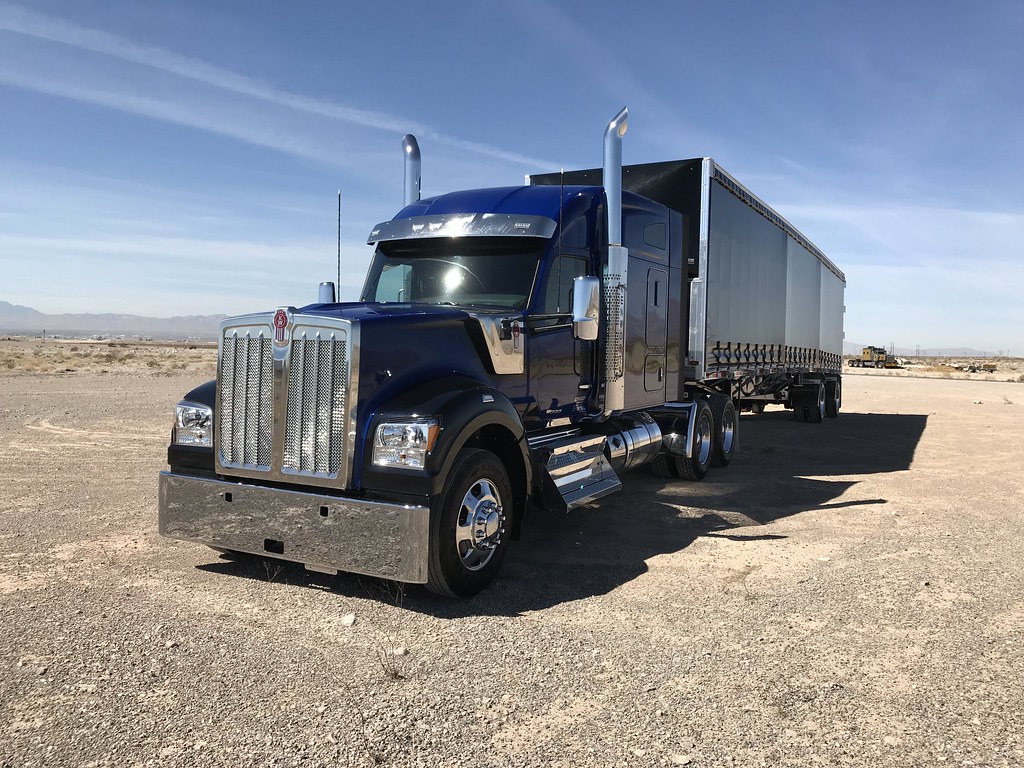
Kenworth is positioning the W990 as the W900's successor, the modern long-hood conventional designed to carry the torch.
Kevin Haygood
"Kenworth's W990 will now carry the torch of nostalgia for those who want traditional long hood styling. It shares many of the same custom tailoring characteristics of the W900 but in a wider cab configuration, with better aerodynamics."
W900 vs. W990: Key Differences
| Feature | W900 | W990 |
|---|---|---|
| Cab width | 1.9 meters | 2.1 meters (wider) |
| Aerodynamics | Classic profile | 6-7% better |
| Fuel economy | Baseline | ~3% improvement |
| Cab noise | Standard | Quieter |
| Windshield | Classic size | Taller with better visibility |
| Turning radius | Famously wide | Up to 6 degrees tighter steering cut |
| Cab platform | Legacy 1.9m | Shared with T680/T880 |
| Cultural status | 63 years of legend | Still earning its stripes |
On paper, the W990 is a better truck in almost every measurable way. But truckers don't always buy on spec sheets.
Some drivers feel the W990 "lacks identity" and looks like "a T680 with a big hood." The W990 doesn't offer the Aerocab couch option that many old-school truckers love. And perhaps most importantly, the W900 has had six decades to establish its place in trucking culture, the W990 hasn't earned that yet. It may in time, but the W900's shoes are enormous to fill.
What Buyers and Sellers Should Do Now
If You're Buying a W900
- Don't wait. Once production officially ends, the used market is all that's left. Prices for clean, well-maintained W900s are expected to firm up as supply permanently stops growing.
- Know what you're buying it for. If it's a working truck, focus on engine condition, maintenance history, and frame integrity. If it's an investment or show truck, focus on originality, limited-edition status, and cosmetic condition.
- Pre-emissions models carry a premium for a reason. W900s with CAT 3406/C15 or Cummins N14 engines avoid all modern emissions equipment, no DPF, no DEF, no SCR. These engines are bulletproof and cheap to maintain.
- Parts availability will remain strong. With 280,000+ W900s sold over 63 years, the aftermarket ecosystem is massive. Parts won't be an issue for the foreseeable future.
- Get a thorough pre-purchase inspection. Check the frame for cracks (especially at stress points near the fifth wheel), verify VIN through NHTSA's decoder, and review the complete maintenance history.
If You're Selling a W900
- The market is in your favor. Kenworth itself says the end of production "serves to make current trucks even more valuable." You're holding an appreciating asset.
- Highlight the W900's discontinued status in your listing. Mention the end of production, the model year, engine type, and any limited-edition features. Buyers are actively looking for these trucks.
- Document everything. Maintenance records, engine rebuilds, custom work, all of it adds value. A well-documented W900 commands a significant premium over one with unknown history.
- Quality photos matter. The W900 is a beautiful truck, show it off. Clean it up, photograph it in good light, and use all the photo slots available in your listing.
- Price with confidence. This is not a truck that's going to depreciate faster because it's discontinued. The opposite is true. Price based on condition and market comparables, not desperation.
The W900's Legacy Lives On
Production lines stop. Legends don't.
The Kenworth W900 shaped American trucking culture in ways that no other single vehicle can claim. It was Snowman's truck in Smokey and the Bandit. It was Sonny Pruitt's truck in Movin' On. It was James Bond's adversary in Licence to Kill. It's the truck on the poster, the truck in the game, and the truck that generations of owner-operators built their careers, and their identities, around.
With 280,000+ units on the road and a passionate community of owners, the W900 will be a fixture on American highways and at truck shows for decades to come. The production line may be ending, but the W900's story is far from over.
As Kenworth's Kevin Haygood said: "We look forward to seeing them on our roads and at truck shows for many years to come."
So do we.
Find Your W900 on Trucker To Trucker
Whether you're looking to buy your first W900, add one to your collection, or list yours for sale, Trucker To Trucker connects buyers and sellers of semi trucks, trailers, parts, and equipment across the country.
Browse Kenworth Trucks for SaleSell Your Equipment $49 Flat Fee, Live Until SoldLooking for your next commercial truck or trailer?
Thousands of listings from sellers nationwide, no commissions.


Comments
Join the conversation
You need to login to your account to comment.
No comments yet
Be the first to share your take on this trucker tip.