
Used Hyundai Van Trailers For Sale in Colorado
Shop used Hyundai van trailers in Colorado, including 53-foot dry vans with air ride, logistics posts, roll doors, swing doors, and sliders.
Learn more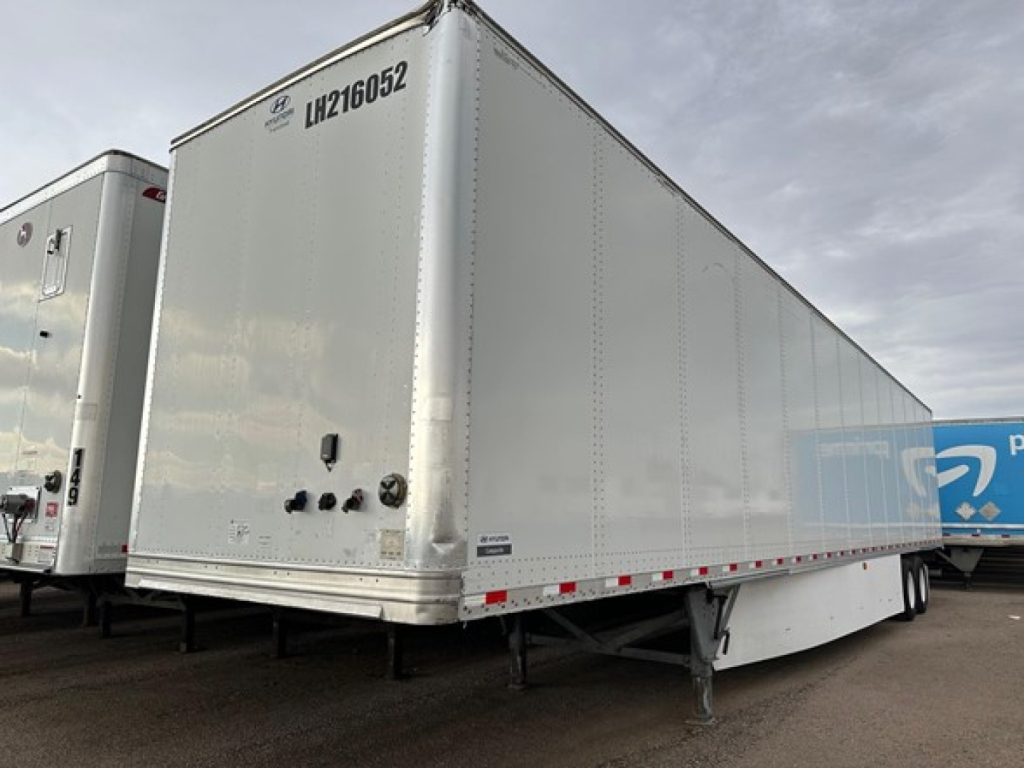
Showing 13 to 13 of 13 results
Have used hyundai van trailer to sell? List it here to reach thousands of buyers.
About Used Hyundai Van Trailers in Colorado
The biggest buying decisions usually come down to door type, floor and wall condition, and how the trailer is set up for cargo securement. Roll-up doors help in multi-stop urban and LTL-style work where quick dock access matters, but they reduce rear opening height and add maintenance points. Swing doors are simpler and often preferred for full trailer loads. Many Hyundai vans are spec'd with plywood or plate-lined walls, aluminum scuff bands, threshold plates, wearbands, and logistics posts or E-track. For a used trailer, look closely at floor fastener pull-through, soft spots around forklift traffic lanes, scuff liner damage, roof bows, rear frame corrosion, and signs of prior sidewall or nose repairs.
Suspension and running gear have a direct effect on resale value and lane suitability. Air ride remains a preferred spec for dry van operations carrying damage-sensitive freight, and sliding tandems or air pin sliders make it easier to manage bridge laws and dock positioning. Common wheel and tire setups include 22.5 low-profile rubber on steel or disc wheels, and some trailers include tire inflation systems that can help reduce irregular wear and roadside downtime. In Colorado, buyers should pay extra attention to undercarriage corrosion, brake condition, and tire age because mountain grades, winter road treatment, and wide temperature swings can accelerate wear on brakes, valves, airlines, and suspension components.
Hyundai dry vans are also known for practical fleet specs such as aluminum roofs, galvanized rear frames, smooth exterior panels, and side skirts on more fuel-conscious units. The right trailer depends on freight type and loading routine. A trailer used in high-cycle dock work should be checked carefully for rear impact damage, anti-dock-walk equipment condition, and door alignment. A road trailer on longer regional or over-the-road lanes should be evaluated for aerodynamic equipment condition, slider operation, and overall structural straightness. Buyers comparing used Hyundai van trailers should focus less on model name alone and more on the exact trailer spec, maintenance history, and how the prior application matches the freight they plan to haul.
Frequently Asked Questions
What are the most common specs on a used Hyundai van trailer?
Most used Hyundai van trailers on the market are 53-foot dry vans built to 102-inch width and 13-foot 6-inch overall height. Common configurations include air ride suspension, sliding tandems, 22.5 low-profile tires, steel or aluminum disc wheels, plywood or plate-lined interiors, aluminum roofs, threshold plates, and either swing or roll-up rear doors. Cargo control features such as logistics posts, E-track, and scuff liners are also common depending on whether the trailer was used in dedicated freight, retail distribution, or general dry van service.
Is a roll door or swing door better on a Hyundai dry van?
The better choice depends on the work. Roll doors are useful for frequent dock stops and city deliveries because they stay contained within the rear frame and reduce the chance of door damage at the dock. Swing doors are mechanically simpler, typically lighter to maintain, and usually provide the fullest rear opening for loading. On a used trailer, the real issue is condition. Buyers should inspect roller tracks, hinges, seals, latch hardware, and frame alignment to see how the door has held up in service.
What should I inspect first on a used Hyundai van trailer?
Start with the floor, rear frame, roof, and suspension. The floor tells you a lot about forklift abuse, water intrusion, and remaining service life. The rear frame and threshold area often show damage from repeated dock contact. The roof and upper rails can reveal prior leaks or structural repairs. After that, inspect the slider assembly, suspension bushings, brakes, airlines, tires, wheel ends, and any tire inflation system. Interior wall damage, patched panels, and door seal condition also help indicate how hard the trailer was used.
Are Hyundai van trailers a good fit for Colorado freight operations?
Yes, provided the trailer spec matches the route and freight. Hyundai dry vans are well suited for general freight, warehouse distribution, and regional haul applications common in Colorado. Air ride is especially helpful for freight that can shift or damage easily on rough roads and mountain corridors. Buyers in Colorado should pay close attention to brake performance, tire condition, corrosion on the undercarriage, and the overall health of valves and air systems because elevation changes, winter weather, and long grades can expose weak components quickly.
Do side skirts and tire inflation systems add value on a used dry van?
They can, especially for fleets focused on fuel economy and uptime. Side skirts may improve aerodynamic performance on highway lanes, but buyers should inspect mounting points, cracks, and road damage because damaged skirts can become a maintenance issue. Tire inflation systems can help maintain correct pressure and reduce uneven tire wear, but the benefit depends on system condition and maintenance history. On a used trailer, these features add value only if they are intact, functional, and supported by the way the trailer will be used.