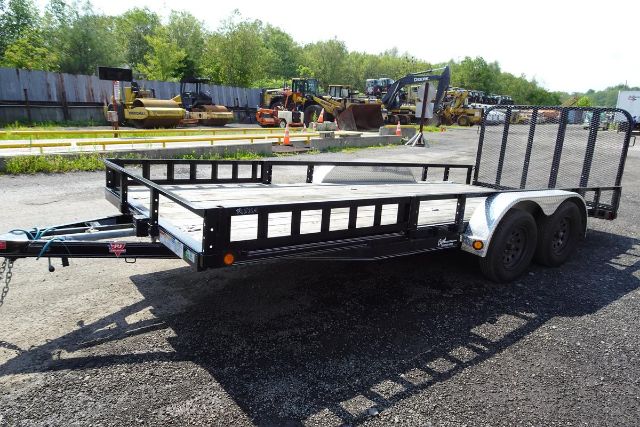
PJ Utility Trailers For Sale
Shop PJ utility trailers built for landscaping, ATVs, mowers, and light equipment hauling with common GVWRs, ramp options, and steel construction.
Learn moreHave pj utility trailer to sell? List it here to reach thousands of buyers.
About PJ Utility Trailers
Frequently Asked Questions
What are PJ utility trailers commonly used for?
PJ utility trailers are commonly used for lawn care fleets, property maintenance, farm and ranch work, powersports hauling, and general contractor use. They are a strong fit for zero-turn mowers, UTVs, ATVs, small compact tractors, generators, and palletized materials that do not require a fully enclosed trailer. Their open design also makes side loading easier when using forklifts or hand loading long materials.
What specs matter most when comparing PJ utility trailers?
The most important specs are GVWR, trailer length and width, axle count, ramp style, deck height, and floor material. Buyers should also check tire size, wheel rating, coupler type, brake setup, and trailer empty weight because payload capacity is determined by GVWR minus the trailer's own weight. Side height, rail design, and the presence of stake pockets or D-rings also matter if the trailer will carry mixed cargo instead of just wheeled equipment.
Is a tandem axle PJ utility trailer better than a single axle?
A tandem axle PJ utility trailer is usually the better choice for heavier and more frequent hauling because it provides higher GVWR, better load distribution, and more stability at road speed. It also gives more margin when hauling commercial mowers, side-by-sides, or compact equipment. A single axle trailer can still be a good match for lighter-duty residential or occasional use, but tandem axle models are generally preferred for fleet and contractor applications.
What deck and ramp features should a buyer look for on a PJ utility trailer?
Wood floors are common on PJ utility trailers because they provide good traction, are serviceable, and handle equipment loading well. Buyers should inspect the condition of the deck boards, the rear ramp angle, hinge points, spring assist hardware, and any mesh gate structure. If the trailer will haul low-clearance equipment, deck height and ramp length are especially important because a shallow loading angle reduces the chance of scraping.