
Stoughton Trailers For Sale in Oklahoma

Have stoughton trailer to sell? List it here to reach thousands of buyers.
Stoughton Trailers in Oklahoma
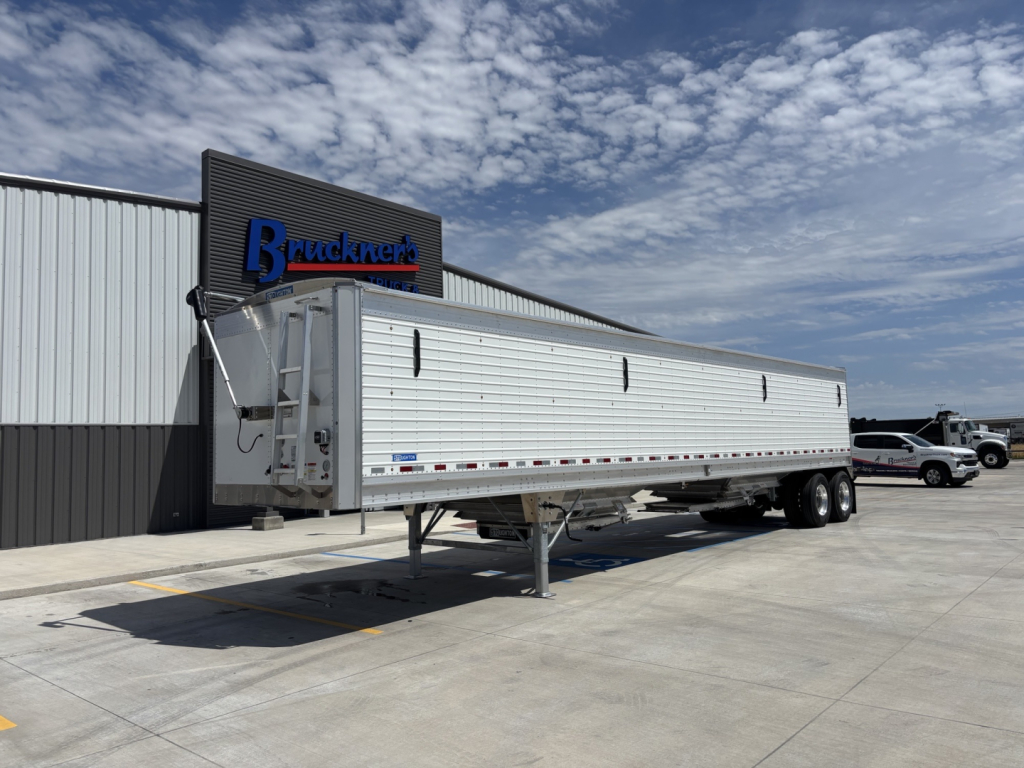
A lot of the buying decision comes down to sidewall height, empty weight, and discharge setup. Stoughton grain hoppers are often spec'd with corrugated aluminum sidewalls, aluminum front panels, stainless rear walls, galvanized steel subframes, and tandem axles with air ride suspension. Common details include 20-inch kingpin settings, 47-inch to 48-inch fifth wheel heights, 49-inch axle spreads, drum brakes, 2S1M ABS, and 11R22.5 rubber on aluminum wheels. Buyers hauling wheat, corn, milo, soybeans, or feed ingredients should pay close attention to trapdoor size, 2-stage manual trap operation, ground clearance, and whether the trailer has a removable inner liner. Those details affect cleanout time, unload control, and how well the trailer handles different commodity densities.
For Oklahoma operators, trailer height and route compatibility matter just as much as cubic capacity. Overall heights around 10 feet 4 inches to 11 feet 4 inches can change how a trailer fits under augers, at elevators, or on farm loading points. Electric tarp systems with remote operation are a common productivity feature on late-model Stoughton hoppers, especially for drivers making repeated stops during harvest or feed deliveries. Tire inflation systems, anti-spray splash guards, LED lighting packages, front and rear ladders, and security-ring lighting setups are also worth noting because they reduce roadside issues and improve daily usability.
When comparing Stoughton trailers for sale, it helps to think in terms of application instead of just model year. A 40-foot hopper may be the right choice where maneuverability and lower empty weight matter most, while a 42-foot or 43-foot spec may better suit operators chasing maximum legal payload and cubic volume. Look closely at construction thickness, post spacing, suspension type, brake configuration, and bushel rating. On hopper trailers, small spec differences can have a real impact on tare weight, durability, unloading speed, and long-term maintenance cost.
Frequently Asked Questions about Stoughton Trailers in Oklahoma
What are Stoughton trailers most commonly used for in this category?
In this category, Stoughton trailers are most commonly used as grain hopper trailers for hauling bulk agricultural commodities such as wheat, corn, milo, soybeans, and other free-flowing products. Their aluminum construction helps keep tare weight down, which supports higher legal payloads. They are also commonly chosen for regional farm-to-elevator work, feed routes, and seasonal harvest hauling where quick loading, controlled unloading, and corrosion resistance are important.
What Stoughton hopper trailer size is best for my operation?
The best size depends on your product density, route restrictions, and loading environment. A 40-foot hopper is often attractive for buyers who want lighter weight and easier maneuverability in tight farm or elevator settings. A 42-foot or 43-foot hopper usually offers more cubic capacity and can be a better fit for operations focused on maximizing volume. Buyers should compare sidewall height, bushel capacity, overall trailer height, and axle placement before deciding, because those specs affect both payload and day-to-day usability.
What specs matter most when comparing Stoughton grain hoppers?
The most important specs usually include cubic feet capacity, bushel rating, sidewall height, empty weight, trapdoor opening size, suspension type, kingpin setting, fifth wheel height, and axle spread. Construction materials also matter. Aluminum sidewalls and panels help reduce weight, while stainless rear walls and galvanized subframes can improve durability in corrosive conditions. Features like electric tarps, tire inflation systems, removable liners, and LED lighting can also add measurable value in daily operation.
Are Stoughton trailers a good fit for Oklahoma grain hauling?
Stoughton grain hoppers are generally a strong fit for Oklahoma grain hauling because they align well with the region's demand for lightweight, corrosion-resistant bulk commodity trailers. Oklahoma operators often need equipment that works across farm roads, elevators, and highway miles while staying practical for harvest conditions. Buyers should still confirm local bridge laws, commodity weights, and loading-point clearance, especially when choosing between taller sidewalls and lower overall trailer height.
How important is trailer construction material on a Stoughton hopper?
Construction material is a major factor because it affects tare weight, service life, and resistance to corrosion. Aluminum sidewalls and front panels help reduce empty weight, which can improve payload potential. Stainless steel rear wall sections and galvanized steel subframes are often used to add strength and improve durability in high-wear or moisture-prone areas. A well-balanced material spec can deliver both low weight and long-term reliability, which is especially important in bulk ag service.