
Wabash Storage Trailers For Sale
Shop Wabash storage trailers for secure on-site storage, including 53-foot dry van and insulated reefer box configurations.
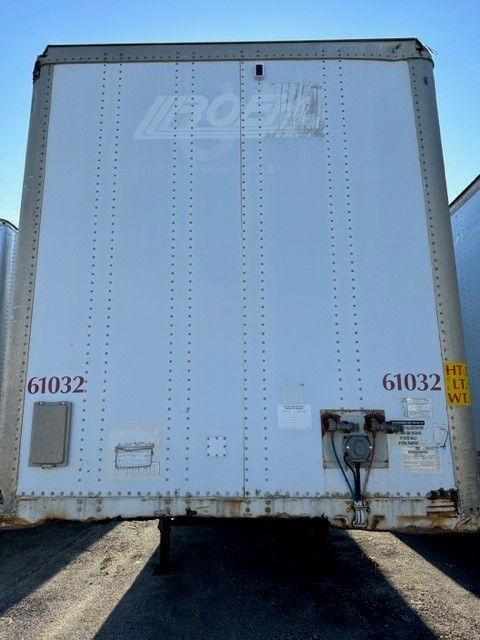
Selling a wabash storage trailer? List your wabash storage trailer for sale and reach thousands of commercial buyers.
Wabash Storage Trailers
A lot of Wabash storage trailers on the market are Duraplate dry vans or insulated reefer bodies with the refrigeration unit removed. Dry van models are typically favored for general warehouse overflow, palletized goods, tools, records, and jobsite materials. Insulated reefer boxes are often chosen for temperature buffering, cleaner interiors, and better protection for materials that should not be exposed to rapid heat swings, even when there is no active cooling unit installed. Common specs include 53-foot length, 102-inch width, swing rear doors, wood or aluminum floors, and either spring ride or air ride suspension. For a trailer that will stay parked, buyers often pay close attention to door seal condition, floor wear, roof corrosion, sidewall damage, and whether the tandem slider can still be positioned safely for site placement.
Wabash construction details are worth checking closely because they affect long-term storage value. Duraplate panels are known for good impact resistance compared with older sheet-and-post designs, and that can be important if the trailer will see forklift traffic or frequent loading cycles. On insulated units, look at the interior liner, duct floor condition, and any signs of prior moisture intrusion. If the trailer will be used at a dock, features like anti-dock walk, swing doors, E-track, and a solid rear sill can be useful. If it will sit in a yard or at a construction site, landing gear condition, tire integrity for repositioning, and overall frame rust become more important than over-the-road specs.
For buyers comparing listings, the real question is how the trailer will be used: fixed storage, dock-high access, mobile jobsite storage, or occasional local moves. A Wabash storage trailer can fill any of those roles, but the best fit depends on box integrity, door operation, floor strength, and site compatibility. Reefer-based storage trailers can offer a more insulated shell, while standard dry vans are usually simpler and less expensive to maintain. In either case, Wabash trailers remain popular because dimensions are familiar, replacement parts are easy to source, and the platform is proven for commercial storage use.
Frequently Asked Questions about Wabash Storage Trailers
What is the difference between a Wabash dry van storage trailer and a Wabash reefer storage trailer?
A Wabash dry van storage trailer is a standard enclosed van body used for secure, weather-protected storage, while a Wabash reefer storage trailer is an insulated trailer body originally built for refrigerated service. On the used market, many reefer storage trailers no longer have an operating refrigeration unit, but they still provide insulation that helps reduce temperature swings inside the box. Dry vans are typically simpler and more economical for general storage, while reefer bodies are often preferred for materials that benefit from a more stable interior environment.
What should I inspect first on a used Wabash storage trailer?
Start with the box condition, not the drivetrain-related components. Check the roof for leaks, the floor for soft spots or severe forklift damage, the rear doors for proper alignment and seal condition, and the sidewalls for punctures or structural repairs. After that, inspect the frame, landing gear, and suspension enough to confirm the trailer can be safely spotted and repositioned if needed. On a storage trailer, a dry and secure body usually matters more than high-spec road equipment.
Are 53-foot Wabash storage trailers the most common size?
Yes. A 53-foot by 102-inch Wabash van trailer is one of the most common storage trailer formats on the market. That size is widely used because it offers substantial cubic capacity, works well for palletized freight and jobsite storage, and matches standard dock and yard expectations. Buyers should still confirm overall site access, turning room, and placement clearance before choosing a 53-foot unit, especially for tighter industrial yards or construction sites.
Is suspension type important on a storage trailer?
Suspension type matters less for a trailer that will remain parked, but it is still worth noting. Spring ride and air ride are both common on Wabash trailers. For fixed storage, the bigger concern is overall axle and frame condition rather than ride quality. If the trailer may be moved around a yard, delivered to a remote site, or loaded heavily while being repositioned, suspension condition becomes more relevant because it affects stability, spotting, and safe transport.
Can a retired Wabash reefer trailer be used for jobsite storage?
Yes. A retired Wabash reefer trailer is often a strong candidate for jobsite storage because the insulated box helps protect tools, supplies, and materials from weather and temperature extremes. Many also have durable interior liners, aluminum duct floors, and heavy-duty rear door assemblies. Buyers should verify whether the refrigeration unit has been removed, whether the floor is practical for the intended cargo, and whether any prior moisture damage is present inside the insulated structure.