
Used Reefer Trailers For Sale in Mississippi
Browse used reefer trailers for sale in Mississippi, including 53-foot refrigerated trailers with Thermo King or Carrier units.
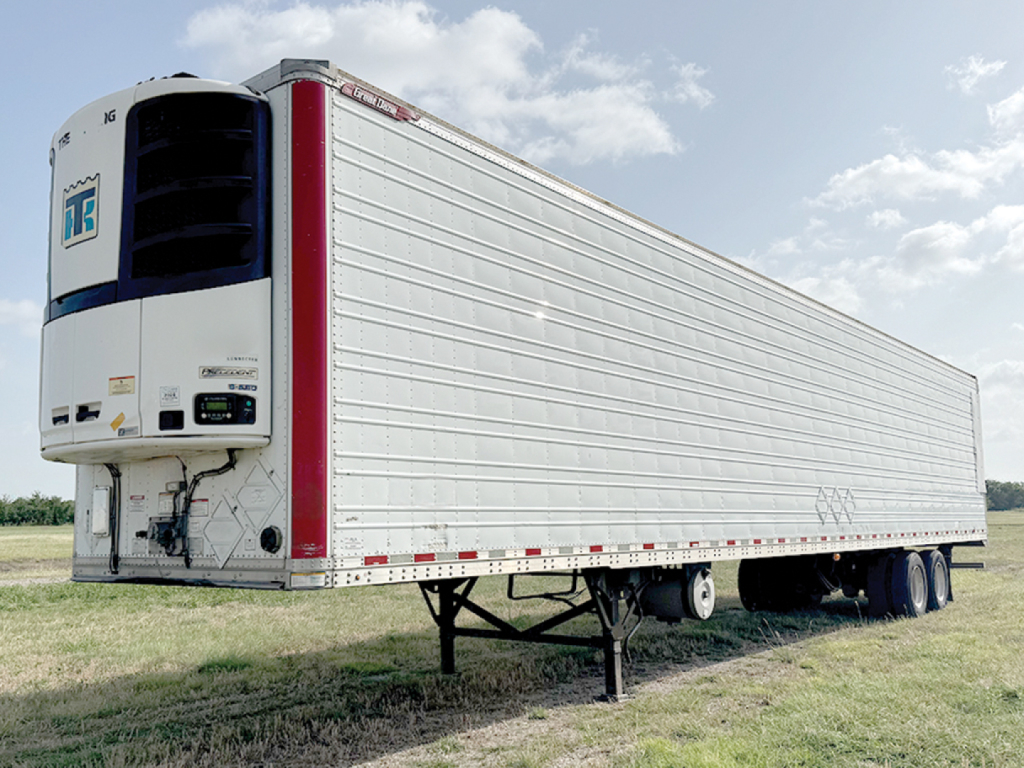

Selling a used reefer trailer? List your used reefer trailer for sale and reach thousands of commercial buyers.
Used Reefer Trailers in Mississippi
The trailer body matters as much as the refrigeration unit. Common configurations include aluminum duct floors for better air circulation under pallets, scuff plates or scuff liners to protect the sidewalls, stainless steel rear door frames, swing doors, and cold chutes to help carry supply air to the rear. Some used reefer trailers are wedge-style trailers with taller interior height at one end, which can change cube and loading flexibility depending on the freight profile. Interior dimensions, floor condition, door seal integrity, and wall insulation all affect temperature recovery and operating cost. Water intrusion, delamination, and floor damage around high-traffic pallet lanes are worth checking closely on any used refrigerated trailer.
Running gear and axle layout should match the lanes and docks you serve. Sliding tandems offer flexibility for bridge laws and dock positioning, while spread axles can help with weight distribution but may be less maneuverable in tight urban deliveries. Air ride suspension is common on reefer trailers because it protects sensitive freight and helps ride quality. Low-profile 22.5 tires, aluminum or steel wheels, side skirts, and trailer scales are all specs buyers may see in this category. Kingpin setting, axle spread, and overall empty weight also matter because reefer trailers are heavier than dry vans before freight is loaded, and every pound affects payload.
A used reefer trailer can be a strong value if the refrigeration system, insulation package, and structural condition are still sound. Buyers should look for recent unit service, evaporator and condenser condition, fuel tank and wiring integrity, accurate temperature control, and signs the trailer was used in food-grade service and cleaned consistently. If the operation depends on multi-stop delivery, pay close attention to door openings, temperature recovery time, and floor airflow design. If the freight is heavier or palletized densely, the floor rating and air channel condition become especially important. The right used reefer trailer is not just a box with a unit on the nose. It is a temperature-management asset, and its value depends on both refrigeration performance and trailer condition.
Frequently Asked Questions about Used Reefer Trailers in Mississippi
What should I inspect first on a used reefer trailer?
Start with the refrigeration unit, the trailer box, and the floor. On the unit, check total engine hours, service records, alarm history, startup behavior, and how quickly it pulls down to set temperature. On the trailer, inspect door seals, wall and roof condition, insulation integrity, and any signs of water intrusion or delamination. The floor should be checked for channel damage, soft spots, cracked welds, and wear in forklift traffic areas because poor airflow or structural floor damage can hurt both cooling performance and load security.
What is the difference between a duct floor and a heavy-duty reefer floor?
A duct floor is designed to move air under the freight so the refrigeration unit can circulate supply air throughout the trailer. A heavy-duty floor is built to handle repeated forklift traffic and heavier palletized loads without failing prematurely. Many used reefers combine airflow design with stronger floor construction, but buyers should confirm the exact floor type and condition. Good airflow under the pallets is essential for maintaining temperature consistency, especially on multi-stop routes or dense loads.
Are Thermo King and Carrier both common on used reefer trailers?
Yes. Thermo King and Carrier are the two most common refrigeration unit brands found on used reefer trailers. Both have broad parts and service support, but buyers often compare them based on local dealer support, technician familiarity, fuel efficiency, and the service history of the specific unit. The condition of the individual reefer unit usually matters more than brand alone, especially on older trailers where maintenance quality has a major effect on reliability.
Is a spread axle or sliding tandem better for a reefer trailer?
It depends on the application. A sliding tandem gives more flexibility for bridge compliance, turning radius, and dock approach, which is valuable in mixed-route and regional freight. A spread axle can improve weight distribution and is common in some operations, but it is typically less maneuverable in tight yards or urban stops. Reefer buyers should match the axle setup to the freight, route restrictions, and the facilities they serve most often.
Why do used reefer trailers typically weigh more than dry vans?
A reefer trailer carries extra weight from the refrigeration unit, insulated body construction, evaporator and condenser components, fuel system, and reinforced floor design. That added tare weight reduces available payload compared with a dry van. Buyers who haul dense freight should pay close attention to trailer empty weight, axle configuration, and floor rating because those factors directly affect how much legal freight can be loaded.