
Reefer Trailers For Sale in Illinois
Shop reefer trailers for sale in Illinois. Compare 53-foot refrigerated trailers, reefer units, duct floors, air ride, and tandem setups.

Showing 1 to 28 of 88 results
Looking for the easiest place to sell your reefer trailer? List it here to reach thousands of buyers.
Reefer Trailers in Illinois
Construction details have a direct effect on operating cost. Insulated wall and roof panels, duct or channel floors, tight door seals, and a well-maintained front-mounted reefer unit all contribute to pull-down performance and fuel efficiency. Heavy duty aluminum duct floors are common because they support airflow under the load while holding up to repeated forklift traffic. Features like scuff liners, stainless steel rear frames, stainless door hardware, cold chutes, and front radius reinforcement can add durability in multi-stop service. Galvanized components and corrosion-resistant materials also matter in Illinois, where winter road salt can shorten trailer life if the understructure and hardware are not protected.
Buyers comparing used and late-model reefer trailers should pay close attention to the refrigeration unit hours, service history, and the condition of the box before anything else. A strong trailer with poor insulation, damaged interior lining, or worn door seals can become expensive quickly because the reefer unit has to work harder to hold setpoint. Check floor condition for forklift damage, look for delamination or repairs in the sidewalls and roof, and confirm that the chute, bulkhead tracks, E-track, and drains match the freight you intend to haul. Suspension type, sliding tandem position, tire inflation systems, side skirts, and wheel specification also affect maintenance cost, bridge compliance, and fuel economy.
For Illinois operators, reefer trailer selection often comes down to balancing thermal efficiency, empty weight, and maintenance access. Regional grocery fleets may prioritize frequent door-cycle recovery and strong airflow management, while over-the-road carriers may focus more on unit reliability, fuel burn, and trailer weight. Inside height, floor rating, and door opening dimensions should also match the pallets, roll cages, or mixed frozen and chilled freight in your network. A reefer trailer that holds temperature consistently, loads easily, and resists corrosion will usually outperform a cheaper trailer that spends more time in repair bays or burns excess fuel trying to protect the load.
Frequently Asked Questions about Reefer Trailers in Illinois
What should I look at first when buying a used reefer trailer?
Start with the refrigeration unit hours, maintenance records, and the structural condition of the insulated box. A reefer trailer can look clean outside and still have costly problems such as weak insulation, leaking door seals, floor damage, or patched interior lining that reduces temperature control. Buyers should also inspect the duct floor, evaporator area, front wall, roof, and rear frame for impact damage, corrosion, or signs of moisture intrusion. If the reefer unit has a solid service history and the box is tight, the trailer is usually worth a closer look.
What is the most common reefer trailer size and configuration?
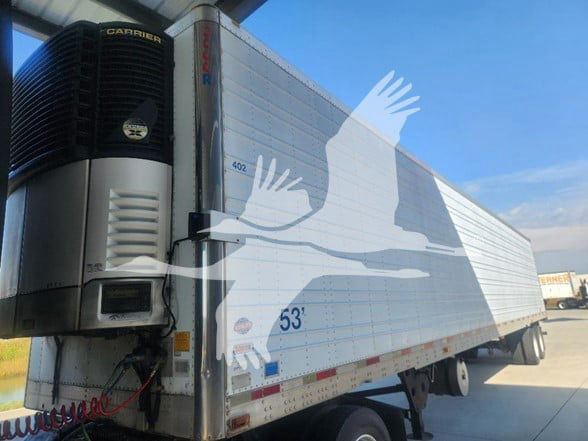
The standard reefer trailer in most fleets is a 53-foot long, 102-inch wide trailer with tandem axles, air ride suspension, and swing rear doors. Most are built with a front-mounted Thermo King or Carrier refrigeration unit and an aluminum duct floor to maintain airflow under the freight. Sliding tandems are common for axle compliance and dock flexibility, and many trailers also include features like scuff liners, cold chutes, tire inflation systems, and side skirts. This configuration fits the broadest range of grocery, frozen, and foodservice freight.
How important is floor type in a reefer trailer?
Floor type is critical because it affects both airflow and durability. A heavy duty duct floor allows cold air to move beneath the load, which helps the trailer maintain even temperature from nose to doors. It also needs to withstand repeated forklift traffic without crushing or separating. If the floor is damaged, airflow can be restricted and pallet handling becomes harder, which can hurt both cargo protection and loading speed. Buyers hauling dense or high-turn freight should pay close attention to floor condition and rating.
Are reefer trailers in Illinois more vulnerable to corrosion?
Yes. Illinois trailers often see winter road salt, wet conditions, and frequent wash cycles, all of which accelerate corrosion on crossmembers, rear frames, landing gear components, and hardware. Trailers with galvanized parts, stainless steel rear structures, stainless door frames, and corrosion-resistant underbody components generally hold up better over time. Corrosion resistance is not just cosmetic. It affects maintenance intervals, resale value, and the long-term integrity of the trailer structure.
Which reefer unit brand is more common, Thermo King or Carrier?
Both Thermo King and Carrier are common across the reefer market, and each has strong support in commercial fleet service networks. The better choice often depends less on brand preference and more on local dealer support, parts access, technician familiarity, and the unit's actual service history. A well-maintained Thermo King or Carrier unit is usually a better buy than a neglected unit of either brand. Buyers should compare hours, maintenance documentation, start and run performance, and how well the unit holds setpoint under load conditions.